CARPRO PERL Review: Choose the Use and Check the Dilution
CARPRO PERL fits a finishing job after cleaning when you want to adjust the appearance of a permitted tire sidewall or trim surface. It is a water-based dressing concentrate, not a tire cleaner. Mixing is the practical trade-off: you gain a choice of concentration, but must identify the surface, ingredients and applicable instructions before mixing.
The clearest US tire choices are undiluted PERL for higher gloss or equal parts PERL and water for a more satin appearance. That does not make either mixture suitable for every rubber part, vehicle control or leather finish.
Documentary review. Hot Car Care has not tested PERL on a vehicle or measured its durability. Product links may earn a commission.
Top 9 best tire sidewall finishing products by use case
These products are ordered for the stated use cases. The list is documentary: it does not report measured performance or rank the whole market. Check the exact formula, surface and received directions before choosing.
How this shortlist is ordered
Order for this page: the exact reviewed model first, then cloth-controlled or pad-applied finishes first, then spray formats and longer aftercare commitments.
How we order these choices- CARPRO PERL Water-Based Dressing Concentrate, 500 mLBest for a permitted sidewall or trim finishing task with a deliberate mixing plan
- Gtechniq T2 Tyre Dressing, 250 mlBest for A cloth-controlled sidewall finish with an optional second layer
- Meguiar’s Endurance Tire Gel, G7516Best for Pad-applied gloss with excess removed
- Adam’s Graphene Tire Dressing, 16 ozBest for An applicator-applied satin finish
- Griot’s Garage Black Satin Tire Coating, 10951Best for An aerosol route to a satin sidewall finish
- Turtle Wax Hybrid Solutions Graphene Acrylic Tire Shine, 53733, 23 ozBest for A sidewall spray with an explicit excess-removal step
- 303 High Gloss Tire Shine, 30395CSRBest for A high-gloss spray with a stated wait before driving
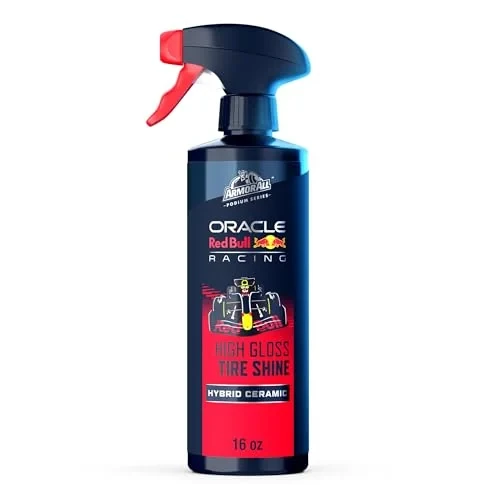
- Armor All Podium Hybrid Ceramic Tire Shine, 16 fl ozBest for A high-gloss route with a one-hour driving wait
- CERAKOTE Rapid Ceramic Tire Coat, AH-RCTIRE10Best for A dressing with separate moisture and washing waits

01Documented task fit
Best for a permitted sidewall or trim finishing task with a deliberate mixing plan
CARPRO PERL Water-Based Dressing Concentrate, 500 mL
PERL is a water-based dressing concentrate for a permitted tire-sidewall or trim finish after cleaning. Its adjustable concentration adds a mixing decision: identify the surface, formula and applicable directions before preparing it. It is not a tire cleaner.
Why this position: The featured concentrate answers this review's formula-and-mixing question before ready-to-use dressing alternatives. Its place is conditional on the exact surface-specific directions, not evidence that dilution improves performance.
Check before choosing: This is not a tire cleaner; match the applicable formula and surface-specific dilution instead of transferring another product's ratio.

02Documented task fit
Best for A cloth-controlled sidewall finish with an optional second layer
Gtechniq T2 Tyre Dressing, 250 ml
Use a foam pad on clean, dry sidewalls, then remove excess T2 with a microfiber cloth. For more gloss, wait the specified ten minutes before another application.
Why this position: Among the alternatives, for a controlled pad-and-cloth sidewall method, with a separately timed optional gloss layer. The documented excess-removal step is the starting workflow here.
Check before choosing: Wear gloves and avoid direct sun. Gtechniq excludes motorcycle and bicycle tires; keep dressing off tread and braking surfaces.
03Documented task fit
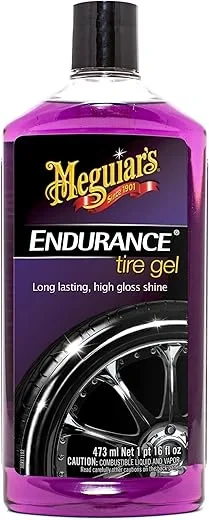
Best for Pad-applied gloss with excess removed
Meguiar’s Endurance Tire Gel, G7516
The 16 oz gel goes onto cool, clean dry sidewalls with a foam applicator. Removing excess is part of the instructions.
Why this position: Among the alternatives, as a pad-applied gloss gel, after the adjustable T2 route. Its cooler, dry-sidewall process and required excess removal are the useful differences, not measured shine superiority.
Check before choosing: Keep it off tread and exclude bicycle, motorcycle and other two-wheel tires. Do not read a cosmetic shine as repaired rubber.
04Documented task fit
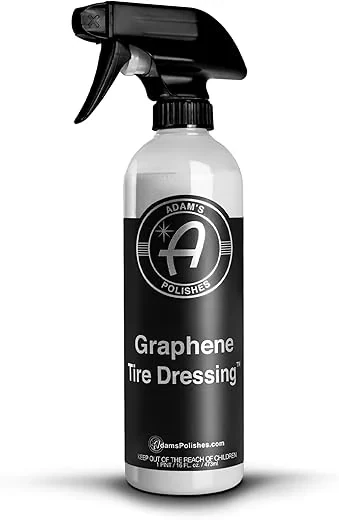
Best for An applicator-applied satin finish
Adam’s Graphene Tire Dressing, 16 oz
The water-based silicone dressing is applied to fully dry, cool sidewalls. The reviewed directions remove excess after a few minutes and let the finish dry.
Why this position: Among the alternatives, for a satin applicator finish. Its own removal and drying directions matter, and conflicting drive-away marketing is not promoted to a timed advantage.
Check before choosing: Do not promise an immediate drive-away time from a conflicting marketing panel. Tire and vehicle restrictions still apply.
05Documented task fit
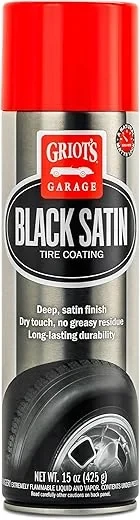
Best for An aerosol route to a satin sidewall finish
Griot’s Garage Black Satin Tire Coating, 10951
The 15 oz aerosol offers a spray-on satin tire finish.
Why this position: Among the alternatives, as an aerosol satin alternative. Moving to a spray adds an overspray-control decision and the need to confirm the actual can's drying directions.
Check before choosing: Control overspray and follow the can’s drying directions. No fixed drive-away time is established by the evidence used here.

06Documented task fit
Best for A sidewall spray with an explicit excess-removal step
Turtle Wax Hybrid Solutions Graphene Acrylic Tire Shine, 53733, 23 oz
Wash the tires thoroughly, shake the bottle and spray the sidewalls evenly. Turtle Wax gives a 3–5-minute penetration interval, then directs wiping away excess with clean, dry microfiber or a foam applicator. An optional second coat also needs the excess removed.
Why this position: Among the alternatives, for a spray route with an explicit penetration-and-excess-removal sequence. That interval is not evidence of an immediate driving permission.
Check before choosing: The product directions concern sidewalls, not tread or brakes. The 3–5 minutes describes penetration before wiping; it is not a promise that the car may be driven immediately. Follow the received label and tire-maker restrictions, without transferring another dressing’s drying time.

07Documented task fit
Best for A high-gloss spray with a stated wait before driving
303 High Gloss Tire Shine, 30395CSR
The 16 fl oz directions specify cleaning overspray and waiting 15–20 minutes before driving.
Why this position: Among the alternatives, for a high-gloss spray with a stated wait before driving. It is a conditional appearance-and-schedule choice rather than the default controlled-application route.
Check before choosing: Use it on permitted automotive sidewalls and keep it away from tread, brakes and control surfaces.
08Documented task fit
Best for A high-gloss route with a one-hour driving wait
Armor All Podium Hybrid Ceramic Tire Shine, 16 fl oz
The reviewed Podium bottle uses clean, cool tires and allows an applicator route. Its directions separate one hour before driving from 24 hours to cure.
Why this position: Among the alternatives, for its high-gloss method with distinct one-hour driving and 24-hour curing periods. Those commitments narrow its fit for a short work window.
Check before choosing: Choose the identified Podium bottle, rather than an unresolved Extreme bundle, and contain overspray.

09Documented task fit
Best for A dressing with separate moisture and washing waits
CERAKOTE Rapid Ceramic Tire Coat, AH-RCTIRE10
The 10 oz instructions call for an applicator, immediate excess removal, two hours before moisture and 24 hours before washing.
Why this position: Among the alternatives, for the route with separate two-hour moisture and 24-hour washing exclusions. Its place reflects the protected aftercare commitment, not tested longevity.
Check before choosing: An optional second layer follows after 15 minutes. Do not transfer the paint-sealant or headlight-kit procedure to tires.
When PERL fits the job
Consider PERL if a dressing is the missing step and you can manage mixing, an applicator and excess removal. If the surface still needs cleaning, solve that task first; adding a finish is not the preparation described by CARPRO.
| Your situation | Decision | What changes the choice |
|---|---|---|
| Permitted car tire sidewalls; satin or higher gloss | PERL is worth considering. | The US instructions distinguish an equal-parts mixture from undiluted application. |
| Exterior plastic trim with confirmed care permission | Compare the US trim instructions with the bottle you will use. | Trim has a different concentration range from tires; mixing is another task to manage. |
| You want to avoid measuring and storing a mixture | Investigate a different dressing format or keep a suitable product you own. | Concentration flexibility is useful only when you want that preparation work. |
| Unidentified leather, suede, screens, controls or a cleaning-only task | Do not use this review as application permission. | A broad material claim does not resolve finish-specific or contact-surface restrictions. |
The US supplier names finished leather; CARPRO’s global page names modern leather. Neither description identifies every seat finish. This review does not recommend PERL for:
- untreated leather
- suede
- steering wheels
- pedals
- screens
- road-contact tire tread.
Follow the component, tire and vehicle makers’ care restrictions before selecting a dressing.
Read the dilution by surface and source
Name the ingredients instead of relying on which number appears first. For US exterior plastics and engine-bay uses, Sky’s the Limit’s PERL sample page explicitly identifies one part PERL to one through three parts water. Its main concentrate page prints the corresponding range as 1:1–1:3. The sample is a separate 50 mL pack; it corroborates wording, not a 500 mL purchase listing.
| Surface and source | Published guidance | Ingredient order and limit |
|---|---|---|
| Tires and rubber — US concentrate page | Undiluted for higher gloss; 1:1 for satin | 1:1 means equal parts PERL and water. Use only for the permitted tire-sidewall task described here. |
| Exterior plastics — US concentrate and sample pages | 1:1–1:3 | The sample page explicitly says one part PERL to one–three parts water. This range is US guidance, not a new global instruction. |
| Engine bays — US concentrate and sample pages | 1:1–1:3 | One part PERL to one–three parts water is stated by the sample page. It does not authorize dressing every engine component. |
| Exterior plastics — CARPRO global page | 1:3, printed as a single entry | The page does not name the ingredients beside the ratio. Do not widen its entry into the US range or reverse it from the headline. |
| Interior vinyl/finished leather — US; interior/dash/leather — global | Both print 1:5 | Those entries do not spell out ingredient order. No converted interior recipe is prescribed here; obtain explicit instructions for the actual finish and bottle before mixing. |
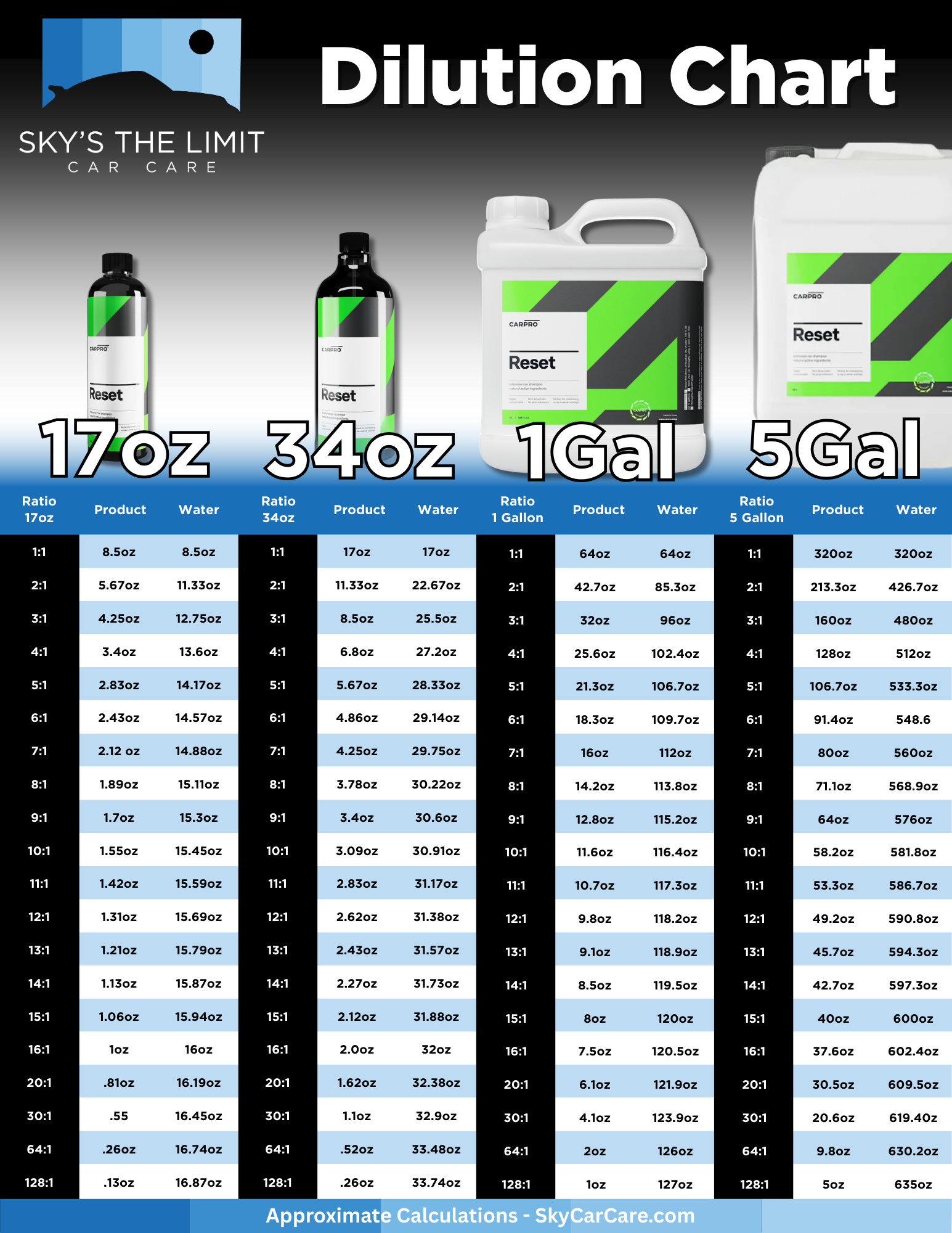
There is a notation conflict worth catching: CARPRO’s global headline uses 5:1 while its interior entry uses 1:5. The linked US general dilution chart also labels water-heavy mixtures with the larger number first. Its separate product and water columns reveal that convention. Do not reverse a PERL mixture solely to match a headline or calculator.
This review therefore gives no mL/oz recipe or dilution calculator. The US tire options and explicitly named US trim ingredients are usable decision information; unresolved interior notation remains a specific hold on an interior mixing recommendation.
Read the US PERL concentrate instructions Check the US sample’s named ingredients Read CARPRO’s global PERL page
Prepare the surface and control the layer

Cleaning comes first, and the US method calls for a thin application followed by complete drying before vehicle use. For an approved tire-sidewall use:
- Remove dirt, oil and dust using cleaning instructions appropriate to the tire.
- Choose the applicable PERL mixture. For the US tire options, distinguish undiluted product from equal parts PERL and water.
- Shake a prepared mixture and keep its container clearly identified as PERL with the chosen ingredients.
- Spread a small amount in a thin, even layer with an appropriate applicator or microfiber towel. Keep product within the permitted surface.
- Wipe away excess and avoid overapplication.
- Let the treated surface dry completely before using the vehicle. If adding another thin coat, the US page specifies at least 20 minutes between applications; that recoat interval does not replace the complete-drying condition.
The US precautions include ventilation, keeping the product away from heat, avoiding skin and eye contact, closing the container after use and keeping it away from children. The bottle’s instructions and any stricter vehicle or component restriction still apply.
An applicator, a suitable wiping towel and a mixing container for diluted use are part of the workflow. Count the supplies already available before choosing a larger bottle. No consumption-per-vehicle measurement supports a running-cost winner here.
PERL or another dressing format?
Choose PERL when its mixing options suit your routine. Someone looking for a different process can review the VRP dressing alternative. That separate review covers VRP’s own application; it does not supply a substitute PERL ratio or establish which formula lasts longer.
For a broader finish and format decision, compare other tire dressing formats. Keep that category choice separate from buying this exact concentrate. Water-based describes the carrier, not tire repair or permission for every material.
Questions before buying PERL
Is PERL a cleaner for dirty tires?
No. CARPRO places surface cleaning before dressing. A suitable cleaner already in your supplies may cover the preparation; buying PERL does not automatically require buying another cleaner.
Is 1:1 the same as one part product in one total part?
No. Equal parts PERL and water are two portions combined. The US tire option uses that equal-parts relationship. Do not transfer the interpretation into a differently written ratio without identifying its ingredients.
Can I use the tire mixture on interior trim?
Do not transfer the tire concentration to interior materials. The pages give different interior entries, and the ratio-order and finish permissions must be explicit before an interior recipe is adopted. A permitted tire application is not evidence of seat or control compatibility.
Does the 20-minute interval mean I can drive after 20 minutes?
No. In the US instructions it concerns additional coats. Complete drying before vehicle use remains a separate condition; this review does not provide a universal driving timer.
Will dilution make PERL cheaper per application?
Dilution increases the amount of mixed liquid, but cost per completed job also depends on consumption, bottle price and supplies. Those were not measured here. Compare the exact pack and your routine rather than treating concentration alone as proof of savings.
Check the PERL concentrate selection

The candidate is one 500 mL bottle of CARPRO PERL dressing concentrate. Match the name, amount, pack and seller. An empty PERL-labeled spray bottle or a dispensing accessory is not the dressing.
This is an Amazon US search, not a verified product listing or an availability claim.
Sources and review scope
Hot Car Care compared the global product page with Sky’s the Limit Car Care’s US concentrate and sample instructions, including the linked general dilution chart. The US supplier’s guidance is identified separately from CARPRO’s global wording. No bottle was physically inspected, and no gloss, sling, weather resistance or material-repair result was measured.
Product references and task details