Hoover CleanSlate Pet FH14000V Review: Tank, Tools, and Formula
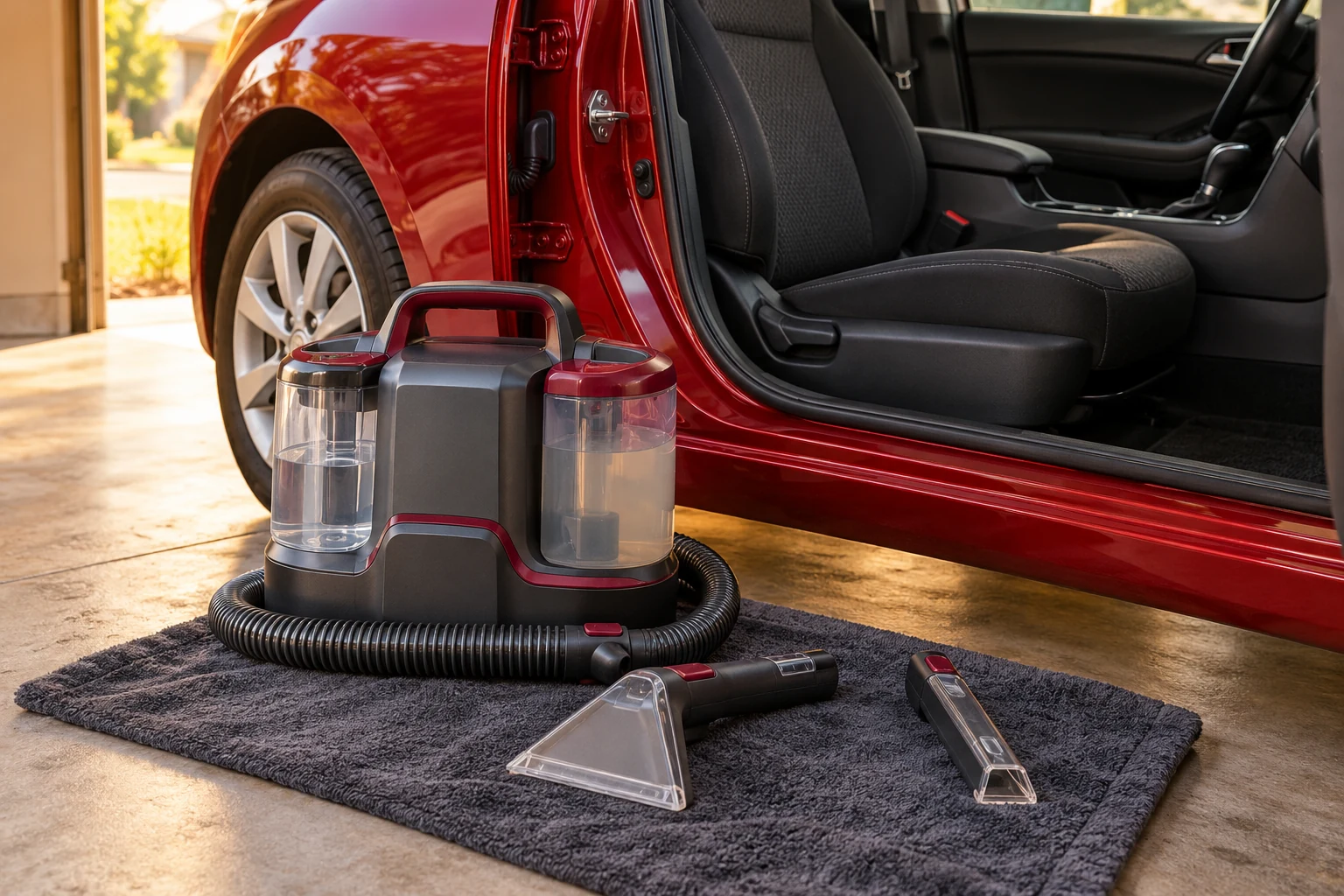
Hoover CleanSlate Pet FH14000V
The Hoover CleanSlate Pet FH14000V is worth considering for a small car-upholstery job when the material permits wet cleaning, a suitable outlet is available, and you can clean and dry the machine afterward. Check the complete model number and formula label first: the CleanSlate name covers different offers, and premix and concentrate need different preparation.
Equipment scenes are illustrative. Use the linked manufacturer documents to identify the exact model and supplied parts.
This is a document-based review of the selected US manufacturer listing and its linked CleanSlate manual. Hot Car Care has not tested this machine or measured stain removal, suction, or drying time. Amazon buttons may earn the site a commission.
Five Checks Before Choosing the FH14000V
After matching the model, check the surface, power source, solution, and cleanup routine.
check which cleaning method the job needs
| Decision check | What to verify | When to stop or choose another method |
|---|---|---|
| Exact offer | The listing, box, and machine identify FH14000V, with the tools you need | The offer substitutes another suffix, a Plus, or an XL without explaining the change |
| Upholstery permission | The vehicle’s care instructions allow wet cleaning of that material and area | The material or its care requirements are unknown, or moisture would reach sensitive components |
| Power and placement | The machine’s data plate and a properly grounded nominal 120-volt supply agree; the cord reaches safely | The plan depends on modifying the plug or an improvised power setup |
| Formula | A HOOVER cleaning fluid intended for this appliance, identified as concentrate or ready-to-use premix | The only justification is that an unrelated bottle says “carpet cleaner” |
| Aftercare | Access to a sink or appropriate emptying point, space to air-dry the parts, and time for the upholstery to dry | You need immediate dry seating or expect hose rinsing to clean the entire machine |
The FH14000V can apply solution and recover dirty liquid from an approved fabric surface. That does not make it a dry-debris vacuum, a general liquid-spill collector, or a shortcut around the vehicle’s cleaning restrictions. Loose grit needs an appropriate dry-cleaning step before you decide whether a wet pass is necessary.
If those checks fit your job, compare the seller’s exact package and return terms. A search result is not confirmation that every offer contains the reviewed model.
Search Amazon US for Hoover FH14000V
Which CleanSlate Offer and Tools Are Being Reviewed?
This review covers the FH14000V selected on Hoover’s CleanSlate Pet page. The page’s search title uses FH14000, while the visible product identifier is FH14000V. Neither wording establishes that every CleanSlate Plus, FH14050, XL, or retailer bundle has the same equipment.
The selected page lists:
- A 7-inch Wide Path Tool.
- A Tight Spot Tool.
- A Hose Rinse Tool.
- Trial solution.
Its specification section also names a bristle/rubber-nub tool, cleaning solution, and measuring cup. The linked family manual says that tools and formula can vary by model. Check the actual offer’s contents rather than counting an optional bundle or upsell as included.
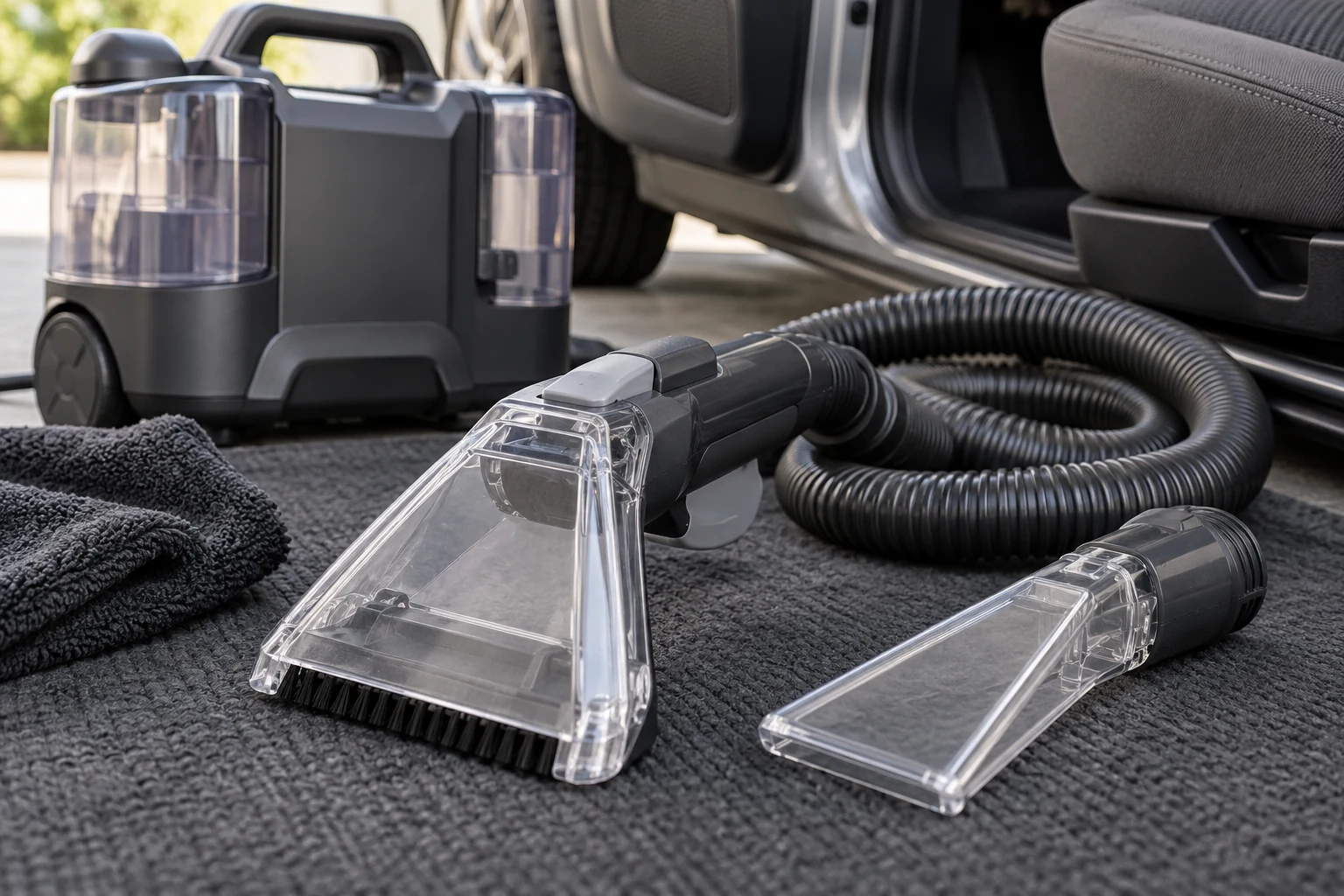
The wide tool is the candidate for an accessible stretch of approved fabric; the narrow tool addresses corners the wider head cannot enter. That access difference is useful in a car, but it is not evidence that either tool removes a particular stain or dries the padding underneath it. Check the opening, seat position, and route for the hose before choosing the package.
Read Hoover’s selected FH14000V listing
The Two Tank Capacities Have Different Jobs
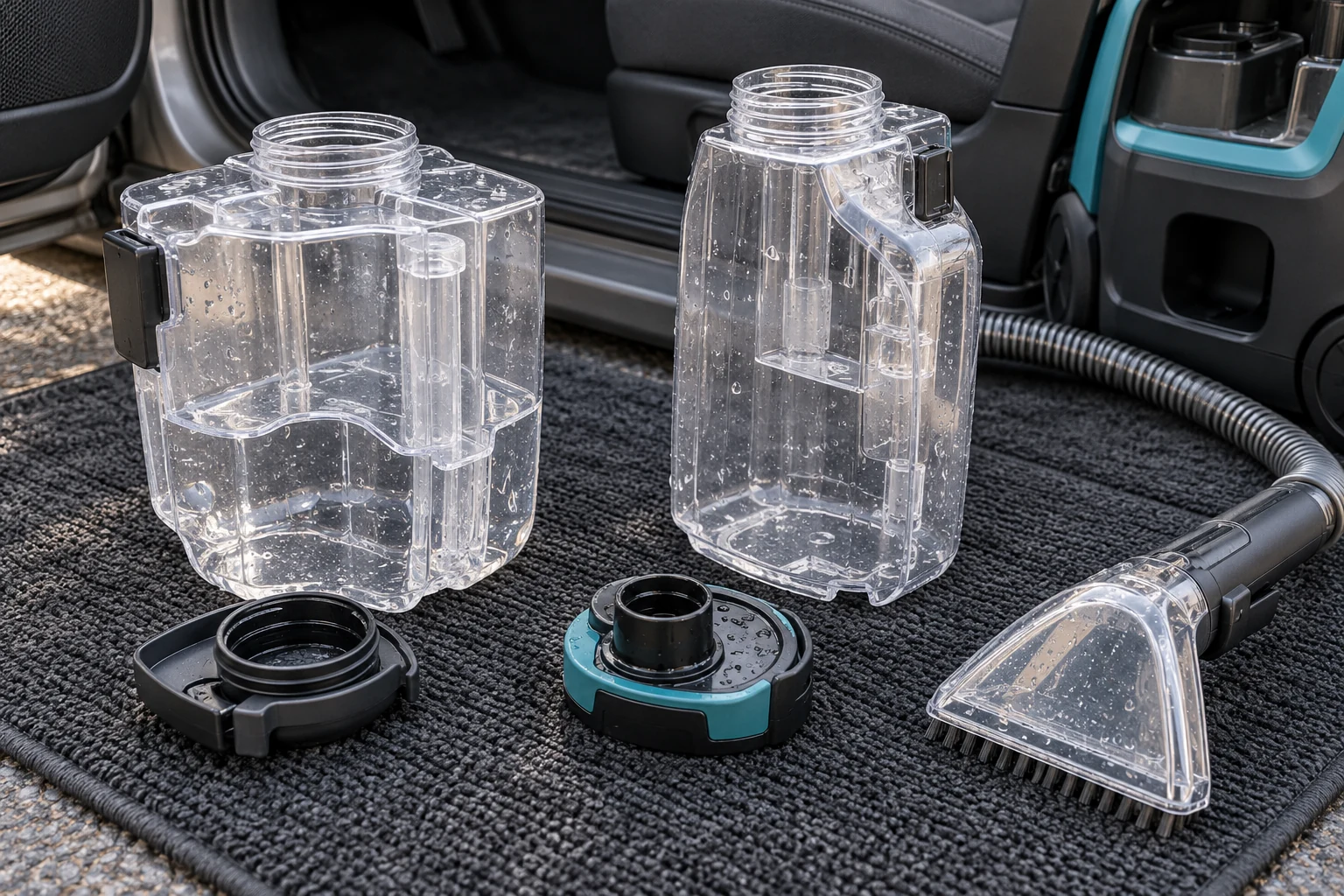
The selected listing labels the clean-water capacity as 40 ounces and the dirty-water capacity as 23 ounces. Keep those figures separate: a larger supply tank does not let the recovery tank exceed its own limit.
| Published specification | Selected FH14000V value | Buying consequence |
|---|---|---|
| Clean-water capacity | 40 ounces | Supply capacity, not a measured number of seats |
| Dirty-water capacity | 23 ounces | The recovery limit needs attention independently |
| Power cord | 15 feet | Check outlet-to-machine placement |
| Hose | 4.5 feet | Check machine-to-work-area reach |
| Wide Path Tool | 7 inches | Check access before assuming the head fits a narrow area |
Check the cord from the outlet to the machine, then the hose from the machine to the work area. Their combined length is not an unrestricted cleaning radius. The machine still needs a secure position and a safe cable route.
Hoover’s operating instructions tell the user to empty the recovery tank at its MAX line or when its sound changes. Plan to stop and check the tank rather than continuing until the clean tank is empty. No seat-per-tank estimate is supplied here because the amount of solution used depends on the actual job.
Formula Choice Changes How You Fill the Tank
Use the filling instructions for the exact approved formula. The linked manual has separate branches for HOOVER 2X concentrate and HOOVER ready-to-use premix; they are not interchangeable recipes.
| Formula type in the linked manual | Preparation branch | Mistake to avoid |
|---|---|---|
| HOOVER 2X concentrate | Water and measured concentrate, using the applicable machine markings and formula directions | Filling the tank with undiluted concentrate |
| HOOVER ready-to-use premix | Premixed solution to the applicable tank line | Automatically applying the concentrate’s dilution recipe |
Read the bottle before filling. If its directions, concentration, or suitability do not match the machine’s instructions, ask Hoover to identify the correct product and method before use. This review does not turn the manual’s chart into a universal recipe for different formulas or machines.
Folex, Lightning Fast, and Carpet Bomber do not become approved tank fluids because they appear in another car-care guide. The CleanSlate manual specifies HOOVER cleaning fluids intended for this appliance. A separate surface cleaner’s instructions are not evidence of permission to put it in the tank.
This is an operating requirement, not an independent legal conclusion about whether a particular warranty claim would be accepted.
Using and Cleaning It After a Car-Upholstery Job
Confirm the vehicle’s cleaning instructions before applying moisture. The CleanSlate manual’s W and S/W fabric guidance is a household-upholstery condition, not blanket permission to wet every car seat. It does not establish suitability for a headliner, seat belt, child restraint, screen, unknown coating, or an area with moisture-sensitive components.
The manual also calls for a hidden-area colorfastness check. Apply that check only after the vehicle’s care instructions allow the proposed method. If the fabric’s response is uncertain, stop rather than treating suction recovery as proof that the material or padding is safe.
The unit requires the voltage on its data plate and a properly grounded outlet; the linked manual specifies a nominal 120-volt circuit. Do not modify the supplied plug. Keep the connection dry and avoid pinching the cord in a door. This review does not provide an inverter-installation or electrical-adapter workaround.
Hose Rinsing Is One Part of Aftercare
The Hose Rinse Tool flushes the hose; it does not empty, rinse, or dry the recovery tank for you. The manual gives hose rinsing and recovery-tank cleaning separate procedures.
After the job:
- Follow the manual’s powered hose-rinse procedure with the rinse tool and securely fitted tanks.
- Switch the machine off and unplug it before removing parts for cleaning or maintenance.
- Empty and rinse the recovery tank and clean the removable tool parts as directed.
- Let the recovery tank air-dry before reinstalling it, and store the machine without solution left in its tanks.
The rinse procedure deliberately runs the machine to move water through the hose. That is different from handling detached parts for maintenance with the power disconnected. Keep both instructions together rather than shortening them to “rinse everything.”
Ventilation and recovered liquid do not establish a fixed drying time for upholstery. The seat surface and its underlying material still need to dry before normal use. If your schedule requires immediate seating, postpone wet cleaning or choose a dry method that the vehicle manufacturer permits.
Read the linked CleanSlate operating manual
Questions Before Buying the FH14000V
Does “Pet” Mean It Is Safe to Clean an Animal?
No. The linked manual says the extractor is not for grooming a pet. “Pet” describes the product’s marketed cleanup role; it does not authorize use on an animal.
Will a Bigger Clean Tank Let Me Finish the Whole Car?
The 40-ounce supply specification is not a whole-car coverage claim. The smaller recovery tank has its own limit, and the amount of solution a job uses is not fixed. Check that stopping to empty and refill is acceptable before buying for a larger project.
Can the Rinse Feature Replace Manual Cleanup?
No. The hose-rinse procedure leaves tank emptying, tank rinsing, tool cleaning, and drying as separate work. Choose it only if you can complete that aftercare rather than leaving recovered solution in the machine.
Is This the Right Choice for Crumbs or a Wet Floor Mat?
For loose dry crumbs, start with an appropriate dry vacuum. For a mat, first establish its material and permitted cleaning method; a wet mat or “carpet” label alone is not permission to use this extractor. The FH14000V review covers approved upholstery spot cleaning, not every interior surface.
What Should I Check Before First Use?
Match the machine’s complete model number to its instructions, check the supplied tools and formula, and review current manufacturer safety information for the actual unit. This article does not certify an individual machine’s serial-number or recall status.