How to Wash Microfiber Car Towels Without Mixing Up Care Rules
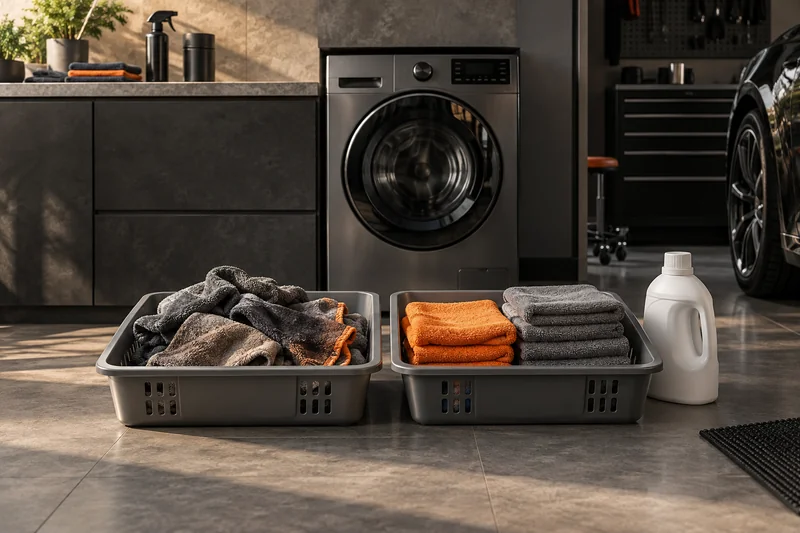
Sort microfiber car towels by their previous job, identify the care rules for the towels you own, and use a compatible detergent’s load directions. Then wash, dry, inspect, and store them for the next suitable task. Different towel makers specify different wash-water settings; a washer setting is not a dryer setting.
This guide compares published care instructions. It does not report a restoration test or guarantee that washing removes every contaminant. As an Amazon Associate, Hot Car Care earns from qualifying purchases. The optional product button opens an Amazon US search, not a verified offer.
Top 5 best microfiber towel detergents by use case
These products are ordered for the stated use cases. The list is documentary: it does not report measured performance or rank the whole market. Check the exact formula, surface and received directions before choosing.
How this shortlist is ordered
Order for this page: dedicated towel-laundry bottles before combined pad care or updated-formula branches.
How we order these choices- P&S Rags to Riches Microfiber Detergent, 32 ozBest for a microfiber-specific laundry detergent with a load-based process
- Chemical Guys Microfiber Wash CWS_201_16, 16 ozBest for a dedicated microfiber detergent in a named 16 oz bottle
- 3D Towel Kleen Microfiber Detergent, 1 gallonBest for laundering microfiber and permitted buffing pads with a low-foam detergent
- Griot's Garage Microfiber & Foam Pad Cleaner 11078, 35 ozBest for a cleaner documented for both microfiber laundering and foam-pad care
- Adam's Towel & Pad Revitalizer HD, 16 ozBest for pretreatment or in-wash care with the newer HD formulation
01Documented task fit
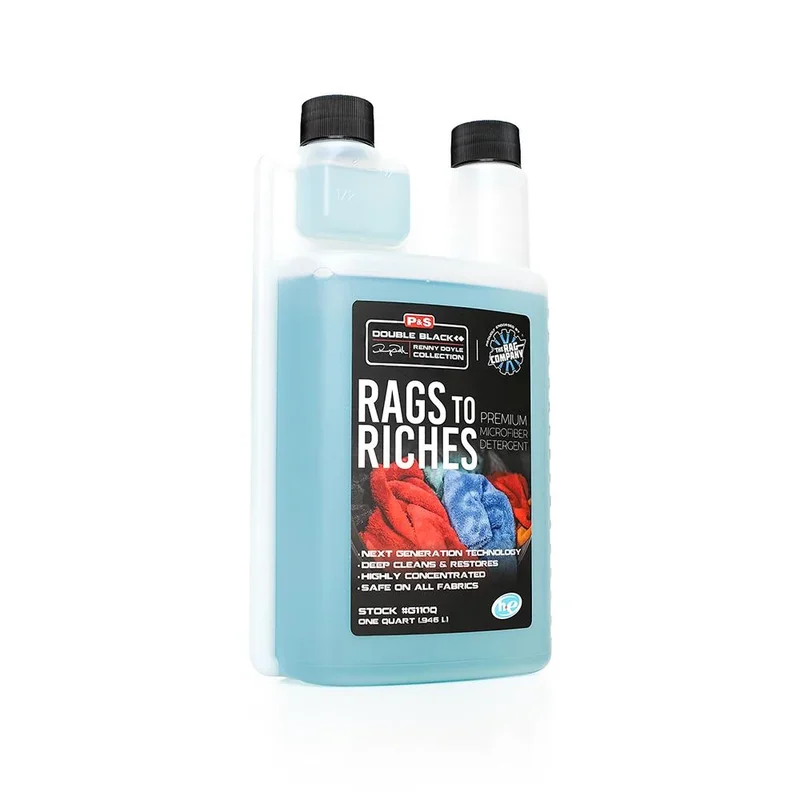
Best for a microfiber-specific laundry detergent with a load-based process
P&S Rags to Riches Microfiber Detergent, 32 oz
The current towel-care guide selects the 32 oz Rags to Riches detergent and separates its load instructions from the wash and drying limits of each towel.
Why this position: First as the towel-care guide's identified microfiber detergent with a load-based process. That starting role keeps towel heat limits separate from detergent dosing.
Check before choosing: A detergent dose does not establish a universal wash-water or dryer temperature. Sort towels by prior use, check the actual load and follow the towel's own care requirements.

02Documented task fit
Best for a dedicated microfiber detergent in a named 16 oz bottle
Chemical Guys Microfiber Wash CWS_201_16, 16 oz
Chemical Guys identifies CWS_201_16 as the 16 oz Microfiber Wash detergent. It is a laundering product for microfiber, rather than a car shampoo or a towel supplied ready for use.
Why this position: Second as another dedicated microfiber-laundry bottle with an exact 16-ounce item code. Its own dose and towel-care requirements must be matched, not inferred from car shampoo.
Check before choosing: Follow the received detergent dose and the actual towel's wash and drying limits. A cleaner's general microfiber claim does not override a towel maker's heat restriction or justify mixing heavily contaminated towels with glass towels.

03Documented task fit
Best for laundering microfiber and permitted buffing pads with a low-foam detergent
3D Towel Kleen Microfiber Detergent, 1 gallon
3D describes Towel Kleen as a laundry detergent for microfiber towels and microfiber, wool and foam pads. The maker also identifies a low-foam formula for high-efficiency and conventional washing machines, adding a machine-compatibility check to the choice.
Why this position: Third for the low-foam towel-and-pad laundry route when machine compatibility and a gallon format are useful. Lemon scent is a qualification, not a hidden fragrance-free claim.
Check before choosing: The manufacturer's page describes a lemon scent; do not call it fragrance-free. Match load directions, material care and rinsing, and do not treat advertised restoration of absorbency as a result independently measured here.

04Documented task fit
Best for a cleaner documented for both microfiber laundering and foam-pad care
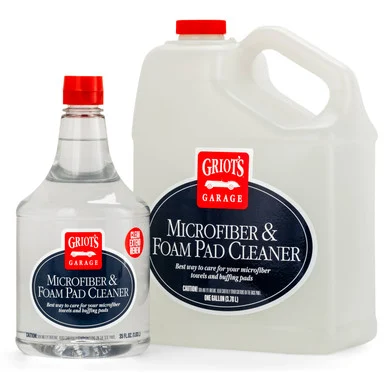
Griot's Garage Microfiber & Foam Pad Cleaner 11078, 35 oz
Griot's identifies item 11078 as Microfiber & Foam Pad Cleaner and lists a 35 oz size. Its two material roles provide an option when both towels and foam applicators need care, using their separate appropriate processes.
Why this position: Fourth where both microfiber and foam-pad care are required. The selected 35-ounce offer, sprayer and separate material processes add purchase checks.
Check before choosing: Check whether a sprayer is included in the selected offer and use the received label. Foam-pad cleaning instructions are not automatically the wash or dryer settings for every microfiber towel.
More product photos
05Documented task fit
Best for pretreatment or in-wash care with the newer HD formulation
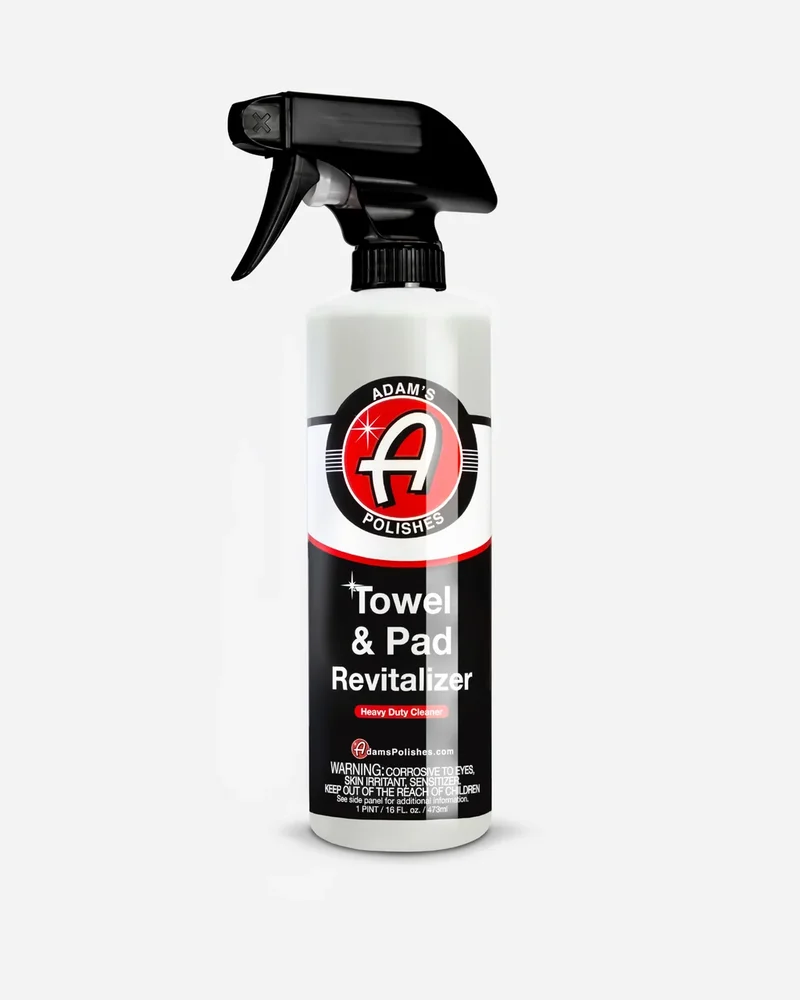
Adam's Towel & Pad Revitalizer HD, 16 oz
Adam's current Towel & Pad Revitalizer page lists a 16 oz option and describes pretreatment and in-wash roles. The older Microfiber Revitalizer & Brightener page directs buyers to this updated formula, so the exact label is a material buying check.
Why this position: Fifth for pretreatment or in-wash care with the newer HD formula. The documented replacement of the older product makes formula matching the key additional condition.
Check before choosing: Do not transfer the older formula's details to the HD bottle. The current page describes a natural citrus scent; follow both detergent directions and the towel or pad's care limits rather than assuming a universal wash-and-dry setting.
Sort by Previous Use Before Choosing a Wash Cycle
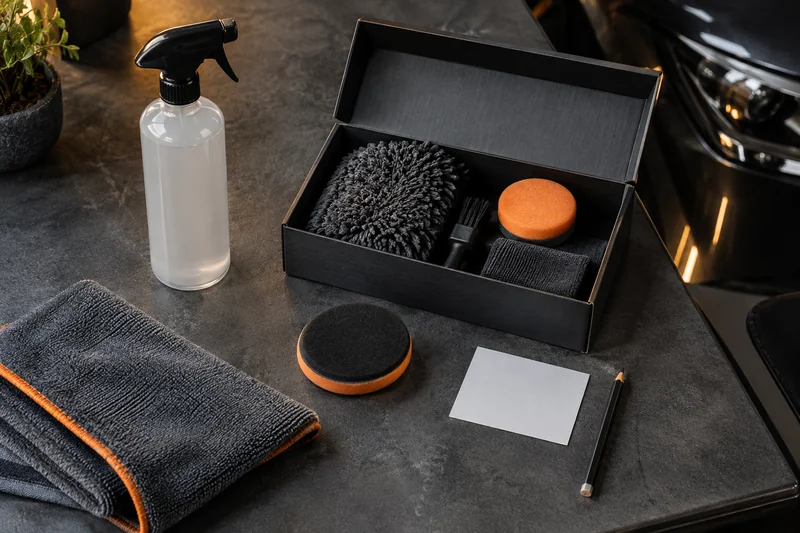
Keep a record of what each towel touched. Use separate piles for paint-drying work, glass finishing, wheel or oily work, and towels used with coatings or an unknown chemical. A color code can identify a job. It cannot tell you which residue is on the towel.
- Paint-drying towels: retain their identity for the next paint-care job.
- Glass towels: keep them apart from wax or polish residue; the Chemical Guys care guide makes this task distinction.
- Wheel or oily towels: do not combine a heavily contaminated batch with a paint-drying load.
- Coating or unknown-product towels: pause before routine laundry and identify the product’s instructions. Ordinary washing is not a documented cure for every hardened residue.
Keep microfiber separate from lint-shedding laundry where the maker directs. The two general guides below support separating towels by soil and previous use; they do not turn every automotive towel into one compatible mixed load.
Choose Instructions for the Towels You Actually Own
These directions cover different care systems. Choose the row that applies to your towels. For a mixed batch, every towel must permit the selected wash and drying settings. If the instructions do not establish a compatible combination, split the batch.
| Towel or care system | Sort before washing | Wash-water instruction | Detergent rule | Drying instruction | Scope limitation |
|---|---|---|---|---|---|
| TRC general microfiber guide | Separate microfiber, dirty work, and cleaner finishing tasks. | Warm or cold; avoid hot or sanitize cycles. | Liquid, compatible detergent; no fabric softener or bleach. | Low/no heat or hang dry; no dryer sheets. | General TRC guidance; normal/bulky cycle plus extra rinse. Verify the exact towel’s label. |
| Chemical Guys general microfiber guide | Separate heavy soil and jobs, including glass from wax/polish. | Warm/hot guidance; also says cold water can be used. | Recommends microfiber-specific detergent; no fabric softener. | Low heat/tumble dry; avoid high heat. | General brand guide; its capful examples are not a universal dose. |
| Chemical Guys Speed Mammoth, MIC530 | Wash separately. | Hot water in this product’s directions. | Specified Chemical Guys microfiber wash; follow its load directions. | Machine dry low; no softener or dryer sheets. | Specific MIC530 example, not a rule for TRC, PFM, or X2000 towels. |
TRC microfiber care guide Chemical Guys microfiber care guide Speed Mammoth MIC530 care instructions
Wash, Dry, and Store: A Practical Sequence
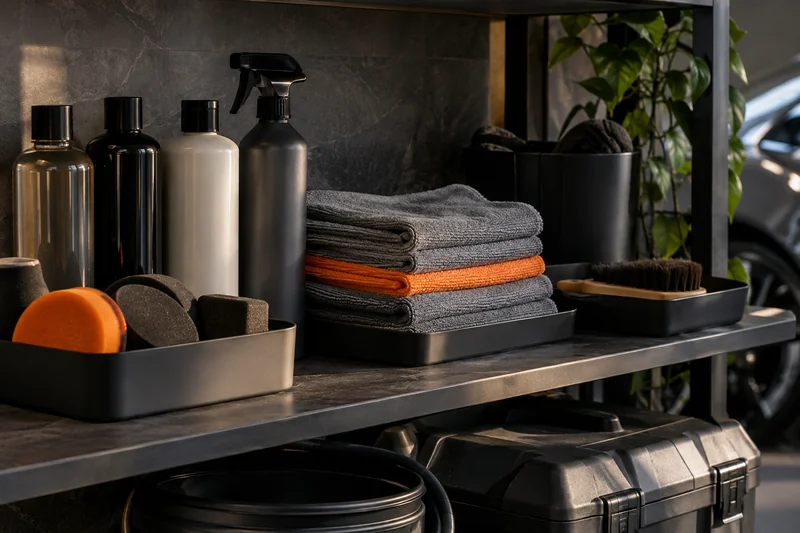
- Identify the towel and previous job. Read its label or exact maker page. Keep an unfamiliar towel separate until you know which directions apply. For a new towel, follow any first-wash instruction before use.
- Sort the load. Use the task piles above, then separate incompatible care settings within a pile. Do not let a shared color override different instructions.
- Choose the detergent and dose. Check that the towel permits it, then use that detergent’s directions for your load size and soil. Do not substitute a capful for an ounce or copy another product’s recipe.
- Set up the wash. Use the permitted wash-water setting and load your machine according to its instructions. For towels following TRC’s general guide, its washer sequence specifies a normal or bulky cycle with an extra rinse; check that your exact towel label and machine permit that branch. Keep other makers’ cycle and rinse rules separate. If the batch cannot follow one compatible routine, wash separate batches.
- Dry with the permitted setting. Read the drying rule separately from the wash-water rule. Keep the batch identifiable while it dries. Where hang drying is permitted, plan a place that keeps it away from the next dirty job.
- Inspect and store. Check for debris, hard areas, or an unresolved residue before assigning the towel back to its task. Store clean, dry towels in a clean container or bag, identified by use.
Leave a note beside each pile for the next wash: towel identity, previous product, allowed wash setting, allowed dry setting, and compatible detergent. Update the note when the product or towel changes.
When More Detergent Is Not the Answer
A stiff towel or a streaky next pass does not, by itself, identify the cause. Check the previous detailing product, whether the batch had room to move, the amount of detergent used, and the rinse instructions. Residue, crowding, or a dosing mismatch are possibilities to investigate, not a diagnosis made by this page.
Before washing again, check your recorded dose and settings against the detergent and towel directions. Correct a documented mismatch instead of automatically adding more cleaner. If those directions include a specific recovery routine, keep its quantities and scope intact; do not create a bucket-soak recipe from a dose that has no water volume.
When to Set a Towel Aside

Visible grit, a hard patch, or an unknown previous coating is a reason to keep the towel away from a delicate surface while you resolve its condition. Identify the earlier product and consult its relevant instructions. This article does not establish that a normal wash restores cured ceramic residue or an unknown solvent-contaminated towel.
The condition check may justify replacement. A routine wash alone does not. If a towel’s condition is suitable and its care directions can be followed, continuing to use it may be enough. If you need a different drying format, compare a replacement drying towel by dimensions and construction rather than a performance claim inferred from GSM.
Do You Need a Dedicated Microfiber Detergent?
Use the towel maker’s compatibility rule. TRC’s general guide allows a plain liquid detergent without added softener, scent, or dye as a fallback; Chemical Guys recommends a microfiber-specific cleaner in its guide. Those are separate instructions. An existing detergent may be sufficient where the exact towel’s directions permit it.
Microfiber Care Questions
Can I wash wheel towels with paint-drying towels?
Keep heavily contaminated wheel or oily towels separate from paint-drying work. Sort by the previous job and soil, then check compatible care rules within each group.
Should microfiber towels be washed in cold, warm, or hot water?
Use the setting allowed for that towel. TRC’s general guide and the MIC530 product directions differ. Do not average them into one temperature or transfer the MIC530 hot-water rule to another brand.
Can I use fabric softener or dryer sheets?
The cited care systems prohibit fabric softener; TRC and MIC530 also prohibit dryer sheets. Leave those products out where prohibited and check the exact towel label.
How much detergent should I add?
Use the exact detergent’s dose for your load and soil. A cap is not an established fluid-ounce measure, and a washing-machine dose does not supply the water volume for a soaking recipe.
Can every coating towel be restored by washing?
No such restoration is established here. Keep a towel with unidentified or hardened residue out of delicate-surface work while you check the earlier product’s instructions.
When should I replace a drying towel?
Assess its condition, previous use, and ability to follow its care routine. This guide does not establish a fixed replacement interval. If the towel is still suitable for its task, a newer option gives you no reason to replace it.
Sources and Limits
Manufacturer buttons above identify the source of each care system and the optional detergent example. No universal Fahrenheit setting, universal dose, underspecified 24–48-hour soak, disinfection promise, or guaranteed coating removal is supplied. Product labels may change; check the directions for the exact towel and bottle you own.
Cloth condition is also part of a glass-cleaning check; see the car window-cleaner guide when the next task is glass. Changing the cleaner does not answer an unresolved towel-care question.