All-Purpose Cleaners for Cars: Materials, Dilution & Use
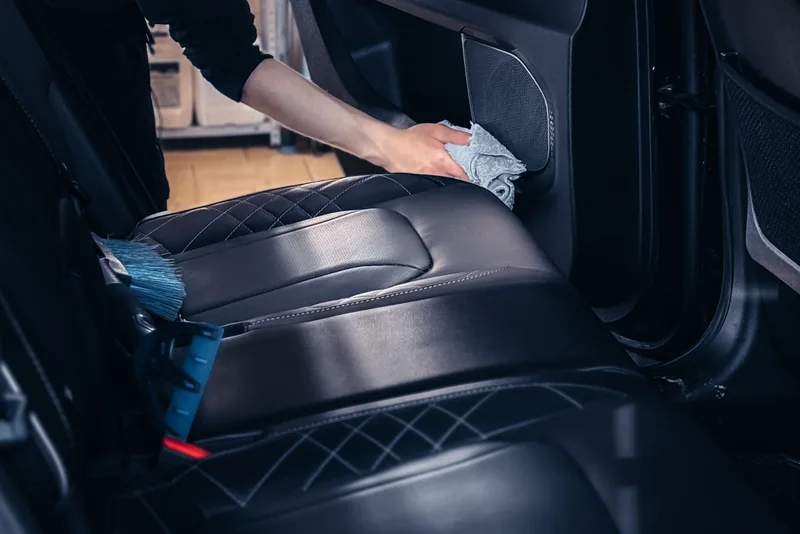
An all-purpose cleaner can be useful for a dirty door panel or removable floor mat. The same bottle may be wrong for the seat beside it, the touchscreen, or the painted body. Choose an APC by the material, the soil, and the instructions for your exact bottle. If the vehicle manual specifies a different method, use that method.
This guide compares documented applications of four products from the original roundup. It is based on manufacturer instructions and a vehicle-manual example, not a hands-on cleaning test. No winner or stain-removal score was measured. The guide does not claim that one product covers every car surface.
Best all-purpose cleaners for cars by use case
This guide compares documented product uses from manufacturer sources. We have not physically tested the selection or ranked the whole market. “Best for” identifies a conditional fit within these products. Check the vehicle or material instructions and exact package before choosing.
- Meguiar’s D10101 All Purpose Cleaner, US gallonBest for a professional concentrate where its handling and mixing requirements can be met
- Simple Green Original All-Purpose Cleaner, 64 fl ozBest for a permitted water-tolerant surface with a water-removal step
- 303 Marine & Recreation Multi-Surface Cleaner 30204, 32 fl ozBest for compatible water-safe materials with damp-cloth removal
- CAR GUYS Super Cleaner, 18 oz with clothBest for controlled cleaning near surfaces that need spray kept off them
- Gtechniq W2 Multi-Purpose CleanerBest for permitted non-leather heavy-soil cleaning with a water-rinse method
- Griot's Garage Citrus All Purpose Cleaner 10815, 35 ozBest for a permitted degreasing task with a citrus-based concentrate
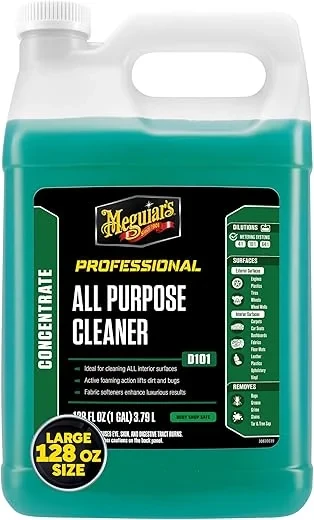
Best for a professional concentrate where its handling and mixing requirements can be met
Meguiar’s D10101 All Purpose Cleaner, US gallon
D101 uses task-specific dilution and removal instructions. The linked manufacturer label and SDS make preparation part of the product choice.
Check before choosing: It is not a default mild cabin cleaner. Follow the label’s protective-equipment and ventilation requirements and vehicle-specific exclusions.
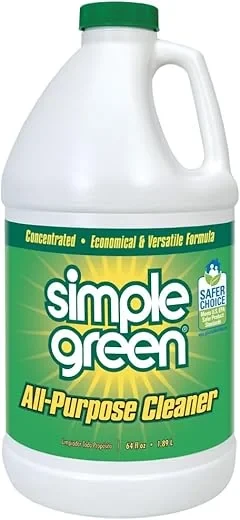
Best for a permitted water-tolerant surface with a water-removal step
Simple Green Original All-Purpose Cleaner, 64 fl oz
The original concentrate’s instructions call for task-specific preparation and a clean-water wipe or rinse after cleaning.
Check before choosing: The maker excludes leather and suede. Do not assume a household or fabric claim authorizes every vehicle material.

Best for compatible water-safe materials with damp-cloth removal
303 Marine & Recreation Multi-Surface Cleaner 30204, 32 fl oz
Gold Eagle’s method uses the water-safe-material decision and a damp cloth to remove cleaner; fabric then needs to dry.
Check before choosing: No dilution recipe is invented here. Check the exact material and keep liquid away from excluded electronics or restraint components.
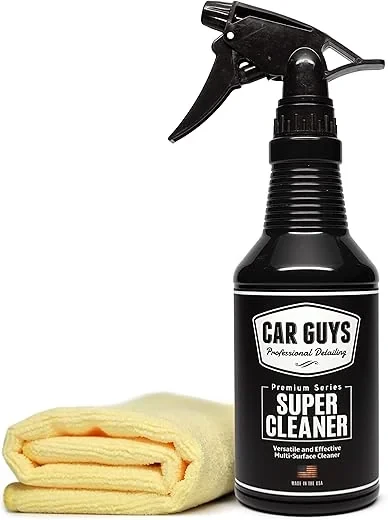
Best for controlled cleaning near surfaces that need spray kept off them
CAR GUYS Super Cleaner, 18 oz with cloth
The reviewed ready-to-use bottle can be applied by the permitted cloth method, helping control liquid near excluded cabin areas.
Check before choosing: Keep it off glass and displays. Do not allow cleaner to dry on the treated area or substitute it for a protectant.
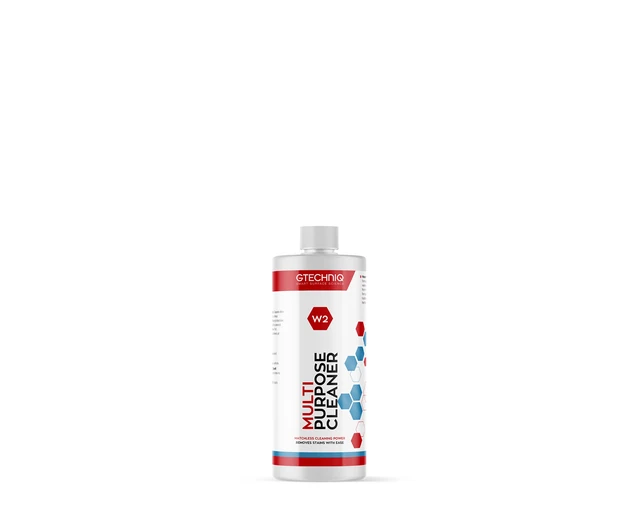
Best for permitted non-leather heavy-soil cleaning with a water-rinse method
Gtechniq W2 Multi-Purpose Cleaner
Gtechniq gives W2 task-dependent dilution and a water-rinse step, adding a distinct concentrate for an approved heavier-cleaning job.
Check before choosing: W2 is not for leather, routine maintenance or ceramic-coated vehicles. Follow its gloves, sunlight and rinsing instructions; do not use it where the material cannot tolerate that process.
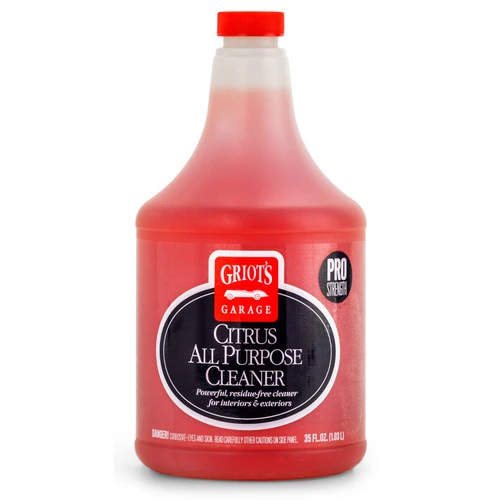
Best for a permitted degreasing task with a citrus-based concentrate
Griot's Garage Citrus All Purpose Cleaner 10815, 35 oz
Griot's identifies 10815 as a nonfoaming concentrate combining alkaline degreasing agents with d-Limonene. Its documented engine, tire and wheel-well roles give the citrus formula a defined heavier-cleaning use.
Check before choosing: Choose the 35 oz bottle, not the gallon or Multi-Purpose Citrus Cleaner. Use the exact label's preparation and removal instructions; no old dilution ratio is assumed here. This is not a default mild cabin cleaner.
Start with the surface, not the stain
Find the care instructions for the particular part you want to clean. A door trim panel may combine hard plastic, a soft coating, fabric, and switches. Approval for one of those materials does not cover the adjacent ones. Where the finish is unidentified, ask the vehicle or material manufacturer before applying a chemical.
| Surface or job | Check before choosing an APC | Decision |
|---|---|---|
| Hard interior trim | Identify the coating and read the vehicle’s cleaning instructions. | Use an APC only when both the part’s care method and the cleaner’s label permit it. Keep liquid out of switches and seams. |
| Leather, suede, or synthetic seats | Confirm the actual seat material; leather-looking upholstery is not enough. | Follow the seat instructions. Simple Green’s original All-Purpose Cleaner excludes leather and suede. |
| Carpet or fabric | Check the textile’s care method, colorfastness instructions, and how cleaner will be removed. | A label’s carpet application does not approve every headliner, seat, or extractor. Avoid saturating the assembly. |
| Screen, instrument lens, or glass | Find the display or glass-specific method. | Keep general APC spray away. CAR GUYS excludes glass and delicate instrument-panel screens. |
| Seat belt or its mechanism | Use the vehicle’s restraint-care instructions. | Do not borrow an upholstery-cleaning recipe. Keep water and cleaners out of the mechanism. |
| Paint, wheels, or engine grime | Identify the finish and the particular exterior task. | Choose a method approved for that task. An interior APC claim does not approve a body wash or wheel treatment. |
A vehicle manual can narrow a cleaner’s broad claim
The US Tesla Model 3 cleaning instructions illustrate the distinction. They specify warm water and mild soap on a soft cloth for spills on vegan and textile seats, with drying afterward, and discourage other cleaning agents and protectants. The touchscreen has a separate monitor-cloth method without cleaners. Seat belts must not be cleaned with detergent or chemical agents. Heavily soiled carpet, in contrast, may use diluted upholstery cleaner without over-wetting.
For another vehicle, read its own manual’s section for the part concerned; the Model 3 instructions do not establish its cleaning method. A hidden-area test is an additional check for a permitted product; it does not cancel an explicit material exclusion.
Four bottles with different preparation and removal methods
The products below are examples with identifiable packaging and published directions. They are not ranked. A concentrate requires measuring and following the specified preparation. A prepared spray can avoid that mixing step. Check upholstery compatibility separately; the format alone does not establish it.
Some product links are affiliate links; HotCarCare may earn a commission. Compare the displayed size, formulation, and included items with the description before ordering. Listing variants and package artwork can change; no price or stock claim is made here.
| Product and package | Preparation | Removal step and limit |
|---|---|---|
| Meguiar’s D10101, one US gallon | Professional-use concentrate; follow its application-specific label. | The interior method absorbs excess with a fresh towel. The removable-mat method has separate rinsing and drying instructions. |
| Simple Green original All-Purpose Cleaner, 64 fl oz | Concentrate; match the dilution to the bottle’s labeled task. | Rinse or wipe with clean water. Leather and suede are excluded. |
| 303 Marine & Recreation Multi-Surface Cleaner, 30204, 32 fl oz | The published spray directions give no mixing ratio. | Remove cleaner and soil with a damp cloth, rinsing the cloth as needed. The fabric must be water-safe. |
| CAR GUYS Super Cleaner, 18 oz kit with cloth | Use the published spray method; no dilution recipe is provided. | Wipe dirty suds away with a separate clean towel. Do not use on glass or delicate instrument screens. |
Meguiar’s D10101: a professional concentrate

Meguiar’s current D101 product page identifies D10101 as the one-gallon package. Its US secondary-bottle label is marked for professional use and separates medium, heavy, and extractor applications. Do not use an extractor instruction as a spray-on seat recipe.
For its permitted interior application, the label calls for a colorfastness check, properly diluted cleaner, agitation when needed, and a fresh towel to absorb excess. A removable floor mat has a different wet-cleaning procedure. The September 14, 2026 US SDS classifies the concentrate as corrosive and requires protective equipment and ventilation. Read its handling instructions before measuring; this is not a default mild household cleaner.
Check the D10101 gallon listing, matching the model and package rather than relying on the product-family name.
Simple Green: original concentrate with an explicit leather exclusion

The US original All-Purpose Cleaner instructions require a concealed-area check and clean-water removal after cleaning. They exclude leather and suede, among other materials. A broader automotive-cleaning article does not remove that exclusion. Do not put this product on a leather seat because another cleaner in the comparison advertises leather use.
For a bottle-identity check, the US Simple Green SDS, version 13000-25A, issued October 1, 2025, lists UPC 043318008139 for the 64 fl oz package and notes a formulation change. Match your bottle to its own current document; an older label may describe a different revision. The SDS limits use to water-tolerant surfaces and excludes surfaces where cleaner cannot be rinsed away. Together with the product page’s damp-wipe option, that means planning a clean-water removal step, not letting residue dry in place.
A damp cloth can be the water-removal method; that does not mean leaving the cleaner to dry on the part. Check that the permitted surface can be wiped or rinsed as instructed. If you cannot remove the cleaner without wetting an assembly that must stay dry, choose another manufacturer-approved method.
Check the original 64 fl oz concentrate listing. A different scent or professional product needs its own instructions.
303: water-safe material and a damp-cloth finish

Gold Eagle’s 303 instructions describe cleaning water-safe materials, including fabrics. After working on a permitted stain with a cloth or suitable brush, remove both the stain and excess cleaner with a damp cloth; rinse that cloth in clean water as needed. Let fabric dry. The brand’s other cleaners are separate products, and this page does not supply a concentrate-mixing recipe.
Check the 303 30204, 32 fl oz listing. Water-safe fabric is still subject to its own care instructions.
CAR GUYS: keep the spray away from glass and displays

The Super Cleaner directions separate light wiping from heavier cleaning. For light soil on a permitted surface, apply to a cloth, wipe, and use the clean side to finish. For heavier soil, remove dirty suds with a separate clean towel. Work in small sections and do not let the cleaner dry on its own.
The maker excludes glass and delicate instrument-panel screens. Near those areas, apply to the cloth to control overspray. Its broad leather and interior claims still need the vehicle’s material-specific permission; they do not override the seat restrictions described above.
Check the 18 oz Super Cleaner kit listing, including whether the cloth is supplied.
Read dilution as a product-specific instruction
Before mixing a concentrate, identify the product code, the market’s label, the intended application, and the ratio’s stated order. A ratio copied from another APC, or from a different machine or foamer method, is not a substitute. If the instructions do not make the water-to-cleaner order clear, ask the maker before measuring.
D101’s US secondary label lists different ratios for heavy, medium, and extractor work. Those numbers belong to D101 and those labeled modes. This guide does not turn them into a universal recipe. Likewise, a prepared 303 or CAR GUYS spray should not receive an invented dilution just because the table also contains concentrates.
Use clean measuring equipment and the container specified by the label. Keep the identity and chosen dilution on the working bottle, and retain the original instructions. Do not mix cleaners together. Simple Green’s US SDS specifically warns against mixing with other chemicals; adding acid or another household cleaner is not a way to improve the APC.
A controlled sequence for a permitted area
- Remove loose soil. Vacuum or use the part’s approved dry-cleaning method first. Decide whether the remaining problem is ordinary soil or requires a separate stain-specific method.
- Prepare the exact cleaner. Follow its label for dilution, ventilation, handling protection, and application. Have the specified clean-water or towel-removal supplies ready before wetting the part.
- Check a concealed area. Follow the label’s test method on the permitted material and assess it after drying. Stop if the test changes the color or finish. An excluded material does not become eligible through a small test.
- Control the liquid. Work on a small area. Where the directions allow cloth application, use it to avoid adjacent screens or controls. Do not flood seams, perforations, headliner layers, or restraint mechanisms.
- Remove soil and cleaner. Use the bottle’s removal method in the comparison above. Change or rinse the cloth as instructed rather than spreading the dirty liquid across another panel.
- Dry and assess. Allow the part to dry by its approved method before judging the result. If residue remains, follow the stated removal instructions; do not automatically increase concentration. If cleaning fails or the finish changes, stop and ask the material maker about the next method.
For detailed material decisions, use the separate car interior cleaner guide, carpet cleaner guide, and leather cleaner guide. A cleaning schedule follows the actual soil and the vehicle’s care instructions; the evidence here does not establish a universal monthly APC treatment.
Questions raised by the original discussion
Is soap and water enough?
It can be the specified method. The Model 3 seat example above uses mild soap and warm water rather than a general APC. Start with the vehicle’s permitted approach, not a stronger product simply because a stain is noticeable. If grease remains, identify the affected material and look for an approved method for that soil; reader praise is not a controlled comparison of cleaners.
Can the same 303 bottle clean outdoor furniture?
Gold Eagle lists water-safe fabrics for outdoor use. Check the furniture’s care instructions, and contact its fabric maker about mildew or special cleaning problems. One reader’s patio-chair experience does not establish compatibility with another cushion or seat.
Is Armor All Original Protectant an APC alternative?
Armor All describes Original Protectant as a product for cleaning, shine, and protection of specified interior vinyl, rubber, and plastic. That role differs from selecting a soil-removal APC. The maker excludes floors and vehicle controls such as pedals and steering wheels, along with several other materials. Follow the vehicle’s finish instructions before adding protection. This guide does not estimate how long it will keep a dash looking new.
What happened to the other products in the old list?
Griot’s Citrus All Purpose Cleaner, item 10815, is a concentrate with alkaline degreasing components and citrus solvent. Its current product page does not provide the old article’s general mixing recipe, so that recipe is not repeated here. It is also distinct from the brand’s Multi-Purpose Citrus Cleaner.
The old Turtle Wax entry names an OXY two-can bundle, while its accompanying photo shows Interior 1 cans. That mismatch is not a reliable basis for a current purchase recommendation. Zep’s heavy-duty foaming citrus degreaser belongs to a task-specific degreasing decision, not a blanket interior recommendation. Acid wheel-cleaner entries and household squeegees are outside this APC comparison. These distinctions do not imply that the products are defective.
The original reader comments remain individual experiences and questions. They are not the publisher’s test data, and an order placed for a protectant is not evidence of its long-term performance. Choose the bottle only after the surface and removal method are clear.