Car Leather Cleaners: Choose by Material and Care Method

Check the seat material and your vehicle’s care instructions before choosing a car leather cleaner. Then decide whether the job calls for a cleaner, an optional conditioner, or a combined product. A bottle advertised for leather can still conflict with the instructions for your seats.
The original comparison table below compares four specific options by their documented use and removal method. It is based on manufacturer instructions and vehicle manuals reviewed on October 7, 2026. We have not tested their cleaning performance, compared prices, or measured protection life. Purchase links are affiliate links; Hot Car Care may earn a commission.
Top 6 best leather cleaning and optional care products by use case
These products are ordered for the stated use cases. The list is documentary: it does not report measured performance or rank the whole market. Check the exact formula, surface and received directions before choosing.
How this shortlist is ordered
Order for this page: separate leather cleaners before shared cabin cleaners, combined care and a conditioner-only option.
How we order these choices- Leather Honey Leather Cleaner, 8 oz ready-to-useBest for a separate ready-to-use cleaning step for permitted leather
- Gtechniq L2 Foaming Leather Cleaner, 200 mLBest for a foam cleaner applied with damp microfiber on a permitted seat finish
- Lexol All Leather Cleaner bottle, 16.9 oz / 500 mLBest for a separate foaming clean with a bottled leather cleaner
- CAR GUYS Super Cleaner, 18 oz with clothBest for a cleaner shared with other permitted cabin materials
- 303 Leather 3-in-1 Complete Care 30218CSR, 16 fl ozBest for combined care where a finished-leather treatment is allowed
- Bick 4 Leather Conditioner, 8 fl ozBest for an optional conditioner after approved cleaning of suitable smooth leather
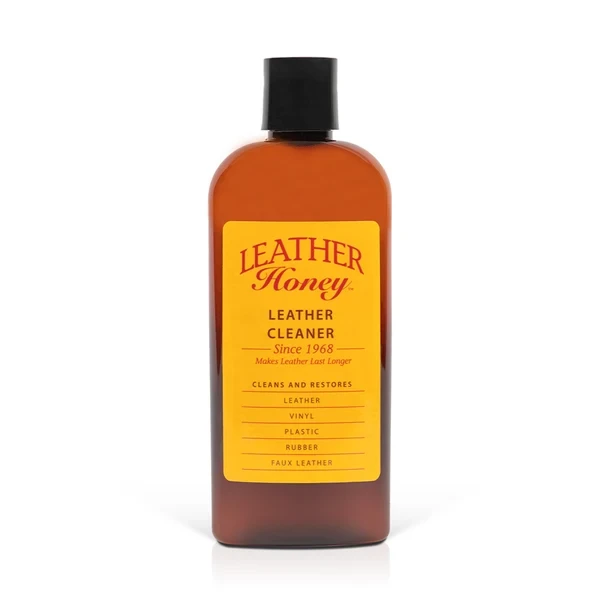
01Documented task fit
Best for a separate ready-to-use cleaning step for permitted leather
Leather Honey Leather Cleaner, 8 oz ready-to-use
This is the reviewed 8 oz cleaner, distinct from the concentrate and UV spray. The manufacturer describes a fragrance-free, pH-balanced formula.
Why this position: First as a separately identified ready-to-use leather cleaner, with a hidden-area and finish check. Its cleaning-only role answers the main task before optional conditioning.
Check before choosing: Do not infer an exact pH or universal seat compatibility. Exclude suede and follow the finish instructions, hidden-area test and cloth-removal method.
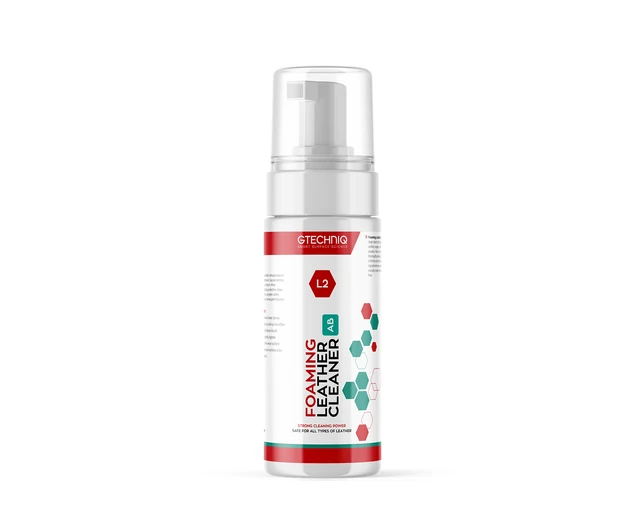
02Documented task fit
Best for a foam cleaner applied with damp microfiber on a permitted seat finish
Gtechniq L2 Foaming Leather Cleaner, 200 mL
Gtechniq’s L2 method allows damp-microfiber application followed by a clean, dry microfiber wipe, adding a foam format to the cleaning choices.
Why this position: Second as another dedicated leather-cleaning format, using damp microfiber and a dry wipe. Its foam process offers a defined alternative to the first ready-to-use cleaner.
Check before choosing: Check the seat’s finish and vehicle instructions before use and wear the specified gloves. Do not transfer broad leather claims to suede, coated seats or cloth-only materials.
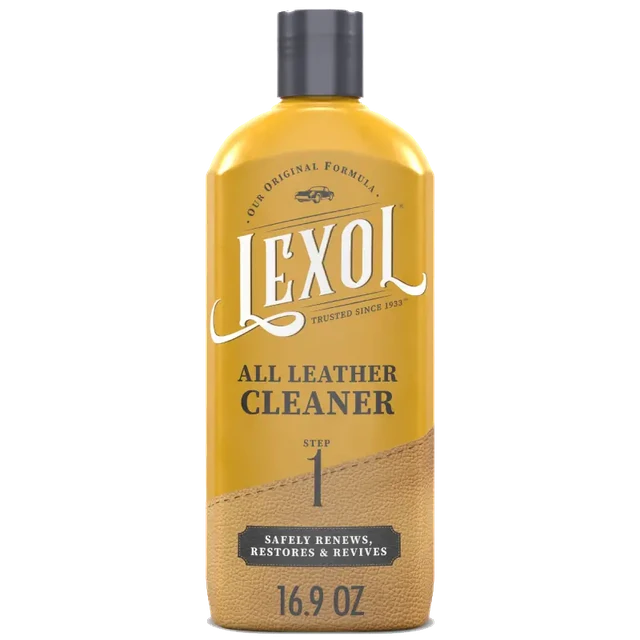
03Documented task fit
Best for a separate foaming clean with a bottled leather cleaner
Lexol All Leather Cleaner bottle, 16.9 oz / 500 mL
Lexol identifies this 500 mL bottle as a pH-balanced cleaner with foaming action and no silicones, alcohols or waxes. It is a cleaner-only bottle, distinct from the brand's conditioner and cleaner-conditioner kits.
Why this position: Third as a separately identified cleaner-only bottle with foaming action. This keeps the cleaning decision ahead of the brand's different conditioner and combined kits.
Check before choosing: Use only on a leather finish whose care instructions allow this formula. The product name does not approve suede or every coated seat. Conditioning is a separate, optional decision governed by the vehicle, not an automatic next step.
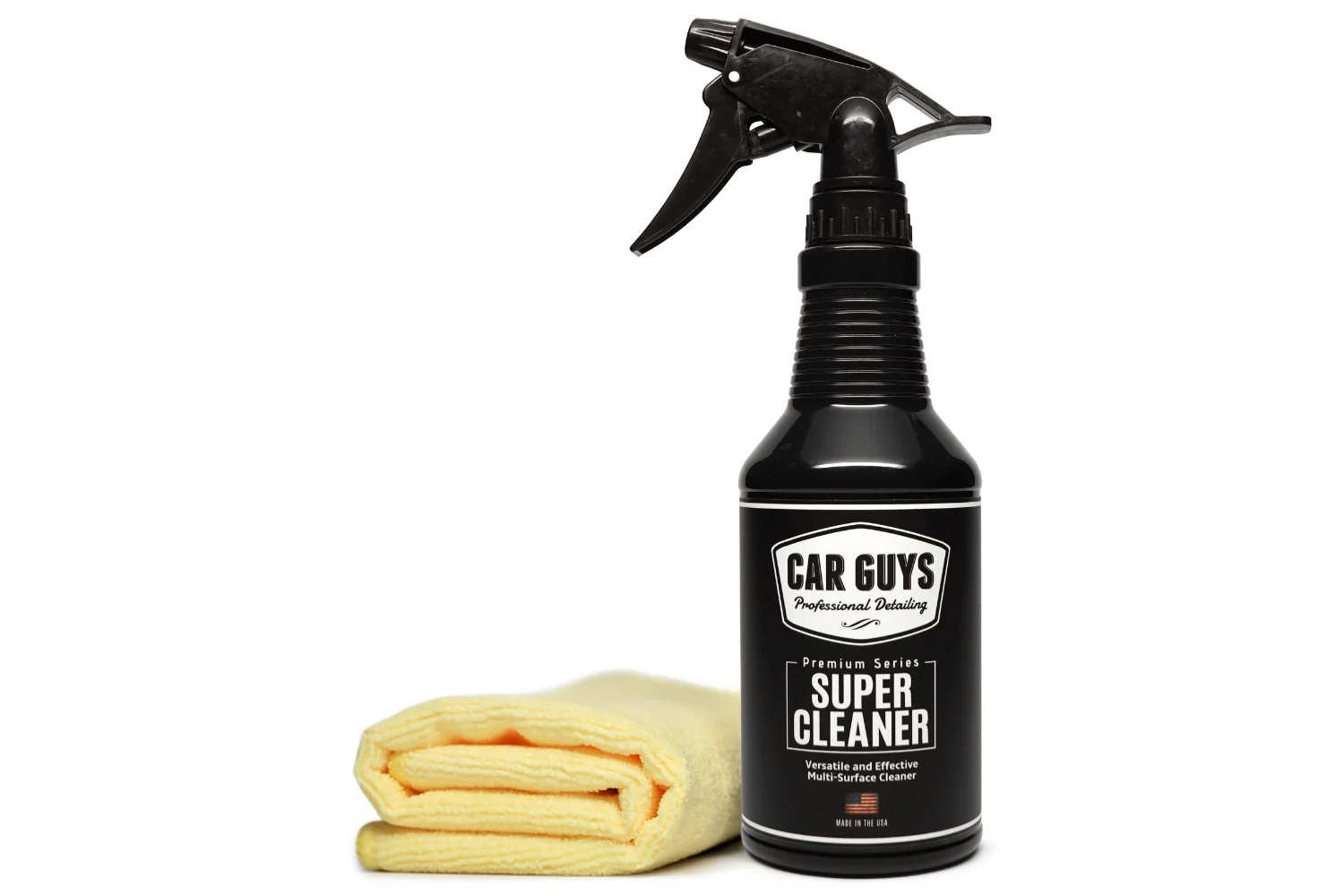
04Documented task fit
Best for a cleaner shared with other permitted cabin materials
CAR GUYS Super Cleaner, 18 oz with cloth
The existing Super Cleaner offer provides the same cleaning formula reviewed in the interior guide; CAR GUYS separates it from a protection step.
Why this position: Fourth as a shared cabin cleaner only where the particular seat permits it. Its wider cabin role and glass/display exclusions make vehicle-specific permission especially important.
Check before choosing: Use it on the seat only if the vehicle permits it. Exclude glass and screens, control liquid around seams and remove it before it dries.

05Documented task fit
Best for combined care where a finished-leather treatment is allowed
303 Leather 3-in-1 Complete Care 30218CSR, 16 fl oz
Gold Eagle identifies this formula for finished leather and vinyl with combined cleaning, conditioning and protection.
Why this position: Fifth for finished leather where combined cleaning, conditioning and protection are actually allowed. It follows cleaning-only choices because a vehicle may forbid the extra treatment.
Check before choosing: Exclude unfinished leather, suede, fabric and flooring. A vehicle may forbid conditioning; follow the damp-removal and immediate-drying directions.

06Documented task fit
Best for an optional conditioner after approved cleaning of suitable smooth leather
Bick 4 Leather Conditioner, 8 fl oz
Bick 4 is a conditioner with a separate post-cleaning role, rather than this selection’s heavy-soil cleaner.
Why this position: Sixth as an optional conditioner after cleaning, not as a sixth dirt remover. Its place preserves that separate care decision and the excluded napped finishes.
Check before choosing: Exclude suede, roughout, distressed and napped finishes. Vehicle permission and a dried hidden-area check come first; it does not repair peeling or cracks.
Check the seat material before choosing a bottle
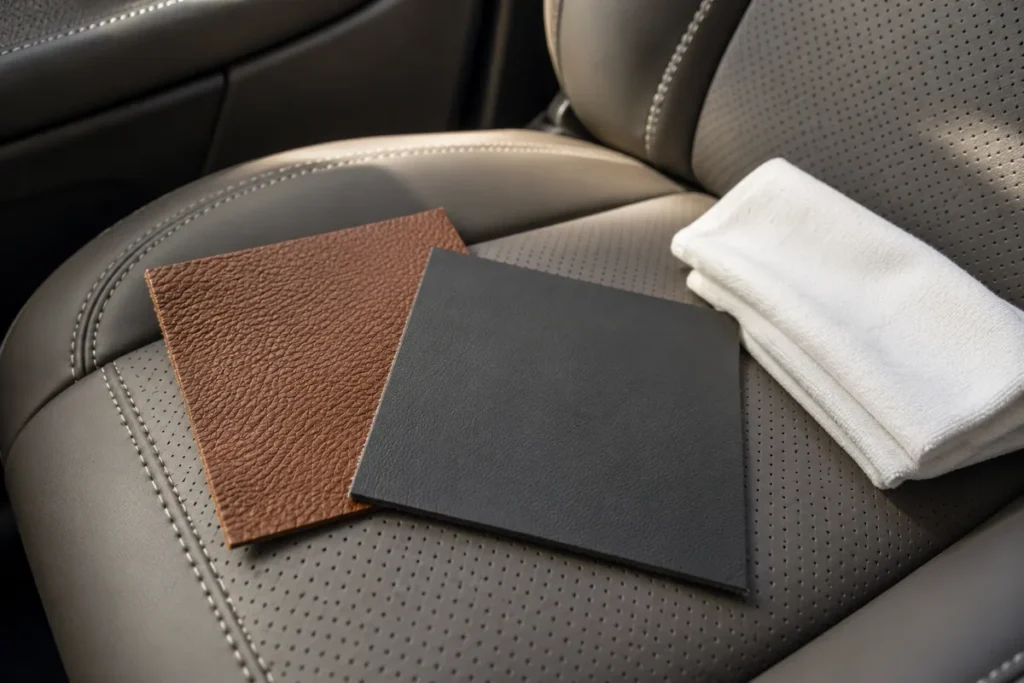
Look up the care section for your model year and trim. Confirm whether the surface is finished leather, synthetic upholstery, suede, or another material, and check whether the manufacturer permits a separate conditioner. If you cannot identify the material or finish, ask the vehicle manufacturer or an upholstery specialist before applying one of these products.
The current U.S. Tesla Model 3 manual recommends warm water and mild soap on a soft cloth for general spills on vegan leather seats, followed by a dry, lint-free cloth. It does not recommend other cleaners, disinfectants, conditioners, or protectants and prohibits spraying the seat directly. An aftermarket product’s claim that it works on synthetic leather does not override those instructions.
Even two trims can need different care. The 2020 Ford F-150 manual separates ordinary leather seats from King Ranch seats. The ordinary-seat instructions exclude oil- or petroleum-based and silicone-containing conditioners; the King Ranch section gives its own conditioning procedure. These examples explain why vehicle and trim matter. They do not establish approval for any bottle below.
A hidden-area test comes after the compatibility check. It cannot make a prohibited product appropriate. For suede, roughout, distressed, napped, unsealed, or unidentified upholstery, use material-specific guidance rather than this comparison of finished-seat care options.
Compare the product role and exact package
Each option remains conditional on your vehicle’s instructions. Sizes refer to the specific package reviewed, not every variant sold under the brand name. Follow the label on the bottle you receive if packaging or directions have changed.
| Product and package | Role | Documented scope | Limit or removal step |
|---|---|---|---|
| Leather Honey Cleaner, 8 oz ready-to-use | Separate cleaner | Manufacturer lists leather, faux leather, and vinyl. | Not suede; wipe with a lint-free cloth and allow to dry. |
| CAR GUYS Super Cleaner, 18 oz | Cleaner for multiple interior surfaces | Manufacturer lists leather and synthetic leather among its uses. | No protection or gloss; exclude glass and delicate instrument-panel screens. |
| 303 Leather 3-in-1 Complete Care, 16 fl oz | Cleaner, conditioner, and protectant | Finished leather and vinyl | Not unfinished leather, suede, fabric, or flooring; remove excess and dry. |
| Bick 4, 8 fl oz | Optional conditioning step | Smooth, finished leather, including car interiors | Not suede, roughout, distressed, or napped leather; allow to dry, then buff. |
Product directions and limits
Leather Honey: separate cleaner, 8 oz ready-to-use
Leather Honey links its 8 oz ready-to-use cleaner to Amazon ASIN B00U7HEUEI. It is different from the brand’s 4 oz concentrate and 16 oz UV-protectant spray. Do not borrow their dilution instructions or protection claims for this bottle.
Leather Honey describes this cleaner as fragrance-free and pH-balanced. That wording does not supply an exact pH value or prove compatibility with every seat coating. Its directions call for a concealed-area test and drying before continuing, then a small amount on a lint-free cloth, gentle wiping, and drying. Conditioning is a separate decision, subject to your vehicle’s care instructions.
For a fuller formulation decision, our Leather Honey Cleaner review compares the 8oz Ready to Use bottle with the concentrate and UV spray and keeps their preparation and protection claims separate.
Check the Leather Honey 8 oz listing
CAR GUYS: a cleaner shared with the wider interior
The reviewed 18 oz package includes a microfiber cloth. For light soil or work near excluded surfaces, the manufacturer directs application to the cloth, then wiping and buffing dry. Work in small sections and do not let the cleaner dry by itself. The manufacturer FAQ identifies it as a cleaner that adds neither protection nor gloss.
Choose it only if the seat instructions permit its use. For other interior materials, see our car interior cleaner comparison; those other uses do not establish permission for your seats.
Check the CAR GUYS 18 oz listing
303: combined care for finished leather and vinyl

The manufacturer purchase link identifies the 16 fl oz listing, ASIN B0185PU34O, labeled 30218CSR; packaging may vary. 303’s directions require a hidden-area colorfastness test. Do not use it if discoloration occurs. Wipe dry with a clean microfiber towel; if excess remains, remove it with a damp towel and immediately dry the surface.
303 markets this formula as cleaning, conditioning, and providing UV protection for finished leather and vinyl. Its suggested reapplication interval of 30–45 days or as needed is maintenance guidance, not a measured promise of protection for that long. A vehicle that prohibits conditioner or protectant needs a different care route.
Check the 303 16 fl oz listing
Bick 4: optional conditioning after cleaning

Bickmore’s 8 oz product page covers smooth, finished leather and specifically lists car interiors. Although the listing also describes cleaning, its directions call for separate cleaning when leather is very dirty. Use it as an optional conditioning step after cleaning, when your vehicle permits it; it is not the first answer to heavy soil.
Bickmore states that Bick 4 does not darken finished leather, but still requires a hidden-area colorfastness test. That claim is not a guarantee for your particular finish. Shake the bottle, apply with a cloth, allow it to dry, and buff, following the current label and vehicle instructions.
Plan cleaning and removal before starting
- Confirm permission. Match the material, model year, trim, and care instructions. Record any product or tool exclusions. If the manual and bottle disagree, stop and resolve that conflict before use.
- Match the bottle. Check the exact product, ready-to-use or concentrate form, volume, and directions. A shared brand name does not make a spray, concentrate, conditioner, and kit interchangeable.
- Read the removal step. Have the specified clean cloths ready. Check whether the formula must be wiped dry, removed with a damp cloth, left to dry, or buffed. Follow only the method for that bottle and permitted surface.
- Test as directed. Choose a concealed area, use the prescribed amount and removal method, and wait through the stated drying or checking step before treating a visible area. Stop if discoloration occurs or the result fails the label’s test.
- Assess the cleaned surface. If soil remains, consult the permitted method for that stain rather than increasing strength, combining products, or adding a conditioner automatically. For a damaged or peeling surface, obtain material-specific repair advice.
For perforated or ventilated seats, check the vehicle’s directions for both liquid application and tools. This guide does not prescribe spraying into perforations or a universal scrubbing brush. Keep seat care separate from carpet shampooing; carpet-cleaner instructions do not establish leather compatibility.
For the cleaning sequence itself, follow our leather-seat cleaning guide: qualify the material, control cloth application and residue, then complete drying and assessment before deciding on any optional conditioning.
Check that both steps are appropriate before choosing a two-bottle kit. Check the cleaner and conditioner separately, along with any included brush or applicator. Having both bottles does not mean every cleaning session needs conditioner. Our car cleaning kit guide explains how to check the contents against the jobs you actually plan to do.
If the separately permitted conditioning option you are considering is Leather Honey, our Leather Honey Conditioner review checks the genuine-leather finish, excluded materials, absorption wait and excess-removal work before choosing the 8oz bottle.
Leather care questions
What should I use on synthetic or vegan leather?
Start with the vehicle’s instructions for that upholstery. Manufacturer permission for faux leather on a bottle is only one part of the check. The Model 3 example above shows why a synthetic-seat label alone is insufficient.
Does every leather cleaner need a conditioner afterward?
No. Decide from the vehicle’s care instructions and the selected product’s role. A separate cleaner, a conditioner, and a combined cleaner-conditioner are different steps. Do not add another layer of treatment simply because a kit includes it.
Can I use saddle soap on car seats?
Do not infer permission from its use on saddles or boots. Fiebing’s saddle soap page describes smooth-leather goods and saddlery, but that does not establish compatibility with your vehicle’s seat finish. Confirm vehicle-specific permission before choosing that route.
Will a conditioner repair cracks or peeling?
We have no evidence here that any of these products repairs cracks or peeling. Identify the material and damage before buying a treatment for it. Cleaning and conditioning claims should not be read as restoration claims.
How often should I clean or condition the seats?
Follow the vehicle’s care instructions and respond to spills or soil using its permitted method. The 303 interval applies to that product’s reapplication guidance; it is not a schedule for every cleaner or a reason to condition every type of seat.
For other surfaces and related care tasks, browse Interior Care.