How to Clean Leather Car Seats: Check the Material and Finish First
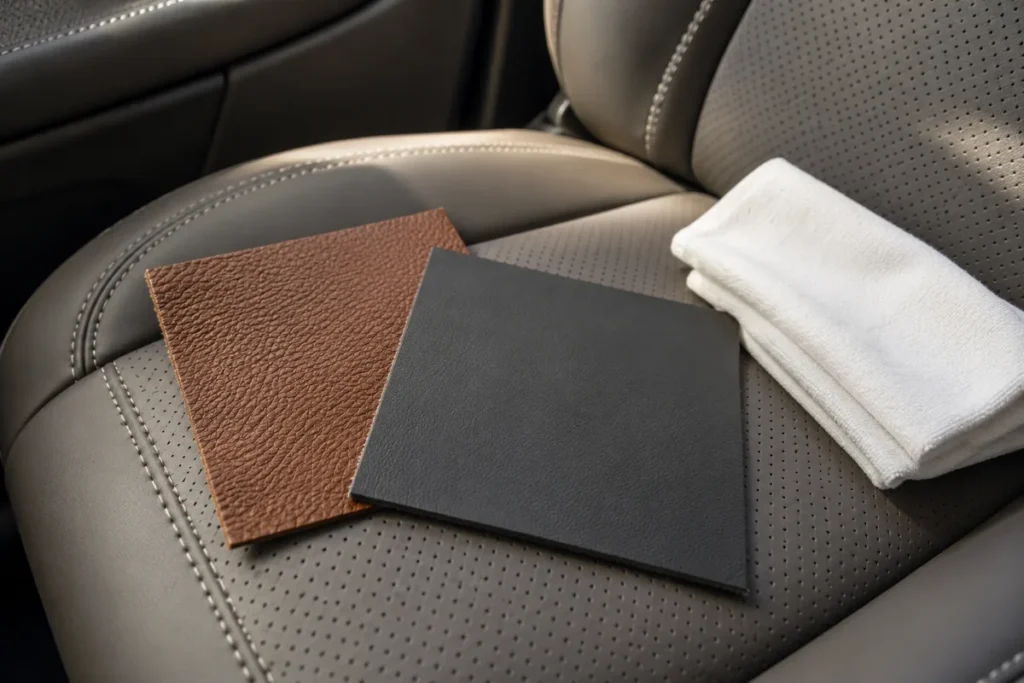
Before cleaning leather car seats, identify the upholstery and finish in the care instructions for the exact vehicle. Genuine leather, coated leather and synthetic upholstery can require different products. Remove loose dirt, follow the permitted cloth-cleaning method, remove residue and dry the surface. Conditioning is a separate decision; a clean seat does not automatically need it.
This guide uses manufacturer instructions and two named vehicle-manual examples checked October 13, 2026. Hot Car Care has not tested these methods on a vehicle. The examples explain how to choose a permitted process, without establishing one recipe for every seat.
As an Amazon Associate, Hot Car Care earns from qualifying purchases. The optional cleaner button opens Amazon US search results, not a verified seller offer. You can follow the applicable cleaning method with suitable supplies you already have.
Top 5 best leather seat cleaning products by use case
These products are ordered for the stated use cases. The list is documentary: it does not report measured performance or rank the whole market. Check the exact formula, surface and received directions before choosing.
How this shortlist is ordered
Order for this page: dedicated cleaning-only products before shared cabin cleaning and combined conditioning.
How we order these choices- Leather Honey Leather Cleaner, 8 oz ready-to-useBest for a separate ready-to-use cleaning step for permitted leather
- Gtechniq L2 Foaming Leather Cleaner, 200 mLBest for a foam cleaner applied with damp microfiber on a permitted seat finish
- Lexol All Leather Cleaner bottle, 16.9 oz / 500 mLBest for a separate foaming clean with a bottled leather cleaner
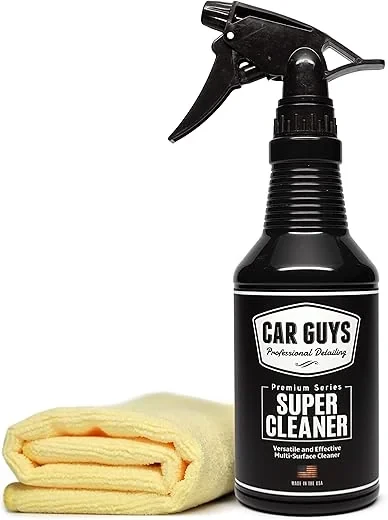
- CAR GUYS Super Cleaner, 18 oz with clothBest for a cleaner shared with other permitted cabin materials
- 303 Leather 3-in-1 Complete Care 30218CSR, 16 fl ozBest for combined care where a finished-leather treatment is allowed
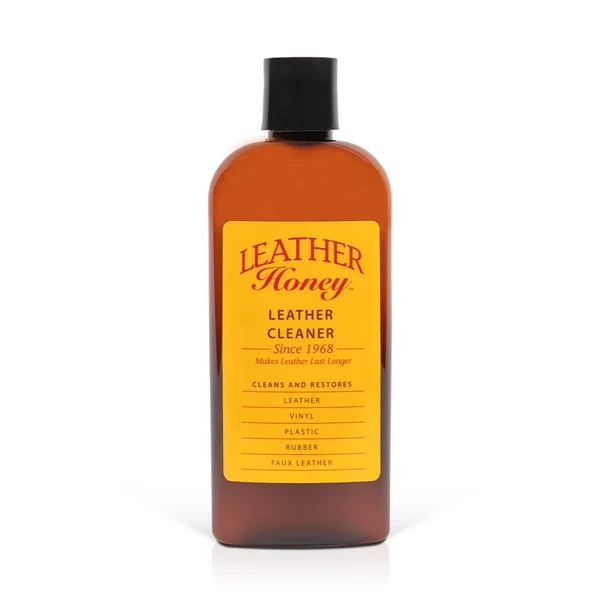
01Documented task fit
Best for a separate ready-to-use cleaning step for permitted leather
Leather Honey Leather Cleaner, 8 oz ready-to-use
This is the reviewed 8 oz cleaner, distinct from the concentrate and UV spray. The manufacturer describes a fragrance-free, pH-balanced formula.
Why this position: First as the featured ready-to-use cleaner-only route on a permitted leather finish. Its separate identity prevents the conditioner or concentrate from being treated as the same product.
Check before choosing: Do not infer an exact pH or universal seat compatibility. Exclude suede and follow the finish instructions, hidden-area test and cloth-removal method.
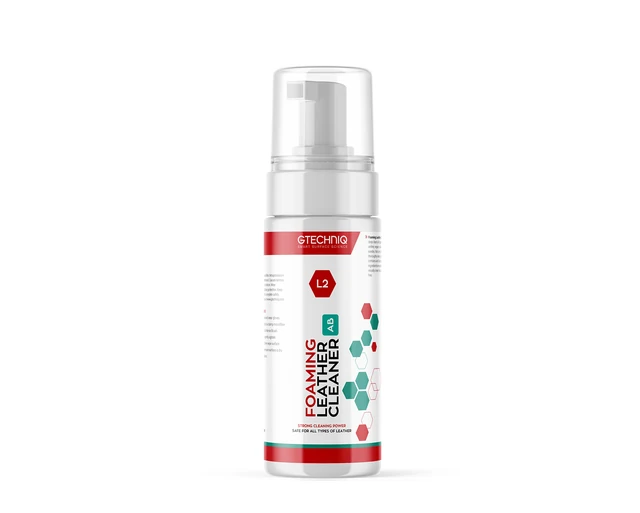
02Documented task fit
Best for a foam cleaner applied with damp microfiber on a permitted seat finish
Gtechniq L2 Foaming Leather Cleaner, 200 mL
Gtechniq’s L2 method allows damp-microfiber application followed by a clean, dry microfiber wipe, adding a foam format to the cleaning choices.
Why this position: Second for a dedicated foam-cleaning method with damp microfiber and a dry wipe. The material and vehicle check remains necessary even for a leather-specific bottle.
Check before choosing: Check the seat’s finish and vehicle instructions before use and wear the specified gloves. Do not transfer broad leather claims to suede, coated seats or cloth-only materials.
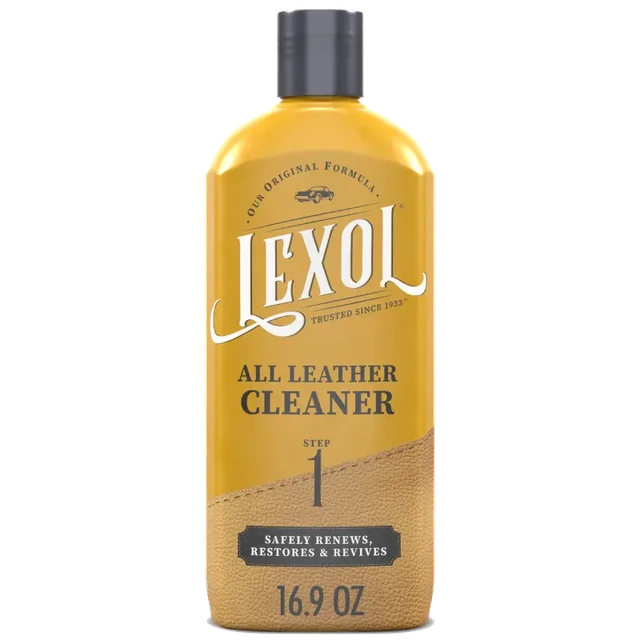
03Documented task fit
Best for a separate foaming clean with a bottled leather cleaner
Lexol All Leather Cleaner bottle, 16.9 oz / 500 mL
Lexol identifies this 500 mL bottle as a pH-balanced cleaner with foaming action and no silicones, alcohols or waxes. It is a cleaner-only bottle, distinct from the brand's conditioner and cleaner-conditioner kits.
Why this position: Third for the separately identified foaming cleaner-only bottle. It keeps the cleaning purchase distinct from Lexol conditioner and multi-step kits.
Check before choosing: Use only on a leather finish whose care instructions allow this formula. The product name does not approve suede or every coated seat. Conditioning is a separate, optional decision governed by the vehicle, not an automatic next step.
04Documented task fit
Best for a cleaner shared with other permitted cabin materials
CAR GUYS Super Cleaner, 18 oz with cloth
The existing Super Cleaner offer provides the same cleaning formula reviewed in the interior guide; CAR GUYS separates it from a protection step.
Why this position: Fourth as a broader cabin cleaner only if the particular seat permits it. Shared cabin scope does not remove finish, seam or liquid-control restrictions.
Check before choosing: Use it on the seat only if the vehicle permits it. Exclude glass and screens, control liquid around seams and remove it before it dries.

05Documented task fit
Best for combined care where a finished-leather treatment is allowed
303 Leather 3-in-1 Complete Care 30218CSR, 16 fl oz
Gold Eagle identifies this formula for finished leather and vinyl with combined cleaning, conditioning and protection.
Why this position: Fifth where finished-leather combined care is expressly allowed. It follows separate cleaners because conditioning/protection is an extra decision a vehicle may rule out.
Check before choosing: Exclude unfinished leather, suede, fabric and flooring. A vehicle may forbid conditioning; follow the damp-removal and immediate-drying directions.
Identify the Seat Material and Finish
Look up the upholstery description and care section for your model year and trim. “Leather-looking” is not a sufficient identification. Genuine leather may have a finish that affects permitted care; vegan leather and leatherette are synthetic materials. If the documentation does not resolve the surface or coating, ask the vehicle manufacturer or an upholstery specialist before selecting a chemical.
| Known surface | Cleaning decision | Conditioning decision |
|---|---|---|
| Uncoated genuine leather | Follow the vehicle’s permitted method and the exact cleaner’s instructions. | Consider only when both vehicle guidance and the conditioner’s scope permit it. |
| Coated genuine leather | Match the factory finish, not just the leather underneath. | Verify first. Do not remove or abrade a finish to make conditioner absorb. |
| Synthetic, vegan leather or vinyl | Use the upholstery-specific OEM method. A cleaner’s broad list does not override it. | Do not choose Leather Honey Conditioner: its specified scope excludes faux leather and vinyl. |
| Unknown finish or material | Hold chemical selection and identify the upholstery. | Verify first; resemblance to leather is not permission. |
| Suede or another napped surface | This smooth-seat process does not qualify it. Obtain the material-specific method. | The Leather Honey Conditioner and regular Cleaner discussed here exclude suede. |
If the next task is comparing permitted bottles, use the car leather-cleaner comparison. Use the comparison to select supplies after identifying your seats.
Prepare for the First Cleaning Pass
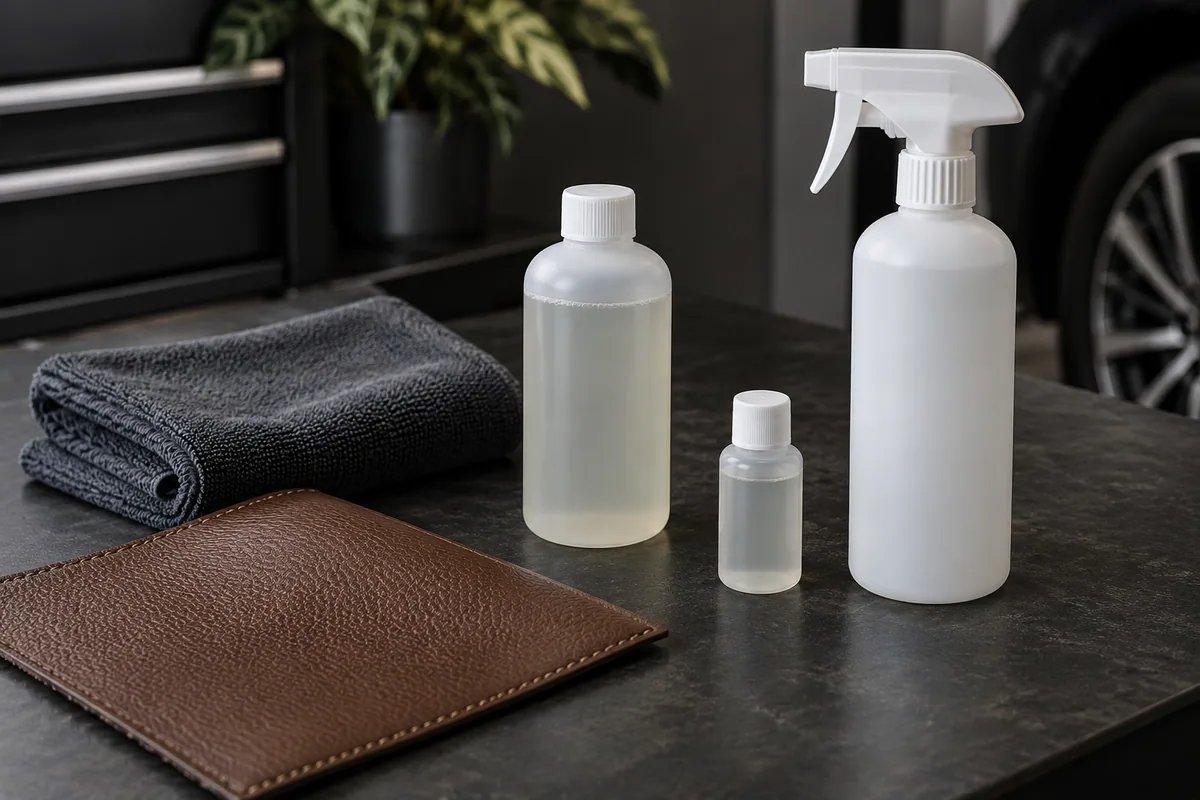
Start only after the vehicle’s care method and any selected product agree on the actual surface. A concealed-area test cannot make an explicitly prohibited product suitable. Do not use a test patch as a substitute for identifying the finish.
Prepare the permitted tool for loose dirt, soft lint-free cleaning and removal cloths, and a dry cloth. Keep a clean removal cloth separate from the cloth carrying cleaner. Prepare the exact solution specified by the applicable instructions; this guide supplies no universal detergent concentration or branded-concentrate mix.
For perforated or ventilated seats, check the vehicle’s specific application and tool rules before adding moisture. Use cloth application when permitted, without spraying or pouring liquid into holes or seams. Keep this process limited to the seat surface; seat-belt mechanisms, switches and airbag assemblies need their own instructions.
Clean, Remove Residue and Dry

For an identified surface whose instructions permit gentle cloth cleaning, carry out the first pass in this order. The two vehicle examples show which product rules apply to each named seat routine.
- Remove loose dirt by the permitted method. Vacuum the eligible seat surface and accessible creases gently with a suitable attachment. If the material or tool is still uncertain, resolve it before starting.
- Check a small concealed area when the applicable instructions require it. Use the same permitted cleaner, cloth, removal and drying method planned for the visible area. Continue only after the required check shows an acceptable result.
- Put the permitted cleaner or solution on the cloth as directed. Keep the cloth damp rather than dripping. Work gently over a manageable area, without soaking the upholstery or adding a direct spray where the vehicle forbids it.
- Remove product and lifted soil using the specified method. Use a clean cloth and any prescribed clean-water wipe. Do not assume that an air-dry product, a wipe-dry formula and a rinse-removal method are interchangeable.
- Remove remaining moisture and let the surface finish drying. Use a dry, soft cloth where instructed, then follow the vehicle’s ventilation and drying guidance. Do not add heat or a blow dryer to shorten the process.
- Inspect the dry area before treating more of the seat. Look for remaining soil, residue, color change or a changed finish. Stop an unexpected result; do not respond by increasing strength, soak time or scrubbing pressure.
Leather Honey’s car-seat guide supplies a brand-specific example of debris removal, a concealed trial, modest cloth application, gentle excess removal and complete drying. Its regular Cleaner is a separate product from its Conditioner. Those published steps are useful only where the vehicle and actual material permit that cleaner; the brand’s broad interior claims do not authorize the entire cabin.
Read Leather Honey’s qualified car-seat cleaning example
Two Vehicle Examples with Different Product Rules
The 2024 Mazda CX-5 U.S. manual’s leather-upholstery section calls for vacuuming, gentle cleaning with a soft cloth, detergent-residue removal with a well-wrung clean-water cloth, then moisture removal and drying with shade and ventilation. It permits a suitable special cleaner or its stated mild-detergent method. This guide does not transfer Mazda’s model-specific detergent concentration to any branded concentrate or another vehicle.
Read the 2024 CX-5 U.S. leather-upholstery instructions
For Tesla Model 3 2024+ North America, the inspected manual displayed software 2026.32. Its vegan-leather seat routine uses a soft cloth with warm water and mild soap, followed by a dry lint-free cloth. Other cleaners, conditioners and protectants are not recommended. It prohibits direct spraying and blow drying. Follow that vehicle’s routine rather than substituting a leather-cleaner bottle on the strength of its synthetic-material claim.
Read the named Model 3 seat-cleaning instructions
These are two documented examples, not approval or prohibition for every car. Find the equivalent care section for your actual vehicle. A mark that remains does not establish a need for a stronger cleaner in either example.
Decide on Conditioning Separately
Finish cleaning before deciding whether any aftercare belongs on the seat. Remove soil with the permitted cleaning method. A conditioner has a separate job; a two-bottle kit does not mean both bottles are needed.
Leather Honey’s car-seat tutorial description places its Conditioner on uncoated genuine leather while giving its Cleaner a broader material list. The Conditioner product page excludes suede, faux leather and vinyl. Its FAQ also notes that some factory-treated seats may resist absorption. These limits support a verify-first decision for coated or unknown finishes; they do not justify wearing away a coating, warming the product or adding repeated layers until it absorbs.
Check the separate Cleaner and Conditioner material scopes
Check Leather Honey Conditioner’s exclusions
Read the factory-treated seat absorption limitation
Choose one of three outcomes:
- Consider an independently permitted conditioner on identified compatible leather.
- Add no conditioner where it is excluded or unnecessary under the applicable care routine.
- Verify the finish before choosing. The Leather Honey Conditioner review explains that product’s specific work and limits. It is an optional next read, not a required cleaning step.
When a Remaining Mark Needs Another Answer

After the surface dries, distinguish removable soil or product residue from an unresolved stain or damaged finish. This guide does not promise to remove every mark. Tesla’s seat section specifically notes that transferred dyes or oils cannot always be safely cleaned off. Mazda notes that genuine leather can have natural surface variation; a wrinkle or scar is not automatically dirt.
If color transfers unexpectedly to the cloth, the finish changes or the test area becomes marked, stop and document what happened for the vehicle maker or an upholstery specialist. Confirm the material, product and permitted removal method before further treatment. A crack, peel or persistent color transfer is outside this first-pass cleaning process; do not try to turn a cleaner or conditioner into a repair product.
For another cabin-cleaning task, check the interior-cleaner material comparison. It does not extend the seat procedure to screens, seat belts, headliners or airbag covers.
Best Intent: An Optional Identified Cleaner
The regular Leather Honey 8 oz ready-to-use Cleaner is one option only after the surface and vehicle allow it. It is different from the 4 oz concentrate, 16 oz UV spray and Conditioner. The separate Cleaner review checks those identities and the applicable directions. No purchase is needed if the permitted method uses supplies already on hand.
Sources and Guide Limits
Manufacturer product pages, care instructions and the two identified OEM manual examples were checked October 13, 2026. The Tesla example is tied to Model 3 2024+ North America and software 2026.32 as displayed at retrieval; the Mazda example is the 2024 CX-5 U.S. manual. Recheck the current instructions for the exact vehicle and bottle before use.
No physical seat-cleaning trial, finish test or exact marketplace-offer verification was performed. This guide excludes universal steam or extractor procedures, dye-transfer guarantees, upholstery repairs and mandatory conditioning. The complete first cleaning pass remains on this page; product reviews and source buttons supply additional checks.