Ceramic Coating for Cars: Spray, Bottled Coating or PPF?
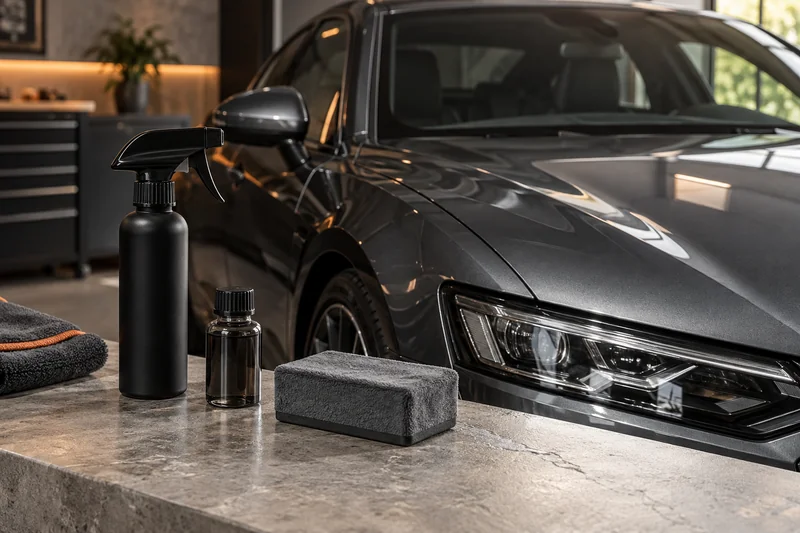
Choose protection by the problem you want to solve and the application conditions you can provide. A spray wax or sealant offers a different application route from a bottled coating with specific leveling and curing instructions. Paint protection film, or PPF, adds a physical film when road-debris damage is the concern. A ceramic label alone does not establish chip protection, lifetime, or permission to treat every part of a car.
This guide helps you choose a direction before buying a product or booking an installer. It uses manufacturer documents and the product identities already associated with this page. It is not a road test or a hardness test. The shortlist uses documentary editorial order for the stated use cases; its positions do not identify measured performance winners. Advertised years and old customer comments are not measured performance here.
Top 5 best ceramic protection options by use case
These products are ordered for the stated use cases. The list is documentary: it does not report measured performance or rank the whole market. Check the exact formula, surface and received directions before choosing.
How this shortlist is ordered
Order for this page: wash-stage maintenance first, then dry-panel protection and separately installed bottle coatings.
How we order these choices- GYEON Q²M WetCoatBest for Temporary protection during a wash
- Turtle Wax Hybrid Solutions Ceramic Spray Coating, 53409, 16 fl ozBest for Dry-panel spray protection applied by towel
- GYEON Q² CanCoat EVO, 200 mlBest for A towel-applied coating alternative during a new installation
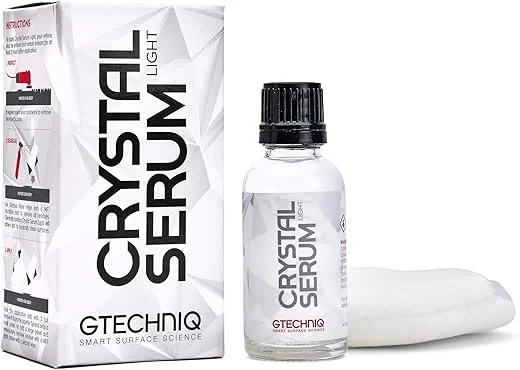
- Gtechniq Crystal Serum Light, 50 mlBest for Indoor application with immediate residue removal
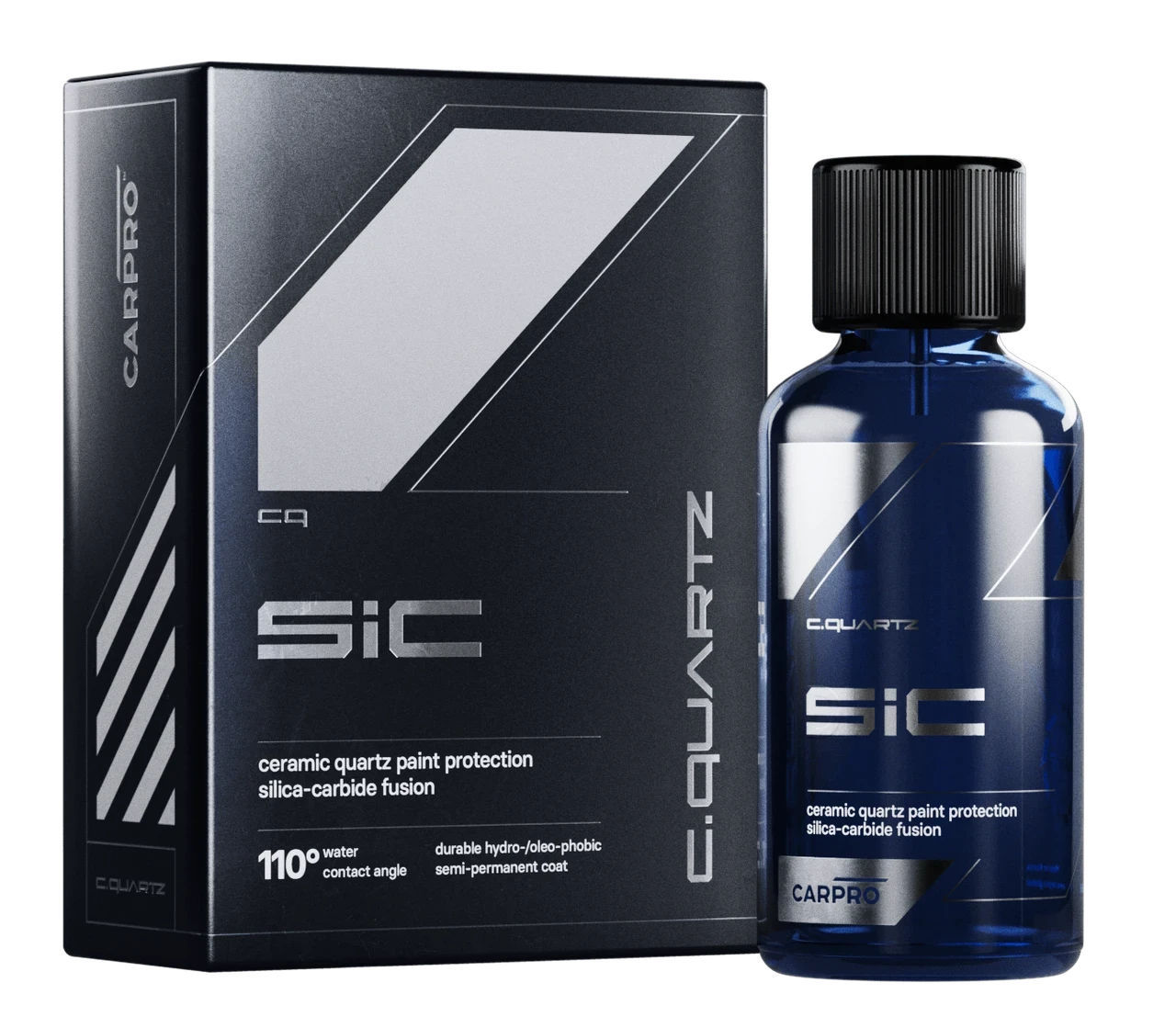
- CARPRO CQUARTZ SiC, 50 mlBest for A bottle-coating example with separate early-care rules
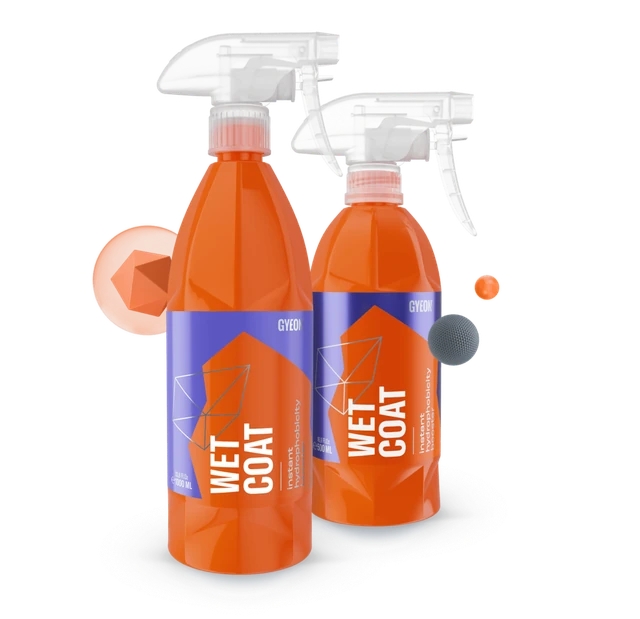
01Documented task fit
Best for Temporary protection during a wash
GYEON Q²M WetCoat
Wash first. Apply one or two sprays to one still-wet panel, rinse immediately with strong water pressure, then dry the vehicle.
Why this position: First for the wash-stage maintenance scenario: its wet-panel, immediate-rinse method answers a smaller job than a new bottle-coating installation. It is temporary maintenance, not a coating substitute.
Check before choosing: Do not let WetCoat dry. GYEON describes it as temporary protection and maintenance, rather than a replacement for a ceramic coating. Vehicle, glass and film restrictions still apply.
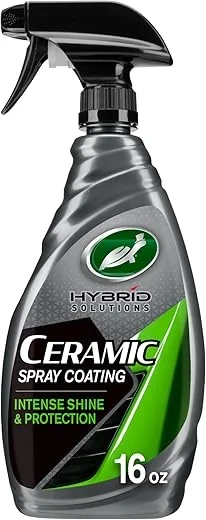
02Documented task fit
Best for Dry-panel spray protection applied by towel
Turtle Wax Hybrid Solutions Ceramic Spray Coating, 53409, 16 fl oz
Wash and dry the vehicle. Turtle Wax specifies two mists on a two-foot-square section, spreading with microfiber and buffing with a clean towel side. This adds a dry-panel spray route beside WetCoat’s wet-panel rinse-off process and the SiC bottle coating.
Why this position: Second for dry-panel spray protection: its measured spray-and-buff method supplies the next application route after rinse-off maintenance, without treating it as a bottle coating.
Check before choosing: Wait 24 hours before an optional second coat. That interval does not establish a universal rain or detergent-wash rule. Check the received bottle and existing coating or film instructions; this 16 fl oz single bottle is separate from multi-bottle offers.
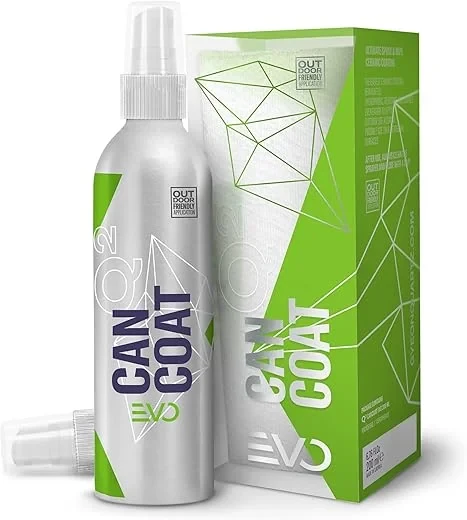
03Documented task fit
Best for A towel-applied coating alternative during a new installation
GYEON Q² CanCoat EVO, 200 ml
CanCoat EVO uses prepared, oil-free, completely dry paint. GYEON directs spraying the towel away from the vehicle, wiping a small area and removing residue. Keep the application out of direct sun and protect it from water for 12 hours.
Why this position: Third for a new towel-applied coating installation with a defined 12-hour water exclusion. This moves beyond maintenance; existing-coating permission remains a separate check.
Check before choosing: The 200 ml EVO coating is not automatically a maintenance booster for installed PURE EVO. Follow the existing coating’s care instructions before adding a layer; a dry period does not establish its first-wash timing. Full preparation and the received directions still apply.
04Documented task fit
Best for Indoor application with immediate residue removal
Gtechniq Crystal Serum Light, 50 ml
CSL calls for small sections and immediate wiping with two towels, then 12 hours indoors.
Why this position: Fourth for a bottle-coating installation when indoor storage and the stated application temperature can be met. The indoor requirement narrows its fit relative to the preceding routes.
Check before choosing: Work within the documented 5–25°C conditions. The optional topper interval does not shorten the required dry-storage period.
05Documented task fit
Best for A bottle-coating example with separate early-care rules
CARPRO CQUARTZ SiC, 50 ml
The current US SiC directions distinguish a dry-storage period from five days without detergents or chemicals.
Why this position: Fifth as the SiC installation example with distinct dry-storage and five-day chemical restrictions. Its specific early-care rules make it a separate planning choice, not a stronger spray.
Check before choosing: Do not shake SiC or apply Reload initially. A wash-stage sealant’s rinse process does not apply to this bottle coating.
Which type of protection fits your task?
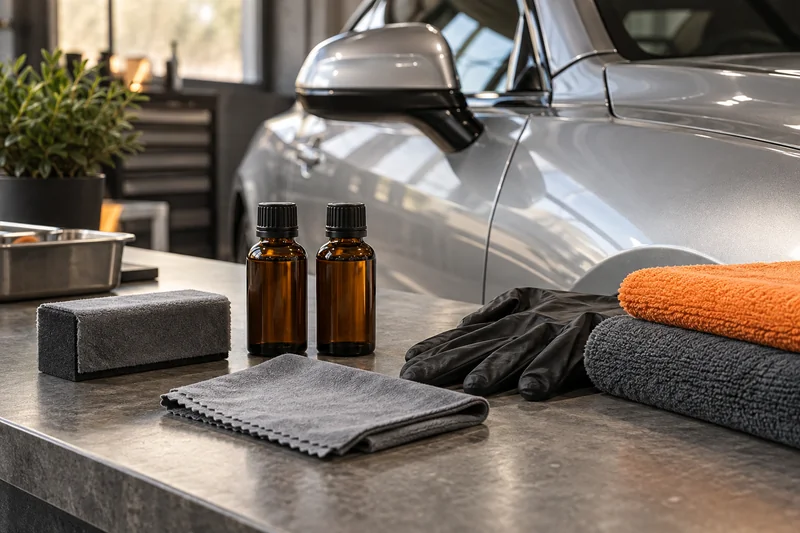
Start with the problem, then compare the formats. The words ceramic, coating, wax, and sealant overlap in product marketing; they are not an application specification. Bottle shape also cannot tell you whether a product needs a dry panel, a wet application, a prescribed wait, or immediate wiping.
| Direction | When to consider it | What to verify first |
|---|---|---|
| Spray wax or sealant | You want a product you can reapply during a regular care routine. | Exact surface permission, wet or dry application, towel method, and any waiting period. |
| Bottled ceramic coating | You can complete the specified preparation, leveling, and protected curing period. | Current instructions for the actual product, suitable workspace, and a plan for correcting mistakes. |
| Paint protection film | You want a physical barrier in areas exposed to road debris. | Exact film, coverage, installation method, finish, care, and removal conditions. |
XPEL’s product FAQs distinguish the role of PPF against physical damage from the water-repelling surface offered by a coating. That is a useful starting distinction, not a promise that film prevents every impact. XPEL’s compatibility statements for its own coatings and films do not approve a different coating on an unidentified film.
If chips are your main concern, investigate film coverage before choosing a ceramic bottle on hardness language. If the goal is simpler routine care, compare the exact spray instructions. Consider a bottled coating only after you can meet its preparation and cure requirements. These are selection criteria, not a claim that one format always outlasts another.
Is the product approved for this surface?
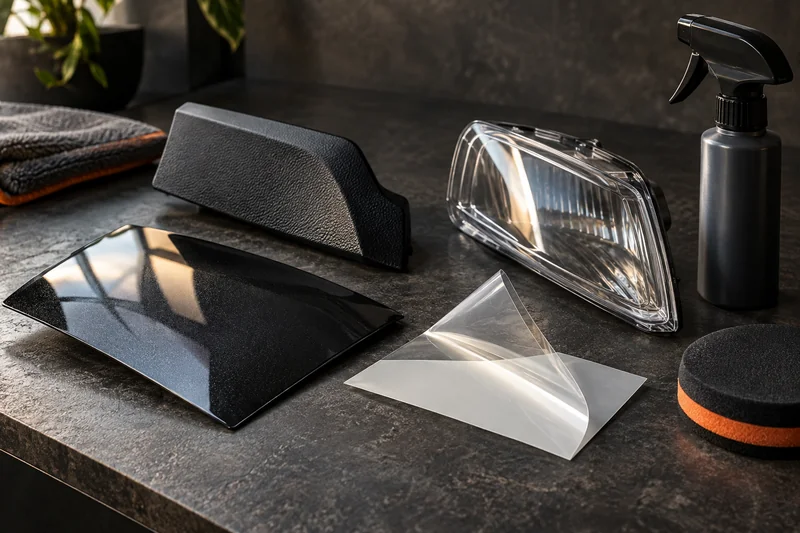
Identify what you will actually coat: glossy painted panels, matte or satin paint, an existing film or wrap, glass, textured trim, or wheels. Permission for painted panels does not automatically cover the other surfaces. Read the product’s current material list and the vehicle or film manufacturer’s care instructions together.
Check the condition of the finish before deciding how to prepare it. A freshly repaired panel, failing clear coat, or an unknown previous treatment calls for clarification from the body shop, vehicle maker, or installer. Do not turn an instruction for sound factory paint into a procedure for every repaint.
For matte or satin finishes, confirm that the proposed product and preparation preserve the intended appearance. A promise of deep gloss is not evidence of suitability for a finish whose sheen must stay unchanged. Check both the coating instructions and the finish-specific care requirements before using a gloss-enhancing product.
Keep the permission check specific around cameras, sensors, lights, seals, and functional parts. A general statement that a product works on a car is not clearance to coat those components. Where the manufacturer restricts treatment, choose a permitted surface or leave the component untreated.
For example, the North American Tesla Model 3 manual (2024+) permits hydrophobic treatment on side and rear windows but warns against it on the windshield because camera visibility can be affected. This is a model-specific restriction, not advice for every vehicle. Check the manual for your own model and production version.
Can you complete the application and curing instructions?

Suitable paint is only one requirement. You also need the working conditions specified for the coating. Before opening the bottle, establish the permitted panel and air temperatures, shelter requirements, working area, wiping method, and periods during which water, washing, or another product must be avoided. Get these from the exact product instructions rather than a generic ceramic-coating tutorial.
- Match the product name, formulation, size, and instructions to the container you receive. A familiar brand or similar box is not enough.
- Check the required preparation and which existing waxes, sealants, or coatings must be removed. Do not assemble a preparation routine from different brands’ directions.
- Read the application and wiping sequence in full. Confirm whether the quoted wait is a flash or leveling window, a second-coat interval, a water restriction, or a washing restriction.
- Have the specified applicators and clean towels ready, along with the protection and ventilation required by the label and matching safety data sheet.
- Check the forecast and storage arrangement against the entire prescribed curing period. If you cannot meet it, postpone the job or choose a different permitted care route.
- Read the correction instructions before starting. Do not assume a cured coating can be removed by the same wipe that levels a fresh application.
The end of a wiping window is not necessarily the end of curing. Likewise, permission to drive does not automatically mean permission to wash or apply a topper. Keep each restriction separately in your plan. If the label leaves one of these questions unanswered, ask the manufacturer before relying on an inferred interval.
For an installer’s quote, request the exact coating and any film underneath it, the preparation included, the areas covered, and the handover care instructions. Ask how missed coverage or an application defect will be handled. Compare those answers before the advertised number of years. A bottle-only price and a prepared, installed service describe different purchases.
What do the existing product names establish?
The product families below illustrate why a kit and a spray should not share a recipe. Their images identify packaging; they do not demonstrate an application result. This guide does not recommend purchasing these listings until the matching product version, material permission, instructions, and safety information are confirmed.

Color N Drive’s current Deep Gloss page identifies a kit as CER1 and lists coating, pre-treatment, applicators, towels, and gloves. The current page’s EAN differs from the stored Amazon listing identifier on this site. That difference does not prove a counterfeit or a reformulation; it leaves the exact kit version unresolved. Match the supplied kit and its instructions before treating the current page as its recipe.
The maker’s product page qualifies clay use in relation to polishing, while its user guide describes clay preparation and optional pre-waxing differently. The guide also specifies a minimum of 10°C, then later gives a 5–30-degree application range. Do not pick the more convenient statement or silently combine them. Ask Color N Drive for the current instructions that apply to your kit and conditions.
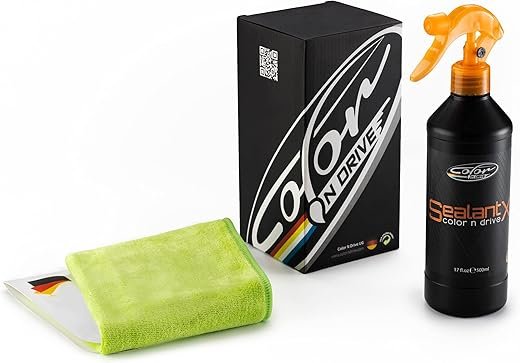
The existing Sealant X listing describes a spray sealant, and the maker’s site includes reviews bearing that product name. Neither a customer’s application routine nor a stored merchant description is a substitute for current manufacturer directions. The complete current label and safety data sheet for the received version were not verified for this guide. Do not use the Deep Gloss kit’s directions for the spray.
An additional stored listing is described as a plastic restorer, with unrelated items in its description. Its identity and painted-panel coating permission are unresolved. It is excluded from recommendations here. A seller’s ceramic or nano wording alone does not resolve that uncertainty.
Older rankings, low-price comparisons, and permanent-protection claims do not establish today’s best choice. They also do not establish current stock, seller identity, or the package that will arrive. A useful product comparison needs matching formulations, surfaces, preparation, exposure, and assessment methods. Those controlled comparisons were not performed for this guide.
What do 9H, water beading, and advertised years tell you?

Ask which test supports a hardness claim and on what substrate it was performed. ASTM D3363’s public description concerns coating-film hardness measured with pencils and notes that pencils and substrates affect comparisons. This guide did not access or perform the full test method. A 9H label without its applicable test evidence is not a measured promise of resistance to road debris.
Water behavior and physical impact protection answer different questions. Visible beading alone does not establish that a coating prevents scratches or chips, or that an advertised service life has been reached. Use the manufacturer’s stated evaluation and care criteria; avoid creating a durability ranking from photographs of droplets.
Read a duration claim with its conditions: exact formulation, preparation, application, exposure, care, and any inspection or maintenance requirements. Keep a manufacturer’s performance claim separate from a written warranty. Before buying a service, obtain the actual coverage, exclusions, obligations, and remedy rather than assuming that advertised years guarantee every aspect of the finish.
What care and correction will it need?
Plan aftercare while choosing the product. Follow the vehicle, film, and coating instructions that apply to the treated surface. A water-repelling finish is not permission to let contamination remain indefinitely or to use any strong cleaner. Remove contamination using a permitted method and keep the stated washing restrictions during cure.
Inspect the application as the exact instructions require. CARPRO’s current CQUARTZ SiC 50 ml directions, for example, describe high spots as excess coating that was not leveled. They distinguish correction soon after application from correction days later. That is a product-specific example, not the repair method for the older CQUARTZ image or every ceramic coating. Consult the instructions for your own product before adding more coating or using an abrasive.
For coated film, confirm that the coating is approved for the exact film and that its care requirements fit the film’s instructions. Do not transfer another film family’s heat, solvent, polishing, or removal guidance. If the surface develops a persistent defect, ask the manufacturer or installer for a diagnosis before attempting an unverified removal method.
Choose the next guide after these checks
For product-level preparation and coating considerations, continue to the ceramic paint-protection guide. For film coverage, product identity, and installation limits, use the paint protection film guide. If the intended job is routine spray protection, compare the spray-wax options under their own label instructions.
Write down the surface, the protection task, and the conditions you can provide. Then check a candidate’s matching instructions against those three answers. An unresolved product identity or conflicting recipe is a reason to seek clarification before application, even when the product is familiar.