How to Remove Sticker Residue From Car Paint
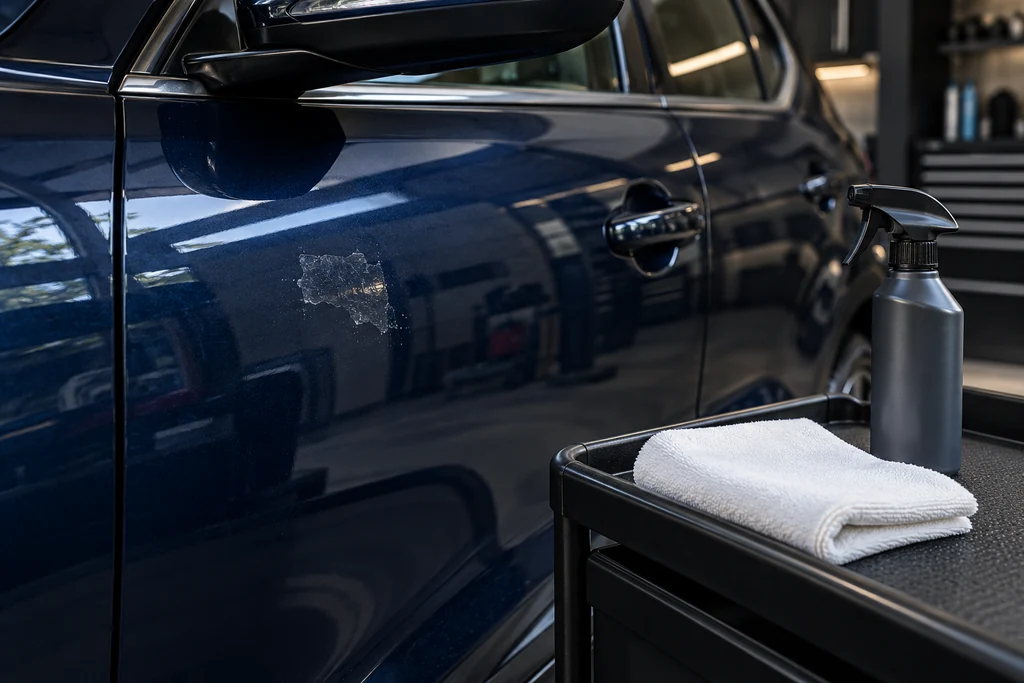
To remove sticker residue from car paint, confirm the exposed finish, pretest a remover approved for it, and follow that product’s cleanup sequence. The Goo Gone Automotive example below ends with soap and water, then a dry inspection. A visible outline alone does not establish that adhesive remains.
This guide covers adhesive left after a sticker has already been removed from eligible glossy exterior paint. It does not cover peeling intact decals, removing wraps or paint protection film, or repairing clear coat. This guide follows manufacturer instructions and does not report physical testing.
Check What Is Under the Adhesive
Confirm that the patch is on painted bodywork before choosing a chemical. A plastic bumper can have a painted finish; a nearby unpainted trim piece is a different surface. Do not let permission for the paint extend to rubber seals, film edges, or surrounding trim.
| What is exposed? | Decision | Next step |
|---|---|---|
| Known, intact glossy exterior paint with leftover adhesive | A surface-approved spot-cleaning route may fit. | Check the exact bottle, exclusions, and pretest directions. |
| A sticker, wrap, or film is still attached | The removal task is different. | Use instructions for that material; do not use this residue process to peel it. |
| A repaint, coating, matte finish, or film cannot be identified | Compatibility is unresolved, rather than automatically approved or prohibited. | Get the applicable finish or installer guidance before applying the remover. |
| Clear coat is flaking, lifting, or otherwise damaged | Do not use chemical cleaning to diagnose or repair it. | Stop and have the finish assessed. |
A spot test checks an otherwise permitted use. It cannot cancel a stated surface exclusion or establish the condition of an unknown repair. Goo Gone’s current reference label excludes rubber and upholstery; keep the example below away from those materials. Read the Automotive product directions.
Gather Only What This Method Requires
Before starting, have:
- the exact Goo Gone Automotive Spray Gel bottle;
- a clean white cloth;
- the means to complete the soap-and-water wash. Read the received bottle’s precautions and handling directions. Keep the cleanup cloth separate from the wash tool so that the next step does not spread collected adhesive.
An equivalent suitable cloth and car-wash soap already in your garage can meet these roles. A pressure washer, drill attachment, scraper, and multi-product solvent kit are not required by this hard-surface process. Do not add heat, an eraser wheel, metal blades, or a homemade solvent mixture.
Remove the Remaining Adhesive With One Documented Method
For an eligible surface, Goo Gone Automotive Spray Gel provides a complete spot-cleaning example. Automotive is the product identity used here; Original, Pro-Power, and the separate Goof Off brand do not inherit this procedure. For the bottle and buying checks, read the Automotive Spray Gel review.
- Check the label and pretest. Confirm the permitted finish and test in an inconspicuous area before treating the visible patch. If the label conflicts with these web instructions, resolve that difference before use.
- Apply the Automotive gel to the adhesive patch. Keep the treatment on the permitted area and away from excluded nearby materials. Do not combine it with another remover.
- Allow the short wait stated in the directions. The manufacturer describes a few minutes, without giving a fixed numerical timer for this step. Do not turn that wording into an invented five- or ten-minute dwell.
- Wipe the loosened material with a clean white cloth. Do not respond to resistance by pressing harder or adding an abrasive tool.
- Wash the treated area with soap and water. Wiping is followed by this separate cleanup step; it is not the end of the documented method. Complete the wash, rinse, and dry using the applicable wash-product and finish instructions.
The manufacturer’s bumper-sticker article also ends with a wash. Its separate advice for lifting an intact sticker is outside this guide. The instructions above concern the remaining adhesive only. Read Goo Gone’s bumper-sticker guidance.
Inspect the Dry Area Before Repeating Anything
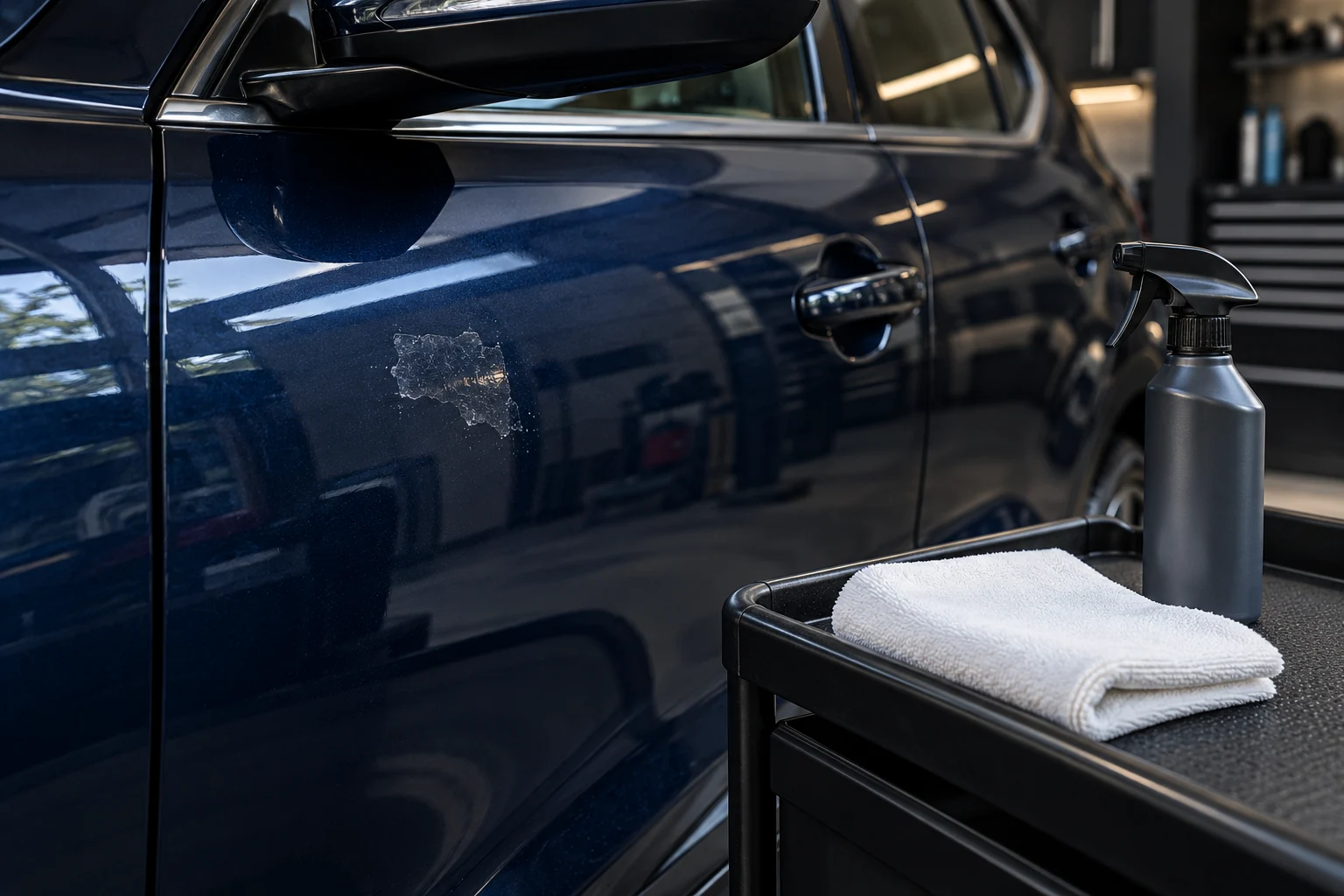
Check the area after the remover and wash residue are gone. Check whether material remains on the surface. A visible boundary is not enough to identify it as glue. This page cannot diagnose a shadow, paint-color difference, haze, or damage from a photograph or a leftover outline.
If a small adhesive patch is still clearly present and the finish has not changed, check the received label before considering another localized treatment. Do not repeat the process without a limit. The cited hard-surface sequence does not establish a universal number of repeat cycles. If the next action would be stronger rubbing, longer contact, or a different solvent, stop and get surface-specific advice instead.
Stop immediately if the surface changes, the finish becomes uncertain, or the remaining mark cannot be identified. Record the product used and what happened so a detailer, paint specialist, or finish supplier can assess the actual situation. Do not try to hide the mark with polish or wax as a substitute for identifying it.
Five Product Picks for the Residue-Cleanup Job
How these five choices are ordered
Positions follow the job on this page: the relevant treatment, required cleanup and optional supplies, or a different residue route. These products perform different tasks; they are not five interchangeable solvents. This is an editorial task-fit order based on documented identity and instructions, without measured test scores. Keep suitable supplies you already own.
- Goo Gone Automotive Spray Gel, 12 fl ozAdhesive-residue treatment
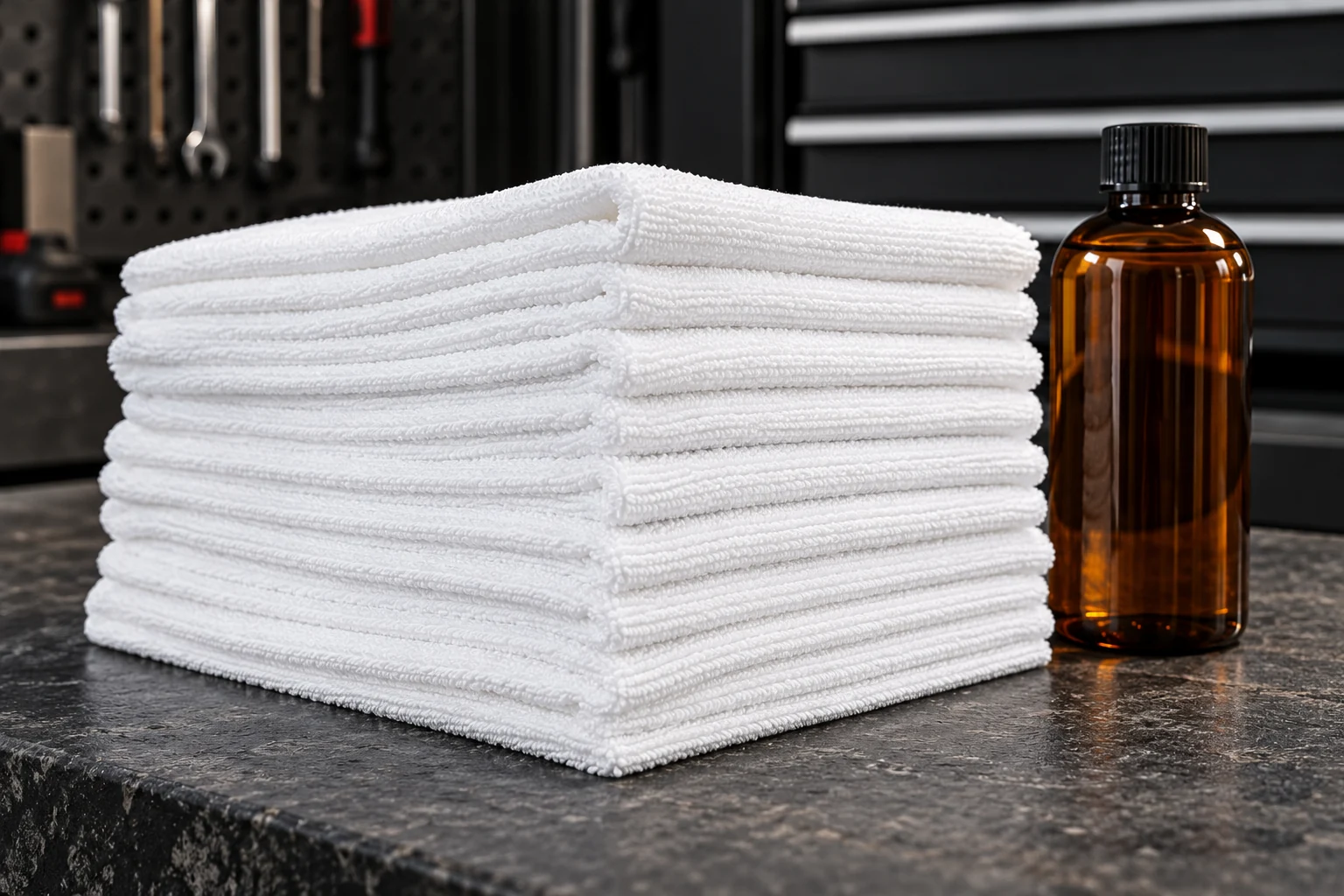
- The Rag Company All-Purpose Terry, White, 16 × 16 inches, 12-packWhite wiping supply
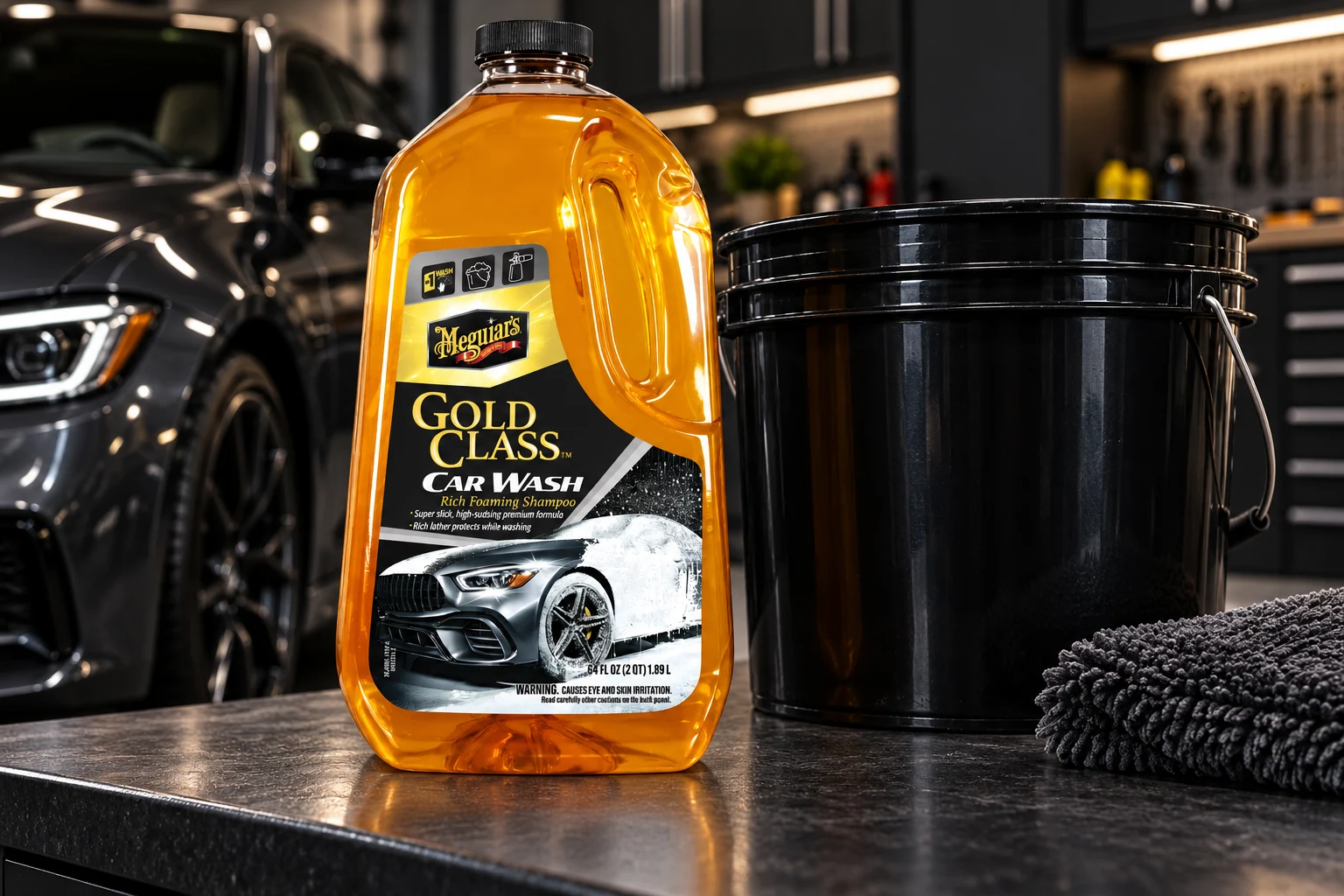
- Meguiar’s Gold Class Car Wash Shampoo & Conditioner, G7164, 64 ozSeparate finishing wash
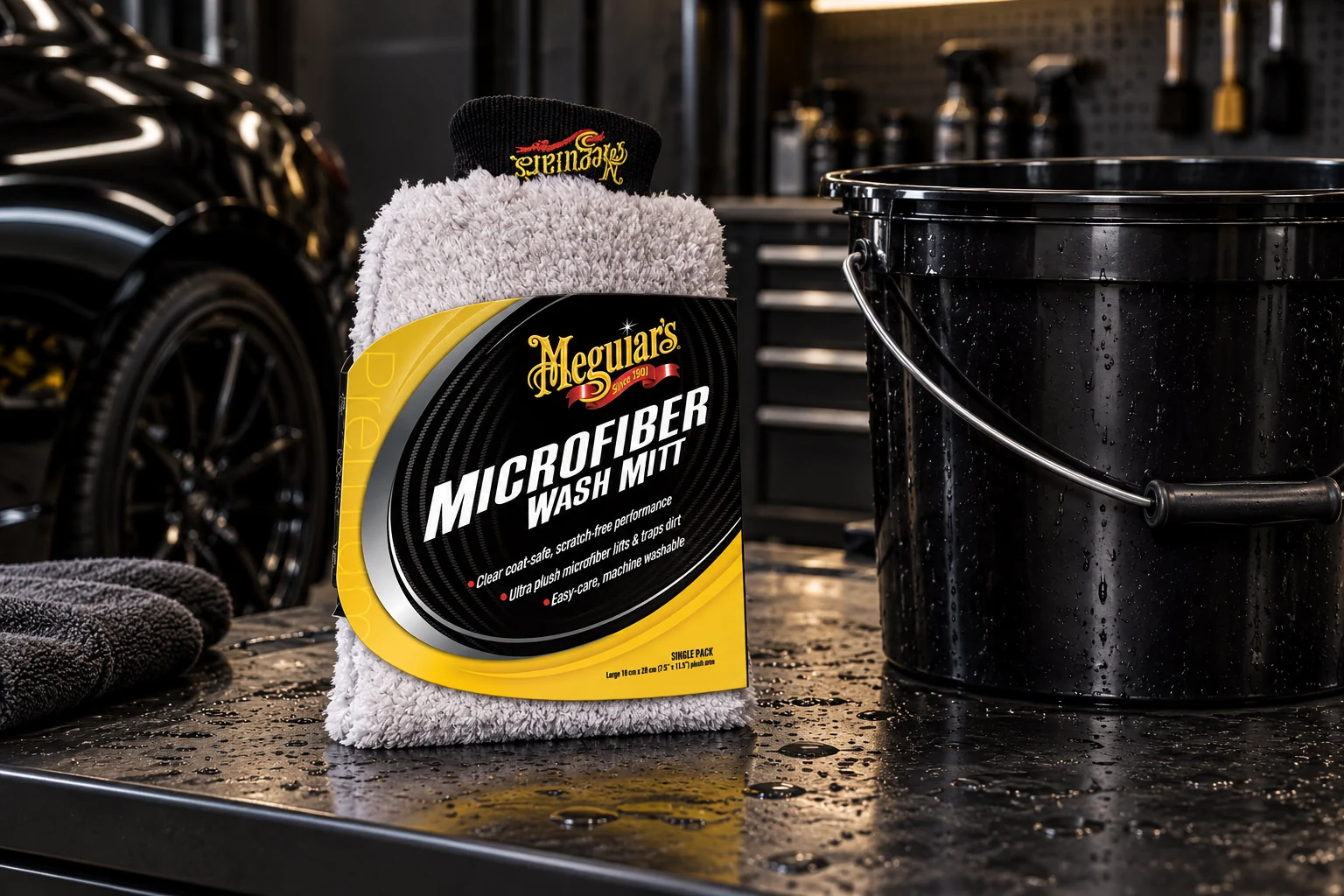
- Meguiar’s Microfiber Wash Mitt, X3002, one mittOptional wash tool
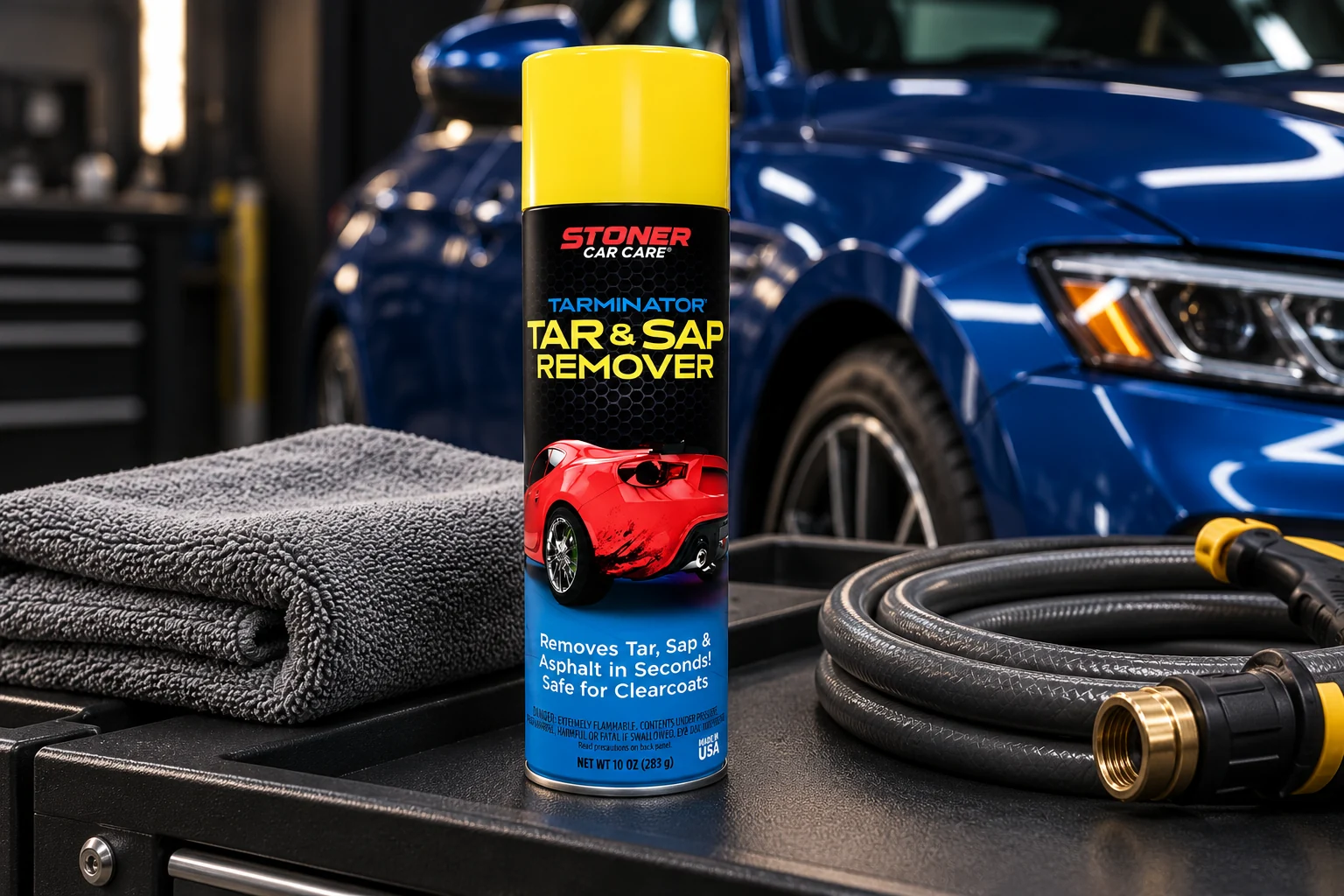
- Stoner Tarminator, 91154, 10 ozLocalized tar route
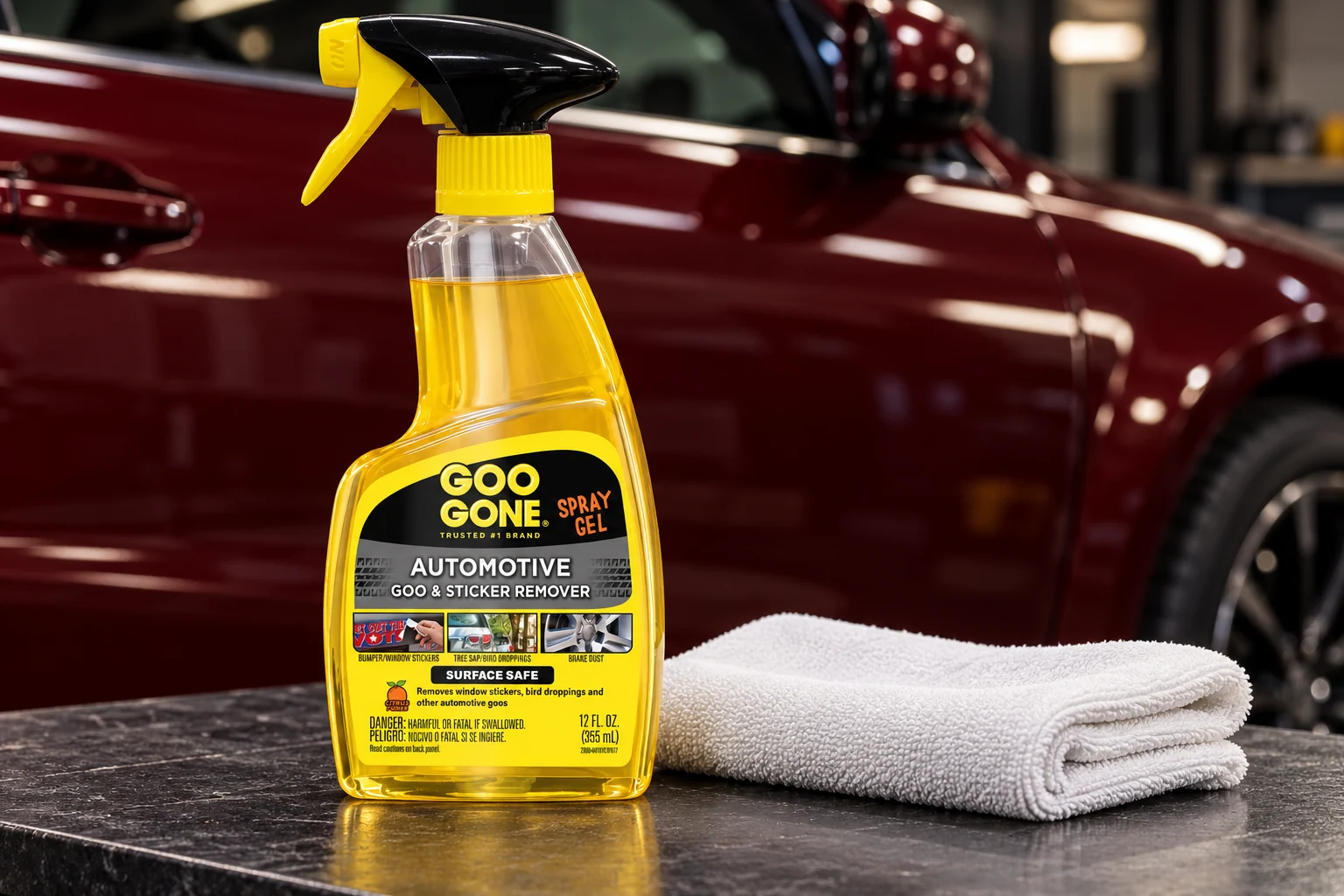
01Adhesive-residue treatment
Best for the documented adhesive-residue example on a permitted exterior painted finish.
Goo Gone Automotive Spray Gel, 12 fl oz
The Automotive identity and the wash that follows it make this the first pick for the process above.
Check before choosing: Match the 12 fl oz bottle and the seller’s pack count before choosing an offer. Do not substitute Original or Pro-Power solely because the brand name is familiar. An unknown repaint, film, or surface exclusion still requires a separate decision.
02White wiping supply
Best for supplying a white wiping cloth when you do not already have a suitable clean one.
The Rag Company All-Purpose Terry, White, 16 × 16 inches, 12-pack
The manufacturer identifies this exact white size and pack, so it is a more relevant choice for this method than selecting a colored towel by softness alone.
Check before choosing: Inspect the cloth before contact and keep a clean section available. This is a wiping supply, not an adhesive remover or a promise that contaminated fabric cannot scratch.
03Separate finishing wash
Best for the separate wash step after the adhesive and remover have been wiped away.
Meguiar’s Gold Class Car Wash Shampoo & Conditioner, G7164, 64 oz
G7164 is a concentrated car-wash shampoo, giving it a defined role in completing the job rather than replacing the adhesive treatment.
Check before choosing: Mix and use it according to the selected wash method and current label. A shampoo’s own paint-protection claims do not establish what the preceding solvent treatment has left on the car.
04Optional wash tool
Best for keeping the soap-and-water wash tool separate from the adhesive-wiping cloth.
Meguiar’s Microfiber Wash Mitt, X3002, one mitt
This is an optional hand-wash tool for use with the wash solution.
Check before choosing: It does not replace the clean white cloth specified for wiping Goo Gone, and it should not be loaded with remover to scrub the patch. If you already have a clean, suitable wash tool, there is no need to buy another just for this job.
05Localized tar route
Best for reconsidering the route when the material is road tar rather than sticker residue.
Stoner Tarminator, 91154, 10 oz
Tarminator is a separately documented exterior-paint treatment with its own small-area, rinse, and surface limits.
Check before choosing: It belongs here as a different job choice, not as the next chemical to apply after Goo Gone. Do not use it on headlights or clear plastics, and do not borrow the gel’s waiting instructions. Compare the tar-removal methods before switching the task.
These are Amazon US affiliate searches, not verified fixed offers. Match the exact product, market, formula, volume and pack in the results. A search does not establish stock or a formula match. As an Amazon Associate, Hot Car Care earns from qualifying purchases.
Questions About Sticker Residue on Paint
Can this process be used on PPF or a wrap?
Not on the basis of this guide. Film and its adhesive require their own applicable instructions. Permission for painted bodywork does not establish permission for installed film, its edges, or a coating over it.
Does a remaining outline mean I need more remover?
No. An outline alone does not identify the remaining material or prove that adhesive is still present. Complete the cleanup and dry inspection before deciding whether the next step is cleaning or assessment of the finish.
Is the final wash optional?
No. Soap and water are part of the cited Automotive hard-surface directions. Plan that step before applying the gel; do not substitute a dry buff simply because the patch looks clean.
Can a successful spot test override an exclusion?
No. A test is an additional check within a permitted use, not a way to approve a material that the label excludes.
Sources and Scope
The process is based on Goo Gone’s Automotive hard-surface directions and current manufacturer-hosted label reference, checked October 25, 2026. The product-card order expresses documented job fit, not a physical test, head-to-head comparison, or guarantee. Amazon buttons are explicitly labeled searches; no live offer, price, or stock level is asserted.
- Goo Gone Automotive directions and surface information
- Goo Gone bumper-sticker article: separate sticker-removal scope
- The Rag Company All-Purpose Terry specifications
- Meguiar’s G7164 manufacturer product information
- Meguiar’s X3002 manufacturer product information
- Stoner Tarminator numbered use directions