Tar Removers for Cars: Methods and Surface Limits

Choose a tar remover by the residue, the exposed finish and the product’s application method. A concentrated wash, a ready-to-use solvent and a scrub pad are different tools. None earns permission to touch every part of a car merely because its label says “bug and tar.”
The original comparison table below covers three US products with identifiable packages and different instructions. We have not physically tested removal speed, coating durability or scratch resistance, so these are task-based choices rather than ranked winners.
Hot Car Care may earn a commission from qualifying purchases through the Amazon links below.
Top 5 best car tar removers by use case
These products are ordered for the stated use cases. The list is documentary: it does not report measured performance or rank the whole market. Check the exact formula, surface and received directions before choosing.
How this shortlist is ordered
Order for this page: identified spot-cleaning routes before mixing or solvent-resistant-surface specialism.
How we order these choices- Rain-X Pro 3-in-1 Bug, Tar & Adhesive Remover, 620213, 16 ozBest for A water-based wipe-off route for tar spots
- Stoner Tarminator, 91154Best for A short aerosol treatment followed by rinsing
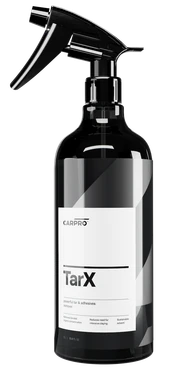
- CARPRO TarX, 1 literBest for Tar spots on permitted cool, dry surfaces
- Chemical Guys Bug Plus Tar Remover, CWS_104_16Best for A diluted wash-compatible treatment
- Koch-Chemie Eulex, 43001USBest for Cloth-applied cleanup on solvent-resistant surfaces
01Documented task fit
Best for A water-based wipe-off route for tar spots
Rain-X Pro 3-in-1 Bug, Tar & Adhesive Remover, 620213, 16 oz
For a cool surface in shade, Rain-X directs spraying the contamination, waiting one minute and gently wiping with clean microfiber. Wash the vehicle afterward as needed. This is the identified Pro 620213 bottle, separate from older Rain-X cleaners.
Why this position: First for an identified ready-to-use, water-based spot-cleaning route with a stated initial wait and wipe method. Finish permission still comes before application.
Check before choosing: The exterior metal, glass and plastic scope is not blanket approval for wraps, PPF or an existing coating. Heavy deposits may need longer, but the page gives no universal maximum; follow the received bottle rather than inventing a dwell time.
02Documented task fit
Best for A short aerosol treatment followed by rinsing
Stoner Tarminator, 91154
The 10 oz aerosol’s directions begin with a cool, wet surface and use a 30–60-second dwell before wiping and an immediate rinse.
Why this position: Second as the short aerosol-and-rinse route. Its different cool, wet start and strict maximum contact period make it a separate workflow from the first bottle.
Check before choosing: Do not exceed one minute or extend paint permission to clear headlight plastics. Check solvent compatibility first.
03Documented task fit
Best for Tar spots on permitted cool, dry surfaces
CARPRO TarX, 1 liter
The current US directions start on a cool, dry surface: dwell for no more than two minutes, wipe, then finish with Ech2o or Reset.
Why this position: Third for its cool, dry-surface tar process and specified finishing wash. Surface and California restrictions narrow its applicability, rather than proving weaker removal.
Check before choosing: Avoid sensitive plastics and acrylic paint; do not use it hot or let it dry. Installed PPF needs its own permission. The US page excludes sale or use in California.
04Documented task fit
Best for A diluted wash-compatible treatment
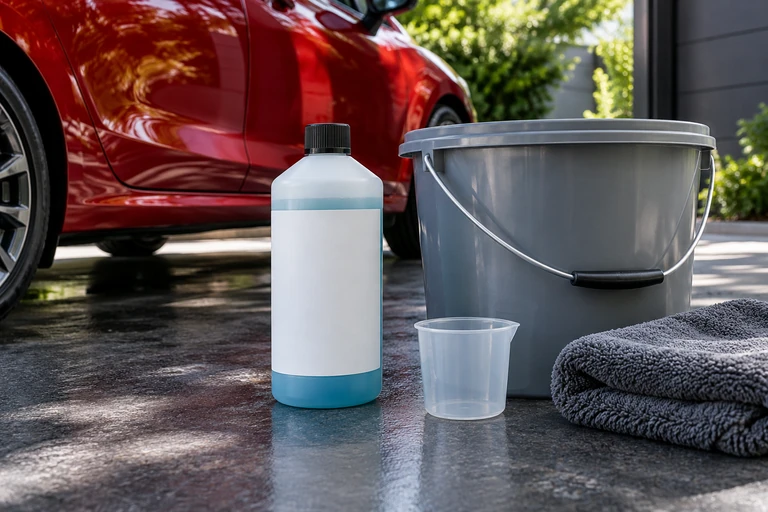
Chemical Guys Bug Plus Tar Remover, CWS_104_16
The concentrate offers a documented six-to-one water-to-cleaner spray route followed by a clean-water rinse.
Why this position: Fourth when a concentrate and measured preparation are appropriate. Its spray and bucket recipes are separate, adding a mixing decision absent from the preceding spot products.
Check before choosing: The bucket directions are separate. Do not escalate agitation or strength without the product and finish instructions.
05Documented task fit
Best for Cloth-applied cleanup on solvent-resistant surfaces
Koch-Chemie Eulex, 43001US
The 1 liter US product is applied undiluted with a dry cloth after a compatibility test.
Why this position: Fifth for the more restricted solvent-resistant-surface task. Undiluted cloth application and excluded plastics make it a specialist route rather than a default paint cleaner.
Check before choosing: Exclude polycarbonate and polyacrylate. Adhesive-removal use does not authorize treatment of installed PPF; no generic dwell timer is supplied.
Identify the residue before choosing the cleaner
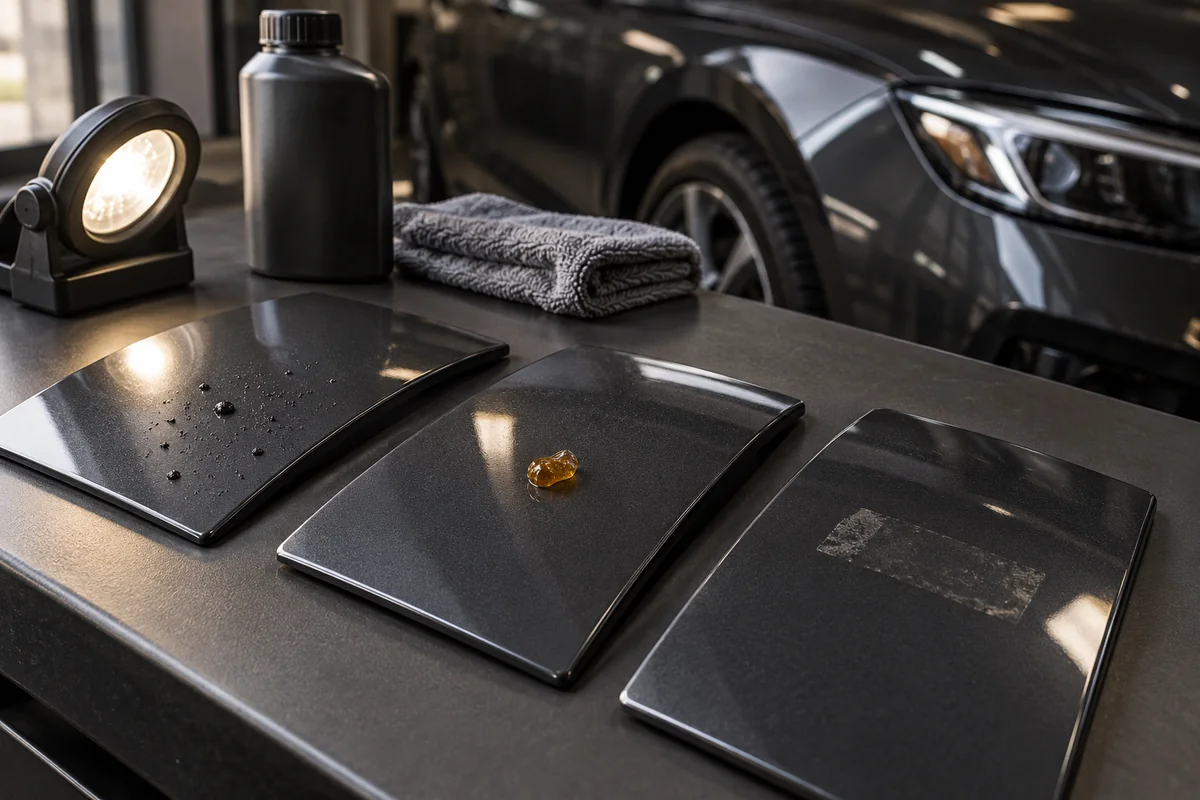
Tree sap needs its own verified product use; a tar-remover name alone does not establish approval. Follow our tree-sap removal guide for a surface check, a documented sap-specific spot method, and limits on further treatment.
Black specks after a freshly surfaced road suggest tar or asphalt, but appearance alone cannot establish what is on the panel. If you cannot identify a mark, avoid cycling through stronger chemicals or scraping it away. Ask a detailer to identify the contamination and finish first.
| Suspected deposit | What to look for in the instructions | Important boundary |
|---|---|---|
| Road tar or asphalt | Explicit tar/asphalt removal on the exposed material | General car-wash or all-purpose-cleaner wording does not establish a tar procedure. |
| Sticker or tape adhesive | Adhesive removal with permission for the underlying finish | Removing adhesive after film removal is a different job from cleaning an installed wrap. |
| Insect remains | A bug-removal or wash method suitable for that finish | Do not assume an insect-cleaning dilution is also the correct solvent method for asphalt. |
| Iron fallout | A product specifically intended for ferrous contamination | Iron removal and tar removal are separate functions; a combined product must document both. |
For sticker or tape adhesive on eligible painted bodywork, follow the separate guide to remove sticker residue from car paint. Keep that task separate from road tar and from cleaning an installed film.
For example, CARPRO describes IronX as a cleaner for iron particles, including brake and rail contamination. That does not turn every iron remover into a tar solvent. The same distinction applies to an all-purpose cleaner: its cleaning category cannot substitute for a documented use on a particular deposit.
For that separate iron-removal decision, the CARPRO IronX liquid review explains formula identity, US surface exclusions and regional instruction differences. Match those checks to the actual bottle and finish before selecting it.
Check the surface beneath the residue
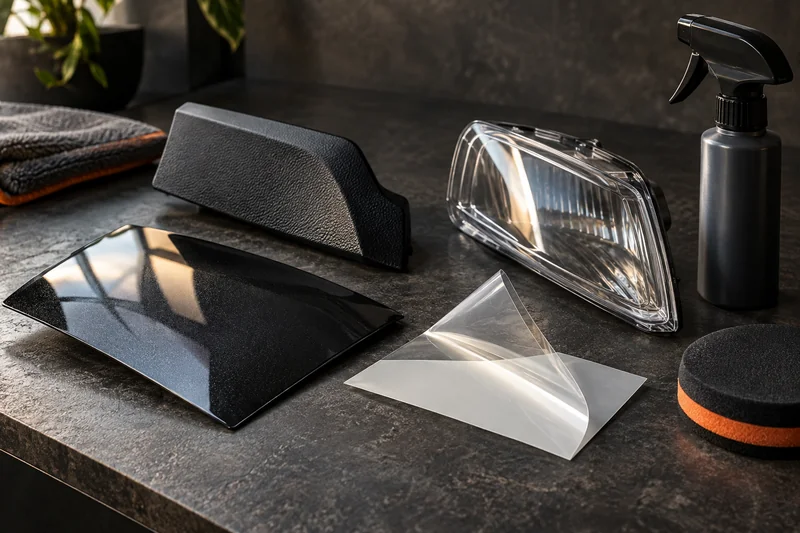
Determine whether the mark is on exposed paint, clear coat, paint protection film (PPF), a vinyl wrap, a ceramic coating or another component. If you do not know what covers the panel, pause before applying a solvent. A test spot checks the selected method locally; it does not override an explicit prohibition or establish long-term compatibility.
- Paint and clear coat: use the exact product label alongside the vehicle’s care instructions. Repainted, damaged or unusual finishes need their own care advice; a broad clear-coat claim is not a guarantee for an unknown repair.
- PPF and wraps: identify the film product and follow its maker’s care procedure. XPEL’s COLOR PPF instructions exclude unapproved solvents, while its other film and coating sections have different requirements. Permission for one XPEL product does not cover all of them.
- Ceramic coatings, waxes and sealants: check the specific protection maker or installer. XPEL’s FUSION PLUS care section directs owners away from aggressive contamination-removal products. “Safe for paint” does not prove that a wax layer or a particular coating will be preserved.
- Glass and surrounding parts: bare glass, coated glass, windshield film and plastic light lenses are separate surfaces. A glass-compatible cleaner can still be unsuitable for a nearby plastic or adhesive. Use the car window cleaner guide for the glass-cleaning task.
3M’s US product-care guidance also separates wrap and protection-film care and warns against abrasive tools. Keep those material-specific instructions attached to the actual film; do not combine solvent recipes from unrelated film guides.
Vehicle instructions can differ too. The US Model 3 manual’s tar-and-grease procedure mentions denatured alcohol when necessary, followed immediately by water and mild non-detergent soap. That is a Model 3 instruction, not permission to use household alcohol on every car, coating or film.
Three documented products with different application modes
The original listing records and US manufacturer information match the identities and packages of these three products. The retained photos help identify the bottles; they do not show a removal test. Check the current seller’s variant, label and package before purchasing.
| Product and package | Mode | Decision that matters |
|---|---|---|
| Stoner Tarminator 91154, 10 oz aerosol | Ready-to-use solvent | Its use directions specify painted exterior surfaces and a short water-rinsed treatment. |
| Chemical Guys CWS_104_16, 16 fl oz | Concentrated Bug & Tar Remover Car Wash | Spray-bottle and wash-bucket methods have separate directions. |
| Koch-Chemie Eulex 43001US, 1 L | Strong solvent used undiluted on a cloth | The surface must resist the solvent; specified plastics are excluded. |
Stoner Tarminator: a short treatment on permitted painted surfaces

Stoner’s US page identifies item 91154 as a solvent-based tar remover. Its use directions require a compatibility check, exclude headlights and clear plastics, and restrict application to painted exterior surfaces.
The directions say to cool and clear loose dirt with water, treat a small area, remove excess drips promptly, allow 30–60 seconds, then wipe and rinse immediately. Do not leave it for more than one minute without rinsing. If necessary, repeat the directed treatment rather than extend that limit.
The same page’s FAQ discusses chrome and longer dwell for heavier deposits. This guide follows the narrower use directions. Do not transfer the method to film, decals, rubber trim or other solvent-sensitive parts from a general marketing claim.
For can identification, package choices and the complete rinse requirement, read the Tarminator 91154 review before selecting an offer.
Check the Tarminator 10 oz listing on Amazon
Chemical Guys Bug & Tar Remover: select the concentrate’s use mode

The manufacturer’s US page lists CWS_104_16 for 16 oz, CWS_104_64 for 64 oz and CWS_104 for one gallon. These sizes share a product family, but the package in this retained offer is 16 fl oz.
For spray-bottle use, the maker specifies 6:1 dilution, wiping with a microfiber towel and rinsing with clean water. Its windshield-cleaning instructions clarify six parts water to one part cleaner. Keep the active product out of direct sunlight.
The bucket directions specify 2 oz in a wash bucket, followed by washing and rinsing, without stating a water volume on the page. Read the bottle for the bucket setup instead of interpreting this as 2 oz per gallon. The 1:10 and 1:5 suggestions in older reader replies are not the verified manufacturer instructions.
A 420 mL spray mixture at six parts water to one part cleaner contains 360 mL water and 60 mL product. This is arithmetic from the documented spray ratio, not a new manufacturer recipe or a removal test. Measure the parts rather than filling the bottle with 420 mL water and adding cleaner afterward. It does not resolve the bucket method’s unspecified water volume.
Check the CWS_104_16 16 fl oz listing on Amazon
Koch-Chemie Eulex: a strong solvent for a confirmed resistant surface

Koch-Chemie USA identifies the 1 L bottle as 43001US. The brand describes a strong solvent for tar, adhesive residue and paint overspray. The US technical sheet limits it to solvent-resistant surfaces and calls for undiluted application with a dry absorbent cloth.
Check material compatibility and colorfastness first, and do not use it on a hot surface. The sheet excludes polycarbonate, polyacryl and similar plastics. The USA page specifies small amounts on a microfiber towel and discarding used towels; it does not give a universal timed spray-and-rinse procedure.
The US description includes removal of PPF adhesive. That means an adhesive-removal task, not approval to clean intact PPF, its topcoat or its edges. “Ceramic” among solvent-resistant materials in the technical sheet likewise does not establish permission for every automotive ceramic coating.
Check the Eulex 1 L listing on Amazon
Before applying a remover

Have the exact label, the finish care instructions and the required removal materials available before opening the bottle. Select one permitted method. Do not borrow a dwell time, dilution or rinse step from another product in this guide.
- Check the working conditions. Use a cool surface and the shade or sunlight restriction specified by the product. Account for adjacent lenses, trim, decals and film edges before deciding where liquid may run.
- Prepare as that product requires. Tarminator’s pre-rinse and Eulex’s dry-cloth method are different starting points. Remove loose contamination by the permitted preparation method so that grit is not carried across the finish.
- Check the bottle’s safety information. Follow its ventilation, ignition-source, eye/skin protection, storage and disposal requirements. The retained Eulex and Tarminator packages carry flammability warnings. A product’s smell is not a measure of safe exposure.
- Work on a small permitted area. Use the specified amount and contact method. Finish the product’s own wipe, wash or rinse step; do not let another product’s one-minute direction become a universal timer.
- Inspect before repeating. Stop if the finish changes unexpectedly, softens, becomes tacky or shows discoloration, or if contamination is not responding as expected. Obtain product or finish-specific advice instead of adding pressure, extending time or reaching for a drill attachment.
A safety data sheet covers chemical hazards. Surface permission still comes from the product’s application instructions and the finish’s care requirements. Match its region and product identification to the bottle, then use the application label and finish maker’s instructions for the cleaning decision.
Questions raised in the original discussion
Will Eulex damage clear coat?
No blanket assurance follows from a successful reader experience. The relevant US technical sheet says solvent-resistant surfaces and requires compatibility and colorfastness checks. An unknown repair, damaged clear coat or protective layer needs its own assessment. Choose another approved method if you cannot establish that Eulex is permitted.
Is Rain-X suitable for ceramic-coated paint?
Rain-X’s current US page identifies Pro 3-in-1 item 620213, 16 oz, as water-based, but that general exterior-surface description does not establish compatibility with your coating. Check the coating maker’s care instructions and the bottle. The old offer’s photo has different warning text from the current official image, so it is not retained here as a verified current formulation.
What about Tarminator odor or residue?
Readers reported both, but those reports are not controlled tests. Use the bottle’s exposure precautions and complete Stoner’s specified water-rinse step. If a mark remains, distinguish remaining tar from an unexpected finish change before trying again. Do not judge safety or effectiveness by odor alone.
Should P21S be diluted more, and how should a leaking bottle be stored?
P21S describes Total Auto Wash as detergent combined with citrus solvent and says it can cut wax buildup. That does not establish a dedicated tar-removal dilution or wax preservation. Follow the exact label rather than a reader’s suggested stronger mix. A leaking package needs the manufacturer’s handling advice or replacement; a bag around it does not establish safe storage.
How hard should I press a Nanoskin pad?
A mechanical pad does not acquire a scratch-free guarantee from “non-abrasive” wording. Nanoskin’s current Scrub Away page describes 6 × 9 inch pads in a six-pack, which does not verify the older offer’s package. Follow instructions for the exact tool and finish. Stop if the job requires extra force or the permitted contact method is unclear.
Are larger bottles cheaper, or is Eulex available locally?
Compare the current exact package and, for a concentrate, its permitted dilution before comparing cost. The 16 oz, 64 oz and gallon Chemical Guys packages are different purchase quantities. Check today’s price and availability for the same SKU and region. Historic prices and stock messages cannot establish current value or local inventory.
How the selections were checked
We reviewed the earlier article, all 35 existing comments and all 16 stored merchant records. The three retained offers have matching package identifiers and original images checked against US manufacturer information. Other automatic offers and unresolved variants were excluded from recommendations; this is an evidence boundary, not a finding that those products are defective.
Manufacturer directions establish documented use, not measured superiority. Reader anecdotes stay separate from those directions. Product labels and formulations can change, so the current bottle and the care requirements of the actual finish remain necessary checks.
For the related contact-tool task, see the car detailing brushes guide. Brushes, scrub pads and drill-mounted eraser wheels do not inherit chemical compatibility or permission from a remover used alongside them.
Original CARPRO TarX, 1 liter appearance reference: View original product packshot