Iron Remover vs. Clay Bar: Do You Need One, Both or Neither?

Choose iron remover for a permitted ferrous-contamination job. Choose clay for bonded surface contamination that remains after washing and suits the tool. Use both only when each has a reason to be there; if washing leaves no identified preparation need, adding either treatment is optional.
This comparison covers suitable gloss automotive paint. These finishes need their own care instructions:
- Matte or satin paint.
- Paint protection film.
- An unidentified coating.
- Damaged clear coat.
A broad surface claim does not establish permission for every finish.
The comparison is based on manufacturer and US distributor documents checked October 13, 2026. Hot Car Care has not run a physical removal, marring or protection test.
Top 5 best iron and clay paint preparation choices by use case
These products are ordered for the stated use cases. The list is documentary: it does not report measured performance or rank the whole market. Check the exact formula, surface and received directions before choosing.
How this shortlist is ordered
Order for this page: match the contaminant first: mechanical bonded-contamination routes before separately needed ferrous treatment.
How we order these choices- Meguiar's Smooth Surface Clay Kit G191700Best for conventional clay preparation when the included clay, detailer and towel fill a real gap
- Mothers Speed Clay 2.0 17240Best for a synthetic surface-preparation tool used with its own supported workflow
- Griot's Garage Brilliant Finish Synthetic Clay 10691Best for a hand-held synthetic-clay tool with a defined lubricant choice
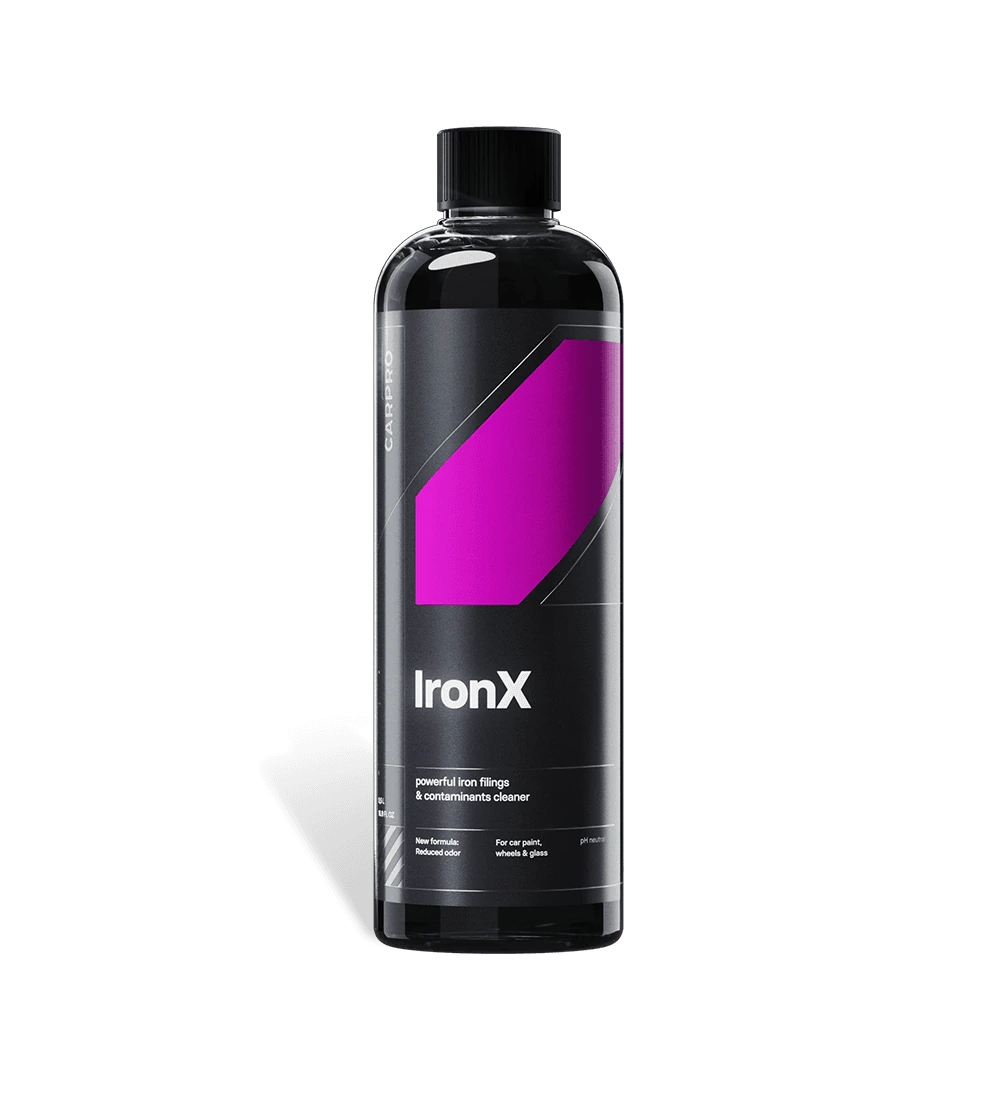
- CARPRO IronX liquid, 500 mLBest for a permitted ferrous-contamination job with thorough removal available
- GYEON Q²M Iron REDEFINED, 500 mLBest for a ferrous-contamination job using the identified REDEFINED formula

01Documented task fit
Best for conventional clay preparation when the included clay, detailer and towel fill a real gap
Meguiar's Smooth Surface Clay Kit G191700
Smooth Surface Clay Kit G191700 supplies conventional clay, detailer and a wipe-down towel for paint preparation when those are the missing supplies. It does not include a full washing setup or establish that clay can correct a visible paint defect.
Why this position: First as the complete identified conventional-clay-and-detailer option for a justified mechanical preparation job. Its place does not mean every washed panel should be clayed.
Check before choosing: The kit is not a full washing setup or scratch-correction system; match G191700 and the received contents.

02Documented task fit
Best for a synthetic surface-preparation tool used with its own supported workflow
Mothers Speed Clay 2.0 17240
Speed Clay 2.0 is a rubber-polymer preparation tool with two supported workflows: washing-stage use or clean, dry-panel use. Match one method to the finish and supplies. Washability does not establish faster or scratch-free work, or safe reuse after any drop.
Why this position: Second as a synthetic mechanical alternative with two supported process choices. Those choices remain separate and do not establish a need for an iron remover as well.
Check before choosing: Its wash-stage and clean/dry-panel routes remain separate; reuse or washability does not establish scratch-free treatment or safe reuse after any drop.
More product photos


03Documented task fit
Best for a hand-held synthetic-clay tool with a defined lubricant choice
Griot's Garage Brilliant Finish Synthetic Clay 10691
Griot's identifies 10691 as a foam-grip synthetic-clay tool. The product page names Speed Shine or car-wash water as lubrication choices, providing a distinct format from a conventional clay kit that includes detailer and a towel.
Why this position: Third as another synthetic mechanical tool with named lubrication options. Its format and lubricant permission are the selection criteria, not a faster or scratch-free claim.
Check before choosing: Match the surface, lubricant and complete tool directions. A maker's reuse or speed claim is not a scratch-free guarantee or a result tested by Hot Car Care; do not transfer this tool's drop-recovery advice to conventional clay.
04Documented task fit
Best for a permitted ferrous-contamination job with thorough removal available
CARPRO IronX liquid, 500 mL
IronX liquid addresses permitted ferrous contamination when the required removal process can be completed. Check the formula, finish, 500 mL size and matching directions. It does not treat every remaining mark, and a purple reaction does not establish repaired paint.
Why this position: Fourth only when the diagnosed problem is ferrous contamination. The list now changes treatment type; chemical iron removal is not ranked as interchangeable with clay.
Check before choosing: Do not transfer paste, foam or another liquid version's directions; a purple reaction is not a measurement of repaired paint.
More product photos


05Documented task fit
Best for a ferrous-contamination job using the identified REDEFINED formula
GYEON Q²M Iron REDEFINED, 500 mL
GYEON Q²M Iron REDEFINED addresses permitted ferrous contamination when the actual bottle matches the formula and thorough rinsing is available. Current global and US pages describe REDEFINED; the updated scent and directions do not automatically apply to an older Q²M Iron bottle.
Why this position: Fifth as a separately identified current-formula ferrous-treatment alternative. Verify REDEFINED before using its directions; both chemical and mechanical treatment are not automatically required.
Check before choosing: The updated version's scent and directions do not automatically apply to an older Q²M Iron bottle; identify the finish and received formula first.
More product photos


What Each Method Removes

Iron-removal chemistry targets particles containing iron. CARPRO describes IronX as forming a water-soluble complex that can be rinsed away. Clay works through contact with the surface: Mothers describes its lubricated sliding action as removing attached contamination left after a wash.
The targets can overlap. Mothers includes metal fragments among the contaminants clay can address. That does not make the two processes equivalent, or prove that claying replaces the chemical step in every preparation job. Nor does a remover's claim to clean more deeply establish a measured advantage on your car.
Read CARPRO's IronX description
Read Mothers' paint-preparation guide
Both methods are preparation steps. They do not establish that a scratch, etching or failing clear coat has been repaired. Smoothness and visible appearance are separate checks; removing a particle can leave a mark behind.
Compare the Requirements Side by Side
The practical trade-off is chemical application and complete removal versus a lubricated contact process. Neither method has a universal time or recipe.
| Decision factor | Iron-removal liquid | Traditional clay or a named claying tool |
|---|---|---|
| Main job | Ferrous contamination within the exact remover's scope. | Bonded surface contamination within the exact tool's scope. |
| Contact | Spray application; agitation may be specified or optional. | The clay or claying surface glides over the finish. |
| Preparation | Follow the remover's wash and surface instructions. | Start with a properly cleaned surface; do not use clay to collect loose wash dirt. |
| Working liquid | Use the actual remover as directed; it is not automatically a lubricant. | Use a lubricant allowed for that clay or tool. |
| Completion | Remove all chemical as directed, including the required rinse. | Use the tool's smooth-gliding endpoint and its wipe or rinse instructions. |
| Main rejection check | Excluded or unidentified finish; no way to complete removal. | Unapproved finish or lubricant; dirty or contaminated working surface. |
| What remains unproved | Complete removal of every contaminant, paint repair and universal superiority. | Absence of marring, removal of every defect and retained protection. |
The clay/tool column covers distinct procedures. Mothers' conventional clay instructions use detailing spray and a wipe-off process. Its Speed Clay 2.0 wash method uses generous car-wash suds and a rinse; it also describes a separate detailer or spray-wax method. A shampoo allowed for the tool is not thereby approved for every conventional clay bar.
For chemical removal, IronX and GYEON Q²M Iron REDEFINED have separate instructions. GYEON's current global page requires a cool surface, reaction, light agitation if needed and thorough rinsing, and says not to let the product dry. Use those details only for the named formula, not as the label for the entire category.
Read GYEON's REDEFINED instructions
Choose One Step, Both Steps or Neither
Base the choice on what remains after cleaning, the finish and the next preparation requirement. Roughness or a rust-colored spot alone does not identify its chemistry.
| What you have established | Reasonable next decision | What would stop the plan |
|---|---|---|
| Washing meets the present care need; no additional contamination or preparation requirement is identified. | Continue the permitted care routine. Neither treatment is automatically necessary. | A later coating or sealant step may have additional preparation requirements. |
| There is a ferrous-contamination job and the finish permits the chosen remover. | Follow that remover's complete process, then reassess. | An excluded finish, unmatched instructions or unavailable rinse/removal resources. |
| Bonded roughness remains and a compatible clay process is established. | Use the named clay or tool with its approved lubricant and removal method. | Loose dirt, contaminated clay, dragging or an unapproved finish. |
| Iron removal has been completed, but bonded contamination still requires a compatible clay step. | Keep the procedures separate: fully remove the chemical before starting the clay's own process. | No confirmed need for the second step, or either product's instructions rule it out. |
| A mark remains on otherwise cleaned paint, or the finish is uncertain. | Identify the finish and remaining problem before choosing another treatment. | Repeating decontamination is not evidence that the remaining mark is removable contamination. |
Should iron removal come before claying? In the separate-step scenario above, finish and remove the iron treatment, reassess the surface, then clay only if a compatible contact step is still needed. This is not a mandatory wash–iron–clay–polish–coating sequence for every car. The protection system's instructions may change the preparation required.
Can Iron Remover Be Used as Clay Lubricant?

Do not assume a fallout-removal liquid is a clay lubricant. CARPRO separately names IronX Snow Soap for clay and polymer decontamination lubrication. That permission does not transfer to ordinary IronX liquid or IronX Paste.
GYEON USA's REDEFINED page mentions lubrication with chemical-resistant clay. The tip is limited to that kind of combination; it does not qualify an unidentified bar, a Meguiar's kit or Mothers Speed Clay 2.0. Its linked clay URL redirected to the homepage when rechecked, so this review does not treat it as a verified exact-tool instruction.
Unless the chemical and the tool both permit the actual combination, complete the remover's process first and use the clay's approved lubricant separately. Do not create a mixed-chemical recipe to combine the jobs.
Check the limited GYEON USA clay tip
Check Removal, Smoothness and Protection Separately
Purple or red color shows a reaction; it does not measure how much contamination remains. It does not prove that nonferrous contamination is gone or that paint damage has been repaired. The IronX US instructions explicitly require verifying complete product removal before drying.
| Check after treatment | What the check tells you | What it does not establish |
|---|---|---|
| The chemical or lubricant has been removed using its specified method. | The removal stage was completed. | A guarantee that every kind of contamination is gone. |
| The cleaned surface meets the clay/tool's smoothness check. | Whether the contact-cleaning endpoint has been reached. | Scratch correction, undamaged clear coat or protection durability. |
| The finish still shows a mark. | A separate appearance problem needs assessment. | Permission to repeat treatment or start abrasive correction. |
| The next protection step's preparation requirements are met. | Whether that particular wax, sealant or coating process can proceed. | Universal approval for another protection system. |
Protection effects also depend on the product. Mothers says claying removes wax and calls for resealing the clayed portion. CARPRO US says IronX's effect differs between oil-based waxes, synthetic sealants and coatings. Do not conclude that both methods always strip protection, or that a neutral-pH remover leaves every protection product unchanged.
Read the IronX US removal and protection guidance
Select the Process Before the Product

For a contact-cleaning job, the clay-bar guide explains the process and stopping checks. The Meguiar's Smooth Surface Clay Kit review covers the conventional kit, while the Mothers Speed Clay 2.0 review covers the reusable tool and its separate lubrication methods.
For a ferrous-contamination job, check the restrictions in the CARPRO IronX review and the version checks in the GYEON Q²M Iron REDEFINED review. If your existing supplies already fit the confirmed job, another purchase is unnecessary.
Best Fit by Intent: Optional Product Searches
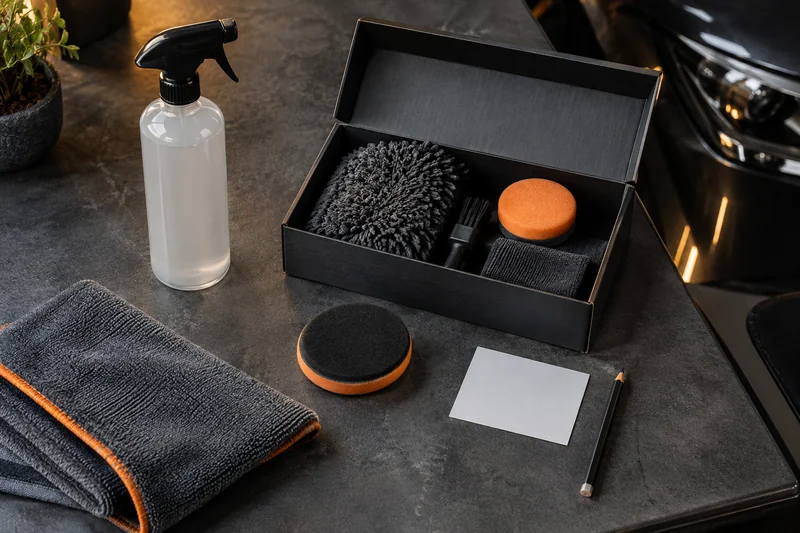
Use a search only if the selected task calls for these supplies. Suitable supplies already owned may be enough; neither search is a required purchase.