Paint Sealants for Cars: Preparation and Application

Exterior care · US product guide
A paint sealant is useful only when its application suits the finish and the time you have available. Start by checking what is on the panel, then match the exact bottle and its directions. A wipe-and-buff spray, a liquid wax/polymer hybrid and a bottle coating require different preparation and waiting periods; the word “sealant” does not make them interchangeable.
This guide compares documented workflows for current US products and explains the limits of the original product list. We have not applied or durability-tested these products on a vehicle. Manufacturer instructions support the methods below; promotional protection periods and reader opinions do not establish a longest-lasting winner.
Purchases through the Amazon links may earn us a commission. The original product identifiers are retained. Before ordering or applying, match the listing and received label to the product number, size and formulation. The photograph cannot confirm current stock or the version that will arrive.
Top 5 best car paint sealants by use case
These products are ordered for the stated use cases. The list is documentary: it does not report measured performance or rank the whole market. Check the exact formula, surface and received directions before choosing.
How this shortlist is ordered
Order for this page: identified spray-and-wipe processes before small-area no-drying and haze-and-buff liquids.
How we order these choices- CARPRO Reload 2.0, 500 mLBest for a named CARPRO spray-sealant workflow
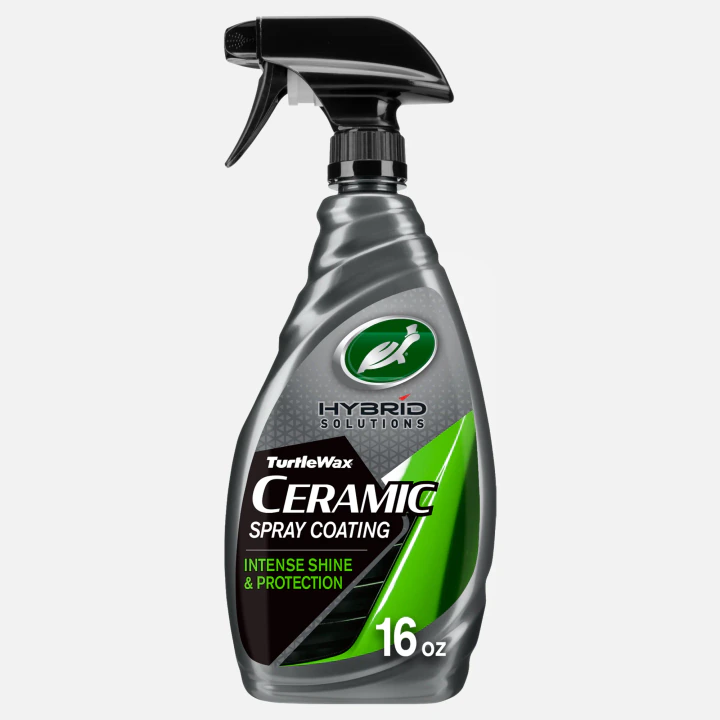
- Turtle Wax Hybrid Solutions Ceramic Spray Coating 53409, 16 fl ozBest for A measured spray-and-buff sealant step on permitted, washed and dry paint
- Turtle Wax ICE Seal N Shine, 16 fl ozBest for a wipe-off spray on dry paint
- SONAX PROFILINE PolymerNetShield, 340 mLBest for small-area application without a drying stage
- CAR GUYS Liquid Wax, 8 oz kitBest for A polymer-sealant alternative to a ceramic coating

01Documented task fit
Best for a named CARPRO spray-sealant workflow
CARPRO Reload 2.0, 500 mL
Reload 2.0 provides a documented spray-sealant option for clean, prepared paint. The current maker page identifies the 500 mL package and a section-by-section microfiber method.
Why this position: First as a specifically identified current spray-sealant formula with a section-by-section microfiber method. Coating-specific layering waits remain attached to the correct workflow.
Check before choosing: Read the Reload 2.0 label. The maker’s wait before adding a coat over CQUARTZ concerns that coating workflow; it is not a universal cure or wash interval for every sealant.
02Documented task fit
Best for A measured spray-and-buff sealant step on permitted, washed and dry paint
Turtle Wax Hybrid Solutions Ceramic Spray Coating 53409, 16 fl oz
53409 uses a small-section dry-paint method. Turtle Wax specifies two mists on a 2-by-2-foot section, microfiber spreading and a clean-side dry buff. The named 16 fl oz spray is separate from ICE Seal N Shine and from Ceramic Polish & Wax.
Why this position: Second as a measured dry-paint spray-and-buff route. Exact bottle and section dose supply a concrete alternative without sharing another sealant's timing.
Check before choosing: The optional second coat follows a 24-hour interval; that is not a rain or washing clearance. Confirm the received label and permission for any installed film or coating before applying it.

03Documented task fit
Best for a wipe-off spray on dry paint
Turtle Wax ICE Seal N Shine, 16 fl oz
ICE Seal N Shine is a spray-sealant route when the job calls for dry-paint application and microfiber removal. Its maker instructions specify a different method from liquid waxes that must haze.
Why this position: Third for a restrained dry-paint wipe-off spray. It follows the measured-dose route because the reader still needs to match this separate product's actual label.
Check before choosing: Use only on a finish that permits the product. More spray is not better: the maker advises restrained application. A general surface claim does not approve cameras, functional glass or an unknown film.

04Documented task fit
Best for small-area application without a drying stage
SONAX PROFILINE PolymerNetShield, 340 mL
The maker identifies article 02233000 as a wax-free paint sealant. Its directions call for clean, dry paint, spreading on partial areas, then microfiber removal to a streak-free finish.
Why this position: Fourth for a wax-free small-area sealant that must not dry. That no-drying requirement is a different handling commitment from the preceding sprays.
Check before choosing: Do not apply on hot paint or allow it to dry. This is the global 340 mL product: match the received regional label and safety information. A liquid sealant does not provide a PPF barrier.

05Documented task fit
Best for A polymer-sealant alternative to a ceramic coating
CAR GUYS Liquid Wax, 8 oz kit
The liquid-wax directions use prepared dry paint, a thin pad-applied layer, a 30-minute haze and buffing.
Why this position: Fifth as the pad-applied polymer sealant with a haze-and-buff process. Its longer handling and separate layering wait put a different workflow at the end of this spray-first order.
Check before choosing: This is a polymer paint sealant, not a bottle ceramic coating. Keep it off rubber and plastic; wait at least six hours before another wax or sealant.
Check the finish before choosing the product

Identify whether the panel is exposed glossy paint or clear coat, a repaired finish, paint protection film, vinyl wrap, or matte/satin paint. A glossy surface may have clear film over it. If the finish is uncertain, ask the installer or vehicle maker before applying a gloss-enhancing product. Approval for paint does not automatically include film, trim, lights or glass.
Resolve existing protection too. A ceramic coating may have its own maintenance-product requirements, and a fresh repair may need a refinisher’s waiting period before protection. Collinite’s FAQ specifically advises checking the coating manufacturer before using a carnauba/polymer topper. That is a conditional choice, not permission to layer any wax or sealant over any coating.
Separate protection from cleaning and repair. Sealant does not replace washing, removal of contamination, or a diagnosis of a scratch. Do not choose an abrasive cleaning step merely because the next product needs a clean surface; the cleaner and the protectant each need approval for the actual material.
A vehicle-specific glass boundary
A paint method can conflict with instructions for the neighboring glass. The current US Model 3 owner’s manual allows hydrophobic window coating only on the side and rear windows, not the front windshield, because it may affect camera visibility. It also directs owners to follow the coating maker’s application instructions. For a Model 3, do not extend a paint sealant across the windshield because a product advertises multi-surface use. This is a named vehicle’s restriction, not a claim that every vehicle has the same rule. Check both the vehicle’s manual and the exact product’s permissions before treating glass.
Water Spots: Check the Finish Before Choosing a Remover

Before selecting a water-spot chemical, use the finish and existing-protection checks above. Keep the application date with the protection’s instructions. Its restrictions on water and cleaning chemicals still matter, even when a remover is advertised as coating-safe.
CARPRO Spotless 2.0 and Gtechniq W9 publish limits involving sun or hot surfaces. Check the exact remover’s permitted surface, working conditions and complete removal instructions. Their limits do not establish a temperature or contact time for another product.
Postpone treatment if the required conditions cannot be maintained. If necessary steps differ between the label and other instructions, ask the maker to resolve the exact formula and market. Do not combine conflicting steps into a new procedure; this guide supplies no complete Spotless or W9 treatment recipe.
An unchanged mark after permitted cleaning is not a diagnosis of etching or permission to use a stronger acid or polish. For a windshield problem, use the existing glass-cleaning troubleshooting guide.
Sources: CARPRO Spotless 2.0 instructions · Gtechniq W9 instructions
Compare application work and the event that follows it

The table identifies the named product and the instruction that matters during the job. “Ready to buff” means residue can be removed. It does not by itself mean ready for rain, detergent washing or a second layer. Where the current instructions reviewed did not establish a separate interval, confirm it with the maker rather than borrowing another row’s number.
| Exact product or family | Application method | Separate decision to check |
|---|---|---|
| Reload 2.0, 500 ml / 17 oz | Current US directions: clean, wax/oil-free paint; work a small section and buff immediately. | Match Reload 2.0 and the received directions; do not import a coating’s cure schedule. |
| Collinite No. 845, 16 fl oz | Carnauba/polymer hybrid; thin coat, haze and removal cue. | Current guide and FAQ differ about an additional coat. Resolve the label/version before layering. |
| Current base JetSeal WAC_118_16, 16 fl oz | Clean, dry paint; thin foam application, 20-minute drying wait, then buff. | That wait is for buffing. The old SW-coded offer is held; this row describes the current base product. |
| ICE Seal N Shine 50984, 16 oz | Wash and dry; two mists per exterior panel, spread with microfiber. | Use its panel dose, not another Turtle Wax spray’s instructions. |
| Current CERAKOTE Platinum Rapid Ceramic Paint Sealant | Clean, dry, cool surface; light coat on one panel and immediate wipe/buff. | Current printable directions specify a two-hour cure without moisture. |
CARPRO Reload 2.0: finish each small section
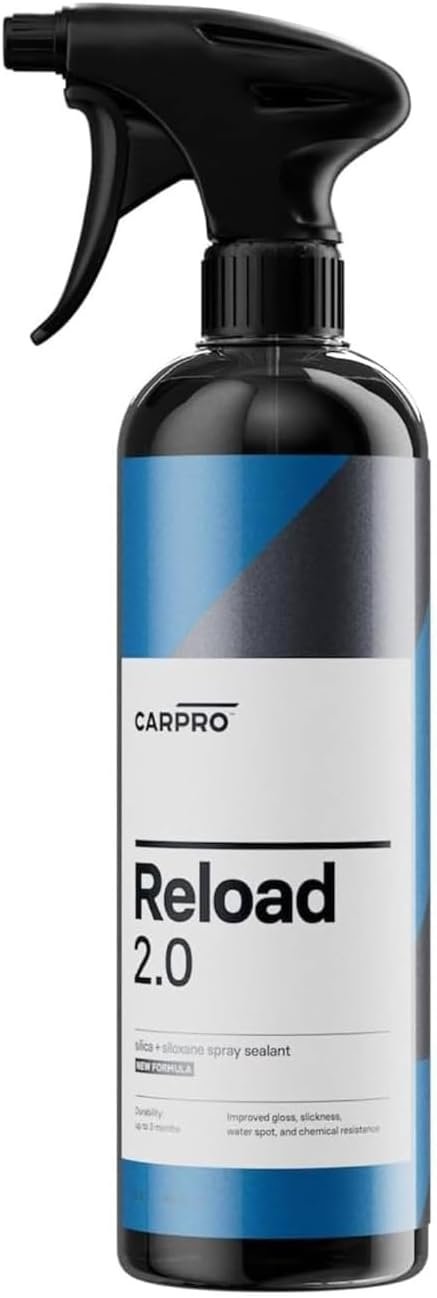
The current CARPRO US listing, supplied by Sky’s the Limit Car Care, identifies 500 ml / 17 oz Reload 2.0 as SKU 113, UPC 8809397812164. The original record uses 113n with the same UPC. This identity check supports the named package; it does not establish that every historical or currently shipped bottle has an identical formulation.
For that current US workflow, start with paint completely clean and free of oils, solvents and wax. Avoid direct sun, use good lighting and shake. The directions specify a section of about 2–2.5 square feet: use 1–2 sprays evenly on the section, or 3–4 on a microfiber towel or large applicator. Spread immediately, work until almost flashed, flip and buff; inspect the completed panel before moving on.
Keep clean towels within reach for immediate removal. Treat any remedy for excessive residue as product- and finish-specific; this guide does not convert an alcohol-cleaning suggestion into permission for every paint, film or coating.
Check the original Reload 2.0 500 ml listing.
Collinite No. 845: a hybrid with a haze cue
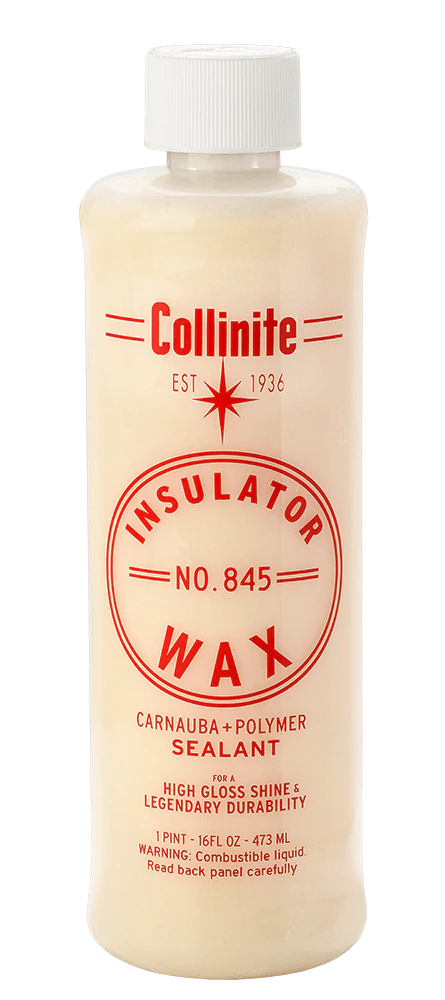
No. 845 Insulator Wax is a 16 fl oz carnauba/polymer hybrid. Do not classify every liquid sealant as wax-free, or take a manufacturer’s advertised months as a controlled comparison with a different formula. Decide whether a wax-containing finishing product fits the care instructions for your paint or existing coating.
The maker’s 845 application guide calls for properly prepared paint, avoiding direct sun and working within its recommended 55–80°F conditions. Apply a thin coat to a small area, such as 2 × 2 ft. Use the haze/removal cue: a finger swipe should leave a clean path rather than an oily smear. Buff with a suitable clean towel instead of assuming a thicker coat adds protection.
Additional coats need a separate check. The current guide says an optional second coat after two hours, ideally 12–24. The current product FAQ and general FAQ specify a minimum of 12 hours between coats. These are conflicting current manufacturer instructions, not one blended timer. Check the received label and ask Collinite to resolve the applicable version before planning an early second coat.
Keep material permissions narrow. The product’s exclusion list includes glass and several unpainted materials; its general FAQ contains a conditional vinyl use that does not align cleanly with that list. Neither is a blanket approval for an installed wrap or PPF. Check the exact finish system rather than extending a paint method across adjacent trim.
Check the original No. 845 16 fl oz listing.
Chemical Guys JetSeal: drying before buffing

The current US JetSeal page identifies the base WAC_118_16 product. For that current base product, wash, decontaminate and dry first. Equivalence to WAC_118_16SW remains unverified. Apply a thin layer with a foam applicator, allow 20 minutes to dry, and buff off with microfiber.
Plan that drying wait alongside your wiping work and inspect for residue. The reviewed method does not supply an additional rain, washing or second-layer interval. A 20-minute buffing instruction cannot answer those separate questions; obtain the applicable instruction before parking outside or adding another product.
The original B001TFE38A purchase recommendation is held. Its title names WAC_118_16, while the model, manufacturer part number and OEM fields name WAC_118_16SW. The maker evidence reviewed does not establish that suffix as the same package or formulation. Ask Chemical Guys to confirm the exact version before transferring the base product’s method to an SW-coded bottle.
Turtle Wax ICE Seal N Shine: its own panel dose
The current US ICE Seal N Shine page and ingredient listing identify the 16 oz product family including 50984. The original record names 50984; the current maker’s package image does too. That is a product-identity check, not a guarantee that an old and new bottle have unchanged ingredients.
Its directions say to wash and dry, then use two mists per exterior panel and gently spread with microfiber. Follow its drying/finish directions. Do not substitute the two-foot-square section and optional 24-hour second-coat instruction of a different Turtle Wax spray. Similar brand names are not an application recipe.
Check the original ICE Seal N Shine 16 oz listing.
Check the exact Seal N Shine spray and the scope of its instructions before buying.
CERAKOTE Platinum: verify the version and moisture window

The current Platinum bulk page identifies the quart as AH-RCPAINT-Q, UPC 850014615253. The original 32 oz record has that UPC but names AHW-104Q. A matching UPC and Platinum photograph are useful checks; they do not document a historical formula change or authorize silently substituting one SKU for another. Check the current maker’s information for the version you have; the original purchase recommendation remains held.
The current Platinum printable directions start with washed, dry paint that is cool to the touch, in shade. Remove preparation residues. Shake for about ten seconds, apply a light coat to one panel, spread with microfiber, then immediately flip to a clean, dry side and buff. Finish and inspect each panel before proceeding.
Those directions separate immediate buffing from a two-hour cure with no moisture exposure. Arrange protection from rain or dew for that period; postpone the job when you cannot provide it. Do not apply that window to Reload, ICE, JetSeal or a different CERAKOTE product. Check the received label or insert if the version is uncertain.
The maker currently links an AHW-104 SDS, version 3.1, revised July 23, 2024. Its handling directions include ventilation and hand/eye protection. An SDS is a handling document, not approval for a film, wrap, windshield or dilution mixture. The product name and a low hazard classification do not settle those permissions.
Why some original recommendations are held

Some original products still need an exact current version or primary application instructions. Their purchase recommendations remain held until that evidence is available. A hold does not show that a product is discontinued or ineffective.
- Meguiar’s M2116, 16 oz: the original identity is recorded, but a complete current primary application page was not available in this research. No dose or waiting period is invented, and the duplicate listing does not create a second recommendation.
- BLACKFIRE BF-300-16: a current retailer page corroborates product identity. That is not verified manufacturer permission for a method, nor evidence of comparative durability.
- Optimum Gloss-Coat, original 20 cc record: the current maker page describes an enhanced ceramic-polymer coating in 10 cc and 20 cc sizes. It requires removing waxes and oils and is not recommended for glass. The original 22912 record’s formulation was not verified as the current version; a coating’s preparation and restrictions cannot be replaced by a spray-sealant shortcut.
- P&S Bead Maker, original C2501 gallon: the current maker family includes a gallon option, but the exact current variant mapping was not established. The default family SKU does not replace the original gallon identity.
- Nu Finish NWXPCRB-1, Shine Armor’s two-piece set and the original 3D POXY variant: exact current package/formula evidence was insufficient. The POXY record mixes multiple pictured sizes with a description for another 3D product; a guessed size is not a verified offer.
- Other CERAKOTE listings: the current Platinum kit is 14 oz. Original 12 oz titles and photographs are inconsistent, so current-kit instructions are not silently attached to those offers.
- Magic Gem, SUPERMAXX and ForceField/CeramicKing entries: exact current maker, US formulation and instructions were not verified. Claims implying you will never need to wash are not adopted.
Several other records serve different tasks: Mr. Pink is wash soap, Stoner Ceramic Prep Wash is preparation, applicators are tools, and Leather Hero Satin is a leather finish. Windshield urethane and seam sealer are bonding/repair materials. None becomes a paint protectant merely because its listing includes “sealant.” They serve other tasks and are not included in this paint-protection comparison.
Make the work plan before opening a bottle
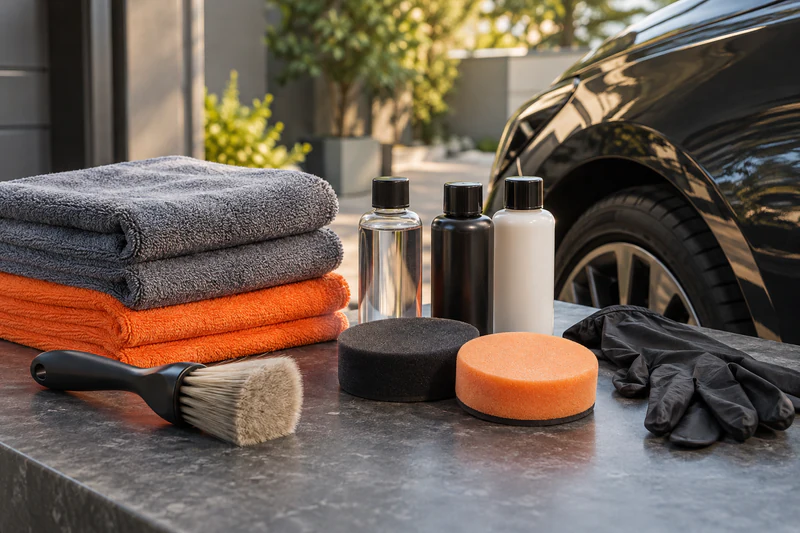
- Verify the surface and package. Match the product number, size, version and finish approval. If a repaired panel, coating or film is involved, resolve its care requirements first.
- Prepare for the actual product. Wash, dry and remove residues when specified. Determine whether decontamination or correction is needed and permitted; do not invent a universal alcohol dilution or polish every panel automatically.
- Set up the application area. Follow label and SDS requirements for handling, ventilation and protective equipment. Keep clean applicators and removal towels ready, and check lighting so residue is visible. Work out of direct sun where directed.
- Keep dose, section size and removal together. Follow the named method without combining one product’s spray count with another’s haze timer. Test the applicable removal cue on the instructed small area; stop and consult the maker if the received directions conflict.
- Write down separate after-application events. Record what is known about buffing, moisture, washing and additional layers. If a required interval is missing, ask before planning the job. Do not interpret “buff now” as “rain safe now.”
Continue normal care after protection. Remove contamination through an approved cleaning method and follow vehicle, finish and product maintenance instructions. Dirt, a water spot or a change in beading is not a controlled measurement of remaining protection. Before adding a topper, diagnose the surface and confirm compatibility; a calendar alone cannot identify the right treatment.
Three decisions raised by the original comments

Is No. 845’s extra effort worth it for wet-weather use?
Readers praised its longevity while mentioning application effort. Those accounts do not establish a measured rain/grime comparison. The useful decision is whether you can prepare the paint, apply a thin coat, watch the haze cue and resolve the separate layering instructions. An ambiguous comment about having a bottle for a year is not a one-year vehicle-protection test.
How should a beginner plan JetSeal application?
The comments describe tricky application and recommend thin layers. For the verified current base WAC_118_16, use the maker’s thin-coat method and drying/buffing instruction, then inspect the result. Resolve an SW-coded bottle with the maker first. Plan outside exposure separately if it is relevant. “Take your time” is practical reader advice; it is not evidence that JetSeal outlasts another product in winter.
BLACKFIRE or Gloss-Coat for a busy schedule?
The original discussion mixes a paint-sealant choice with a bottle coating and conflicting personal longevity reports. The current Gloss-Coat maker requires wax/oil removal; complete primary BLACKFIRE application authority was not established here. First obtain the exact version’s preparation, leveling and protected-time requirements. Then choose a process you can complete, or discuss installation with a qualified detailer. The comments do not provide a shared durability test or a verified winner.
If you are deciding between broader protection systems, the existing ceramic paint protection guide and paint protection film guide address different preparation and coverage decisions.
Sources and package identities were reviewed in October 2026. Recheck the instructions supplied with your bottle when buying or changing versions. If a package alias, direction or primary procedure remains unresolved, keep it open; a rating cannot supply the missing permission.