Car Detailing Brushes: Choose by Surface and Task
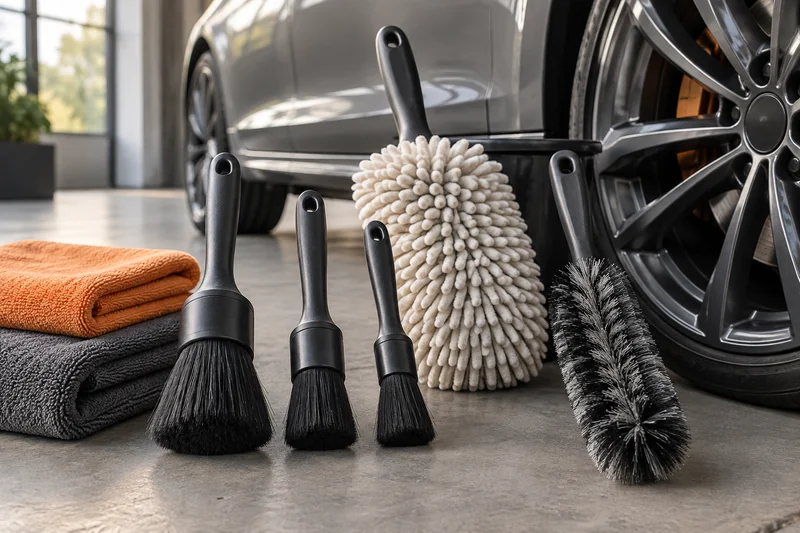
A car detailing brush is useful when a cloth cannot reach a small, accessible detail. Choose one for the surface and the dirt you need to remove: loose dust in a vent, residue in a cupholder, and grime around an exterior badge are different jobs. A soft-sounding bristle name or a large kit does not establish that every tool belongs on your car.
Read the cleaning instructions for your vehicle’s model year, trim, and material first. If those instructions specify a cloth, use that method. Use the checks below to narrow your brush choice, review a set, and decide when to put the brush aside.
Top 6 best car detailing brushes by use case
These products are ordered for the stated use cases. The list is documentary: it does not report measured performance or rank the whole market. Check the exact formula, surface and received directions before choosing.
How this shortlist is ordered
Order for this page: light permitted trim work before narrow-gap and stiff tire-scrubbing roles.
How we order these choices- Detail Factory Ultra-Soft Detailing Brush SetBest for light-duty detail work on permitted scratch-prone trim
- Detail Factory Ultra-Soft TriGrip Detailing Brush SetBest for light detail work when a triangular rubberized grip is preferred
- Detail Factory Crevice Brush SetBest for choosing a dedicated head for a permitted narrow gap
- Mothers Detail Brushes 90-156200, two-packBest for a permitted detail gap where a rubber seam tip is useful
- Chemical Guys All in the Details ACC600Best for a choice of three sizes for permitted interior detail work
- Detail Factory ProGrip Tire BrushBest for a separate tire-scrubbing tool
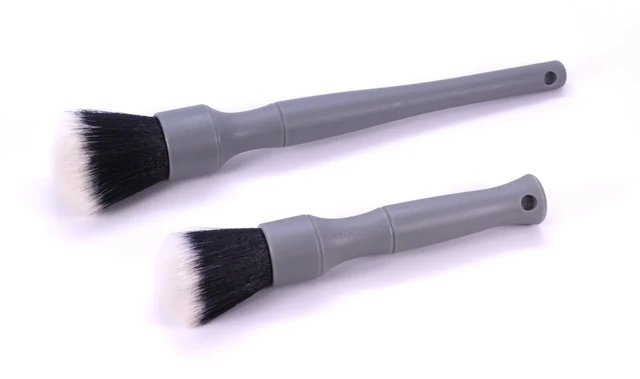
01Documented task fit
Best for light-duty detail work on permitted scratch-prone trim
Detail Factory Ultra-Soft Detailing Brush Set
The maker specifies ultra-soft synthetic bristles and metal-free construction for light-duty cleaning, including sensitive trim examples.
Why this position: First for the broad light-duty trim-detailing scenario where brush contact is allowed. Ultra-soft synthetic, metal-free construction identifies the role, without promising no marking.
Check before choosing: Those examples do not override a cloth-only vehicle method. Clean the brush and avoid treating softness as a guarantee against marking.
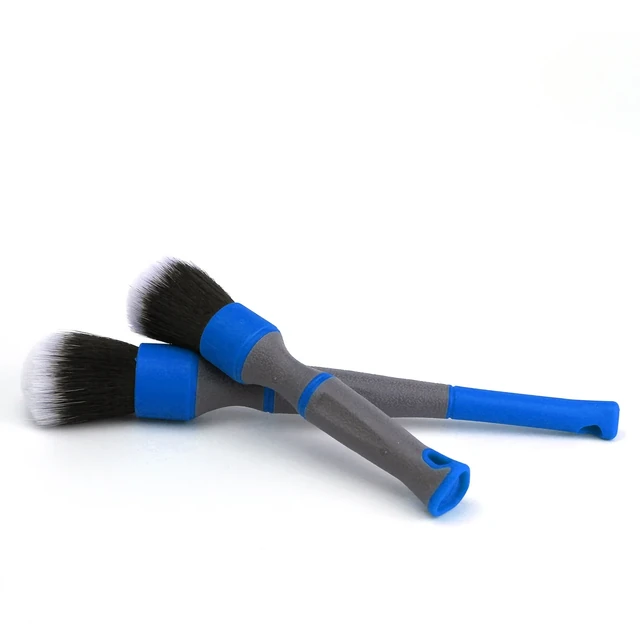
02Documented task fit
Best for light detail work when a triangular rubberized grip is preferred
Detail Factory Ultra-Soft TriGrip Detailing Brush Set
TriGrip adds a rubberized triangular grip to ultra-soft synthetic, metal-free brushes intended for light-duty scratch-prone trim work.
Why this position: Second for the same light-detailing role when a triangular rubberized grip is preferred. Handling is the distinction; the grip does not establish better surface safety.
Check before choosing: The grip changes handling, not vehicle approval. Follow any cloth-only method and check the selected color and set contents; no superior scratch resistance is claimed.
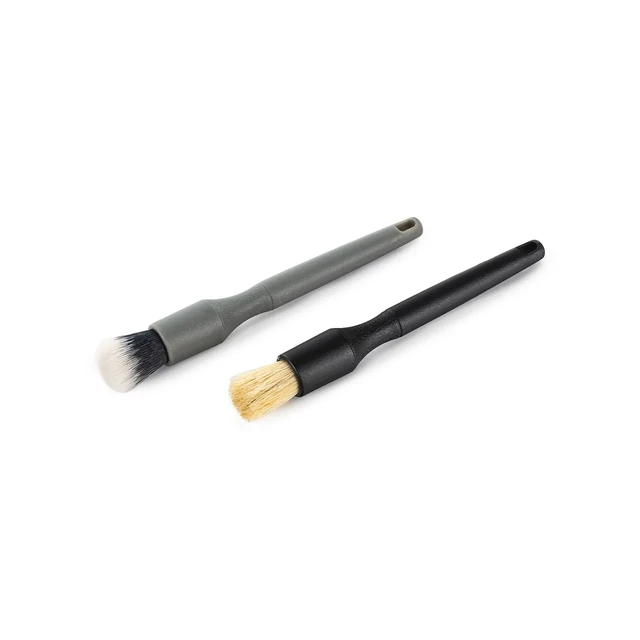
03Documented task fit
Best for choosing a dedicated head for a permitted narrow gap
Detail Factory Crevice Brush Set
The maker’s set distinguishes an ultra-soft head from a boar-bristle head. That difference matters when selecting contact for a confined detail.
Why this position: Third for a narrower gap requiring selection between two different bristle heads. That extra contact choice narrows its fit after the light-duty soft-brush options.
Check before choosing: Do not treat the two heads as interchangeable on every finish. Verify the selected head, gap clearance and material instructions before scrubbing.
04Documented task fit
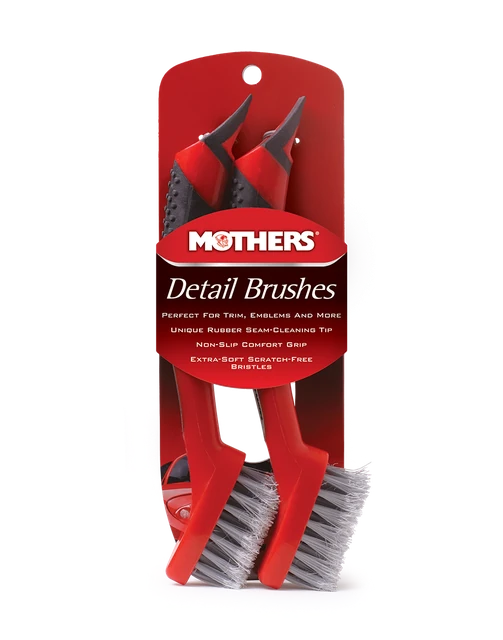
Best for a permitted detail gap where a rubber seam tip is useful
Mothers Detail Brushes 90-156200, two-pack
Mothers lists two detail brushes with extra-soft bristles and a rubber tip for seams. The seam tip gives this pair a different working end from the round and crevice heads already compared here.
Why this position: Fourth for a permitted seam where a rubber tip is useful. The working-end difference supports this more specific gap task, subject to clearance and material checks.
Check before choosing: Check gap clearance and the material's approved contact method. Keep pressure controlled around seams; neither the rubber tip nor soft bristles authorizes brushing a cloth-only screen or seat finish.
05Documented task fit
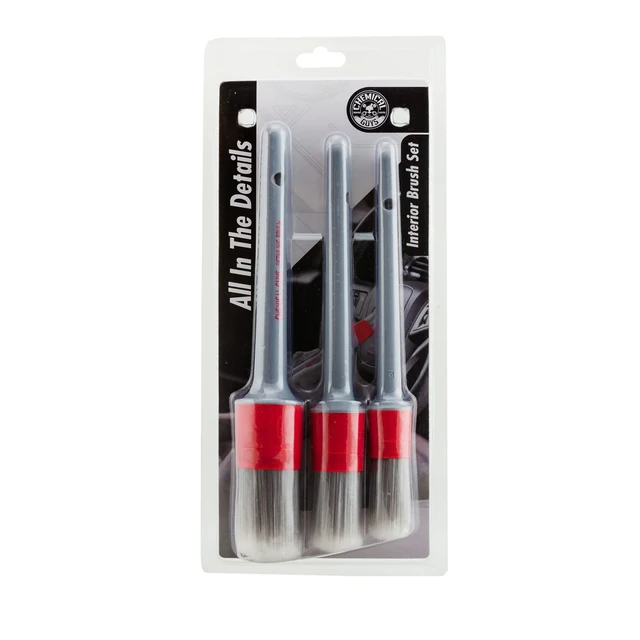
Best for a choice of three sizes for permitted interior detail work
Chemical Guys All in the Details ACC600
The manufacturer identifies three sizes with mixed boar and synthetic bristles for specified vinyl, plastic and rubber tasks.
Why this position: Fifth for specified interior jobs needing one of three mixed-bristle sizes. The buyer must select both head size and permitted contact rather than assume every trim accepts the set.
Check before choosing: Use the smallest appropriate head and remove disturbed soil with the permitted cloth or vacuum method. The kit is not permission to brush every screen or seat.
06Documented task fit
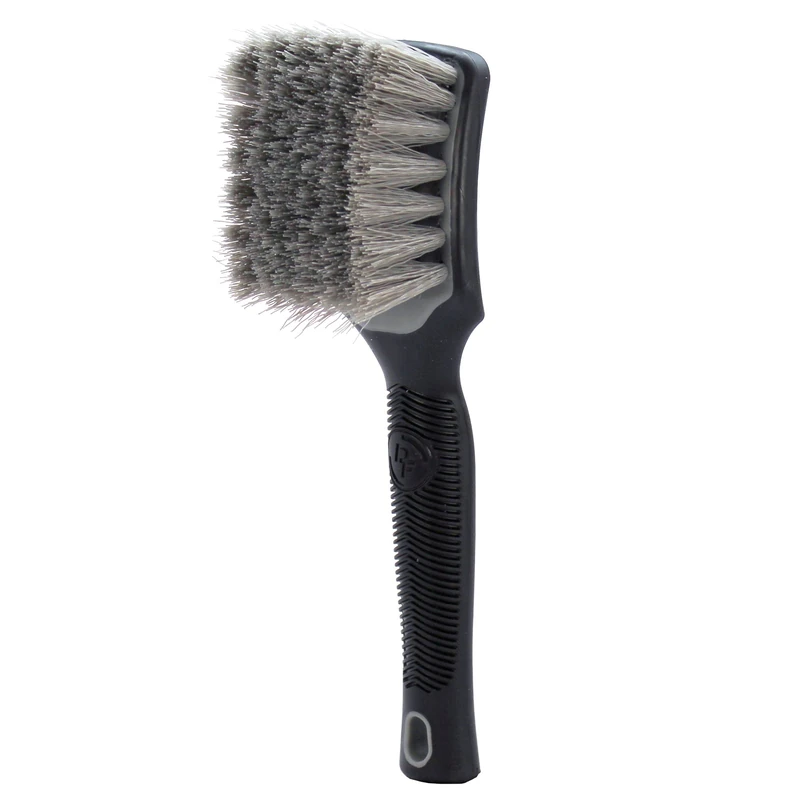
Best for a separate tire-scrubbing tool
Detail Factory ProGrip Tire Brush
The maker specifies stiff synthetic bristles for tire scrubbing, giving this brush a separate task from the soft trim brushes.
Why this position: Sixth as a dedicated stiff-bristle tire scrubber. It belongs at the task-specific end of the list and must stay outside the soft-trim and cabin kit.
Check before choosing: Keep it on permitted tire surfaces and out of the cabin or body-wash kit. Its stiff bristles are not a delicate-detailing recommendation.
Match the brush to one small task
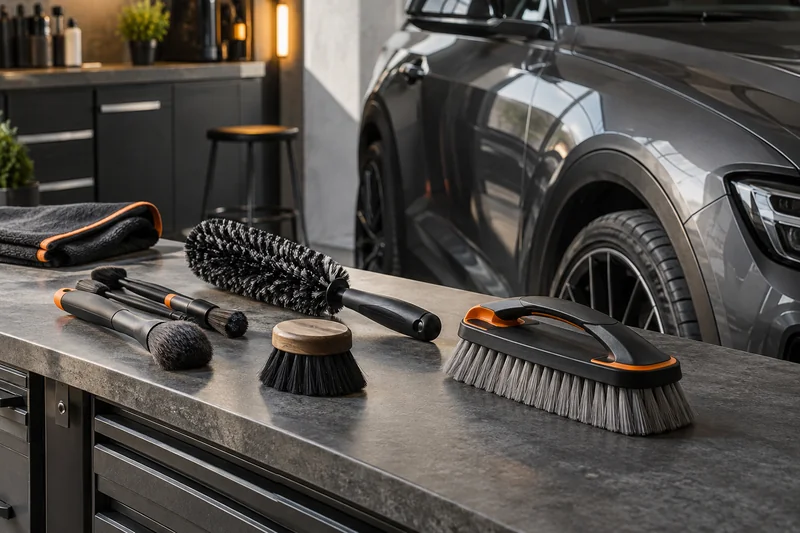
Identify the surface before comparing products. “Interior” is too broad: textured plastic, a glossy trim panel, and a display can sit next to each other but have different cleaning instructions. Keep wheel and tire tools separate from cabin tools so that their use is easy to track.
| Task | What to check | Boundary |
|---|---|---|
| Accessible vent edges and interior gaps | Brush width, reach, and an interior-use specification for the identified material. | The head should fit without forcing the handle into the opening. Cleaning visible edges is different from servicing a duct. |
| Textured plastic or cupholder residue | Vehicle-approved cleaning method, exact brush application, and any cleaner’s current label. | Dusting permission does not establish permission to scrub with liquid. |
| Badges and exterior trim details | The finish and an exterior-use specification for that finish. | Do not extend a badge-cleaning application to washing entire painted panels. |
| Wheel details and tire sidewalls | Separate tool applications and the wheel manufacturer’s finish-care instructions. | A tire scrub brush is not automatically a wheel-face brush. Keep these tools out of the interior kit. |
| Screens, lenses, leather, or synthetic seats | The exact vehicle/material care instructions first. | Use the specified cloth method where required; a seller’s “soft” or “non-scratch” wording does not replace it. |
This page covers small detail work. For washing larger exterior surfaces, see our car wash brush guide; for other cleaning-tool jobs, see car cleaning brushes. Neither category name establishes compatibility with a particular finish.
Read the specification, not just the bristle name
Natural hair, synthetic fiber, and “ultra-soft” are descriptions, not universal safety grades. Look for an identifiable model, its stated application, and the actual package. Different brushes from the same manufacturer can serve different purposes.
For example, Detail Factory’s Ultra-Soft Synthetic Detailing Brush Set is described by its manufacturer as a tool for light cleaning on scratch-prone automotive surfaces. The page names synthetic bristles and a metal-free construction. Its Boar Detailing Brush Set is positioned for more scrubbing action, including textured interior plastics and heavier exterior tasks. The latter page also contains an inconsistent bullet naming synthetic bristles. Check the current product specification with the manufacturer before relying on that material detail.
Shape also changes the job. Detail Factory describes its Crevice Brush Set as having shorter, stiffer bristles for confined gaps. A narrow head can be useful where a broad duster does not fit, but narrowness alone does not make it suitable for a delicate finish.
These are manufacturer specification examples, not results from a comparison test. Their claimed applications do not approve an unidentified budget brush, every screen, or every leather finish. A metal-free handle addresses one part of the construction; it does not make a contaminated brush scratch-proof.
Separate loose dust from sticky residue
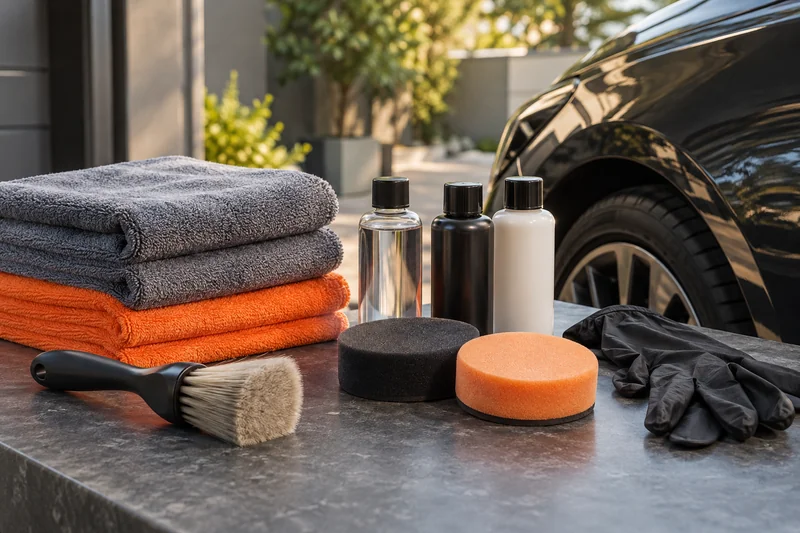
For a permitted interior-brush application, Chemical Guys’ instructions for All In The Details Interior Detailing Brushes, ACC600, begin with vacuuming loose debris, then using a brush alongside a vacuum in hard-to-reach areas. The page identifies three brush sizes, mixed boar and synthetic bristles, and vinyl, plastic, and rubber in its finish table. Its wet-cleaning directions call for wiping away the cleaning solution with a microfiber cloth.
- Identify the accessible area. Check the vehicle’s method and the exact tool application. Leave a screen, lens, seat finish, or damaged trim out of a general vent-cleaning job.
- Remove loose debris first. Where brush use is permitted, work with a vacuum as directed by the tool maker. Keep the nozzle from contacting the finish and use the bristle tips within the space the head can reach freely.
- Reassess anything that remains. If a mark is sticky rather than loose dust, check the permitted cleaner and removal method. Do not respond by pressing harder or adding an unidentified cleaning gel.
- Finish the specified removal step. For a compatible wet-cleaning method, remove the residue as the cleaner and vehicle instructions require. Do not leave the job at “agitate with brush.”
The cleaner is a separate choice. This guide does not prescribe a universal all-purpose cleaner, dilution, soaking time, or gel formula. A brush kit that includes a chemical needs a readable label and material-specific instructions for that chemical as well as for the brush.
Screens and seats: follow the cloth method where specified
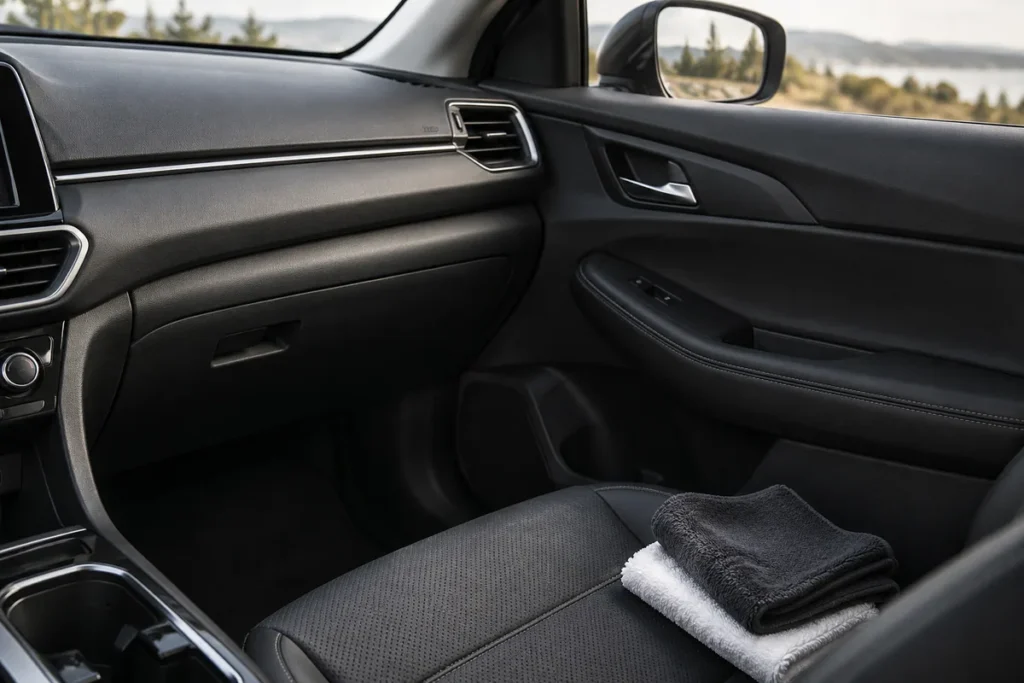
The current U.S. Tesla Model 3 cleaning instructions illustrate why vehicle guidance comes first. They specify a soft, lint-free cloth designed for monitors and displays for the touchscreens. They also exclude cleaners, wet wipes, and dry statically charged cloths there. For general spills on vegan leather seats, the manual describes warm water and mild soap on a soft cloth, followed by a soft, lint-free drying cloth; other cleaners, conditioners, and protectants are not recommended.
Those are instructions for the identified vehicle, not every car. They give no basis for substituting a boar-hair brush for the stated cloth method. For another seat material, identify its finish before choosing tools or chemicals. Our car leather cleaner guide explains the product-role and material checks; it does not turn a vent brush into a seat-cleaning recommendation.
Check the kit before buying more tools
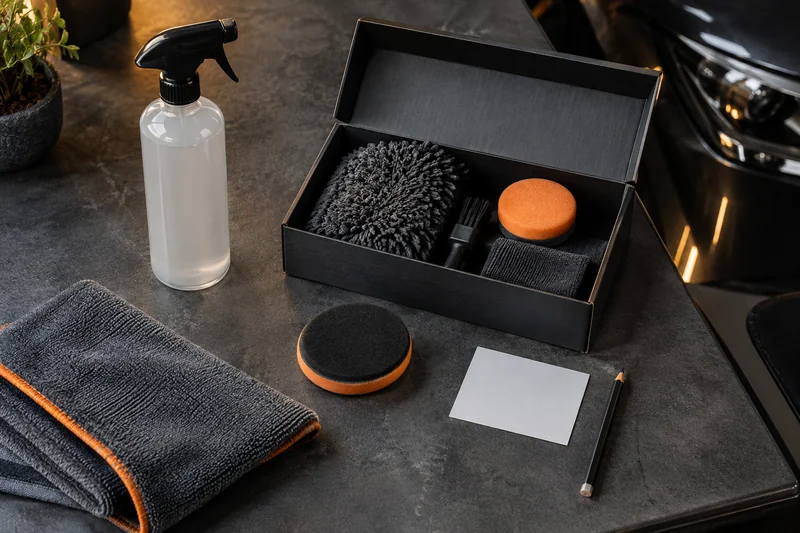
A useful set fills a specific gap in the tools you already have. If your job is routine dust on accessible vent edges, first check whether your permitted cloth and vacuum method can handle it. If a brush is needed, compare its head dimensions and application before paying for a larger assortment.
- Count usable tools for your task. A bag, cloth, bottle, scraper, applicator, or drill attachment may count toward a kit’s advertised total. That number is not the number of suitable detailing brushes.
- Match the selected variant. Verify the model, color or size option, package contents, and current instructions. Similar pictures and a shared brand do not establish identical contents or bristles.
- Distinguish cleaning from applying a dressing. A tire-shine applicator spreads a product; it does not replace a tire-cleaning brush. A rigid plastic scraper is another tool type altogether.
- Check construction you can inspect. Look for a secure head, intact protective parts, and a shape that lets you keep the handle clear of the surface. Stop using a tool if a damaged component could contact the finish.
- Compare evidence before price. A higher price does not prove longer life, and a low price does not prove poor construction. Check the current contents, instructions, and return terms rather than treating a score as durability data.
Wheel and tire sets need their own review. For example, Detail Factory’s ProGrip Tire Brush is specified with stiff synthetic bristles for tire scrubbing. That description is not a recommendation to use it on a painted wheel face. Choose the wheel tool and cleaning method for the actual finish, and keep the tire tool assigned to its separate job.
For a wheel-cleaning job, check the wheel cleaner before choosing a brush. The comparison separates finish limits and chemical removal steps; it does not turn a stiff tire brush into a wheel-face tool.
Track use, inspect, and store
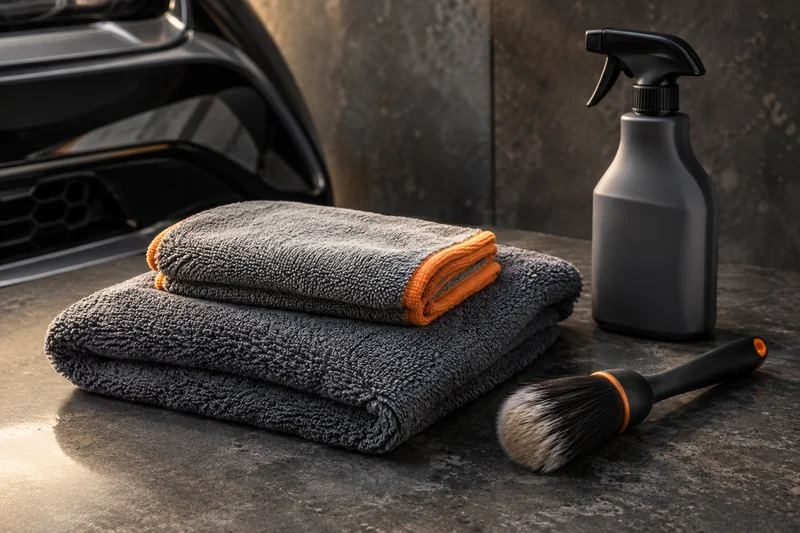
Label or otherwise separate brushes by use: cabin, exterior details, wheels, and tires. You do not need to buy every category at once. Check where a tool has been used before it touches another surface.
Inspect the bristles and head before each session. Follow the maker’s cleaning and drying instructions for the exact brush, including any restrictions on detergents or solvents. Do not assume that “chemical resistant” means compatible with every cleaner. Store it after the required drying step, with the head protected from dirt and distortion; replace a tool whose head or protective parts are damaged.
Questions about detailing brushes
Can I use one brush inside and outside the car?
Some makers list both applications, but each surface still needs its own permission. Assign separate tools to cabin and wheel work so you can track their use. A kit with several heads lets you make that separation only when the individual heads suit those jobs.
Is boar hair gentler than synthetic fiber?
There is no universal ranking from those names alone. The examples above show one manufacturer positioning its boar-hair line for more scrubbing than its ultra-soft synthetic line. Compare the exact model and task; do not infer screen or leather compatibility from the animal or fiber name.
Will a large kit last longer than a small set?
Piece count does not measure brush life. We have no verified durability tests that establish a winner among the older kits featured on this page. Buy for a defined task, inspect the tools, and replace damaged parts rather than relying on the previous numerical ratings.
How this guide was prepared: Manufacturer specifications and vehicle instructions were reviewed on October 7, 2026. The product examples explain differences in application; we did not conduct hands-on brush testing or verify a universal “no scratches” claim. Reader questions helped identify topics to cover, but comments are not compatibility tests.