Car Wash Brushes: Choose by Surface and Handle

Choose a car wash brush by the surface it will touch, then by the handle and package you need. A soft wheel brush, a telescoping body brush, and a tire-dressing applicator do different jobs. For painted body panels, the vehicle’s washing instructions come first: some specify a cloth rather than a brush.
This guide compares two identifiable options from the earlier list and explains when to choose a different washing tool. The comparison uses manufacturer specifications and vehicle instructions. We have not tested these brushes for scratching, cleaning speed, or long-term durability.
The product offer links below are affiliate links. HotCarCare may earn a commission if you buy through them.
Choose by surface, compare the two brushes, or read the answers about paint, long handles, and Tanlade durability.
Top 5 best car wash and wheel brushes by use case
These products are ordered for the stated use cases. The list is documentary: it does not report measured performance or rank the whole market. Check the exact formula, surface and received directions before choosing.
How this shortlist is ordered
Order for this page: permitted body-wash heads before separate wheel and fender-well tools.
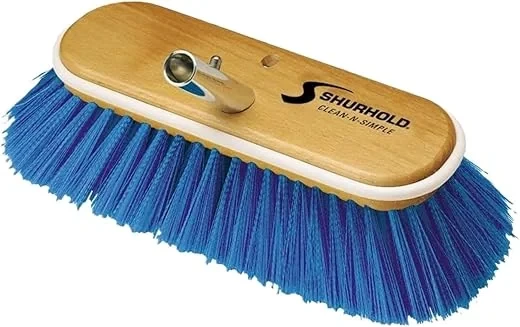
How we order these choices- Shurhold 975 extra-soft blue 10-inch headBest for an approved body-wash task using the Shurhold handle system
- CARCAREZ BR_1301_YLW_1 10-inch headBest for replacing a compatible head in an approved wash setup
- Detail Factory Wheel Brush Kit with interchangeable coversBest for wheel washing with replaceable microfiber contact covers
- Mothers 90-155700 Wheel BrushBest for accessible wheel faces and fender wells
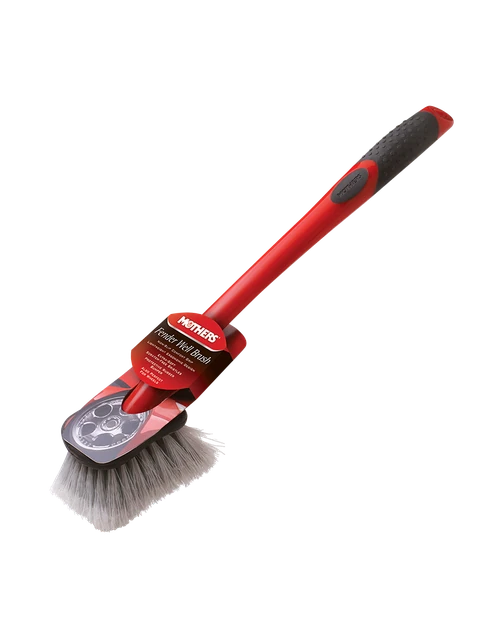
- Mothers Fender Well Brush 90-155800Best for reaching a permitted fender well with a longer handle
01Documented task fit
Best for an approved body-wash task using the Shurhold handle system
Shurhold 975 extra-soft blue 10-inch head
The documented 975 is the blue extra-soft head, and the maker discusses conditional car-wash use. Its head and handle are separate purchase decisions.
Why this position: First for a body-wash task that permits the identified extra-soft Shurhold head. Matching its separate handle is essential; bristle softness is not a scratch-free result.
Check before choosing: Check vehicle permission and the correct handle. Other bristle colors have different jobs, and softness is not a scratch-free guarantee.

02Documented task fit
Best for replacing a compatible head in an approved wash setup
CARCAREZ BR_1301_YLW_1 10-inch head
The documented item is a feathered-polypropylene brush head for dip or flow-through use, rather than a complete handle kit.
Why this position: Second as the alternative replacement wash head for a compatible dip or flow-through setup. Its connector and handle decision follows the named-system option.
Check before choosing: Confirm the connector and buy the handle separately if needed. Flow-through water does not make it suitable for every painted surface.

03Documented task fit
Best for wheel washing with replaceable microfiber contact covers
Detail Factory Wheel Brush Kit with interchangeable covers
The kit has a flexible core, foam contact pad and two interchangeable microfiber covers, making the replaceable contact surface its distinguishing feature.
Why this position: Third for a separate wheel kit with replaceable microfiber contact covers. Its place marks the move away from body washing, not an endorsement of cross-use.
Check before choosing: Reserve it for permitted wheel cleaning. Check clearance, clean the covers and keep wheel contamination away from body-wash tools; no universal reach is claimed.

04Documented task fit
Best for accessible wheel faces and fender wells
Mothers 90-155700 Wheel Brush
Mothers identifies this short-handled brush for wheel and fender-well cleaning; it stays in the wheel kit.
Why this position: Fourth for accessible wheel faces and fender wells using a short handle. It follows the covered-core wheel format because reach and the chosen contact face differ.
Check before choosing: It is not a painted-body wash brush or an assured fit for deep wheel barrels. Verify wheel-finish permission and physical clearance.
05Documented task fit
Best for reaching a permitted fender well with a longer handle
Mothers Fender Well Brush 90-155800
Mothers assigns 155800 to fender wells and lists a long handle, extra-soft bristles and a rubber bumper. It offers a different reach format from the short-handled 155700 Wheel Brush already in this selection.
Why this position: Fifth for the more specific longer-handle fender-well job. It is not a substitute body-wash brush and needs a physical clearance check.
Check before choosing: Check clearance around the wheel and liner before choosing. Keep it in the wheel-well kit; a long handle and soft bristles do not authorize painted-body washing or guarantee scratch-free contact.
Decide what can touch the surface
Find the exterior-care section for your model, including any separate instructions for its paint finish or aftermarket film. Read that before applying a brush manufacturer’s general “car, truck, and RV” claim. A rubber bumper protects against some contact with the head’s hard edge; it does not establish that dirty bristles cannot mark the finish.
| Surface or job | Tool decision | What to verify |
|---|---|---|
| Painted body panels | Use the washing medium permitted by the vehicle’s instructions. Choose a brush only where those instructions allow that contact. | Paint or finish restrictions; clean head; exact bristle variant. |
| Wheels and accessible fender wells | Keep a separate wheel tool. The Mothers option below is made for this role. | Wheel finish and its permitted cleaner/tool; room to move the brush without forcing its hard parts against the wheel. |
| High panels on a truck or RV | A compatible extension may help reach, but length does not override surface approval. | Head attachment, supplied handle, and controlled reach on your vehicle; do not assume an advertised pole length reaches every roof. |
| Glass, camera lenses, and sensors | Follow their separate vehicle instructions. A broad body-brush claim does not establish approval for these components. | Permitted cloth, cleaner, and contact restrictions. |
| Tire dressing | Use the applicator specified for the dressing after cleaning. It is a separate job from washing. | Applicator and dressing compatibility; keep it out of the paint-washing kit. |
The current U.S. Tesla Model 3 manual is a useful example of an OEM restriction. It specifies a clean soft cloth for hand washing, recommends a high-quality microfiber cleaning cloth, and warns against rough or tight-napped washing mitts. It also calls for touchless automatic washes. For that vehicle, follow the cloth directions rather than treating this brush shortlist as approval. These are Model 3 instructions, not a rule for every car.
For a coated, wrapped, matte, repainted, or otherwise modified surface, check the vehicle and finish supplier’s care instructions together. If the permitted contact tool is unclear, resolve that question before buying a brush for it. “Microfiber,” “extra soft,” and “clear-coat safe” are product descriptions, not permission for every finish.
Two brushes with different jobs
These are specification-based choices, not first- and second-place performance winners. One is a head for a handle system; the other is a hand-held wheel brush. Match the model and included parts on the seller’s current page before ordering; packages can change.
| Model | Documented construction | Purchase and use decision |
|---|---|---|
| Shurhold 975, Classic 10 Inch Extra Soft Deck Brush | Blue nylon bristles, wood head, wrap-around rubber bumper; compatible Shurhold handle sold separately. | Consider for routine washing only where the vehicle allows a brush. Budget for the matching handle if you do not own one. |
| Mothers Wheel Brush, 90-155700 | Extra-soft wheel/fender-well brush, non-slip grip and protective rubber bumper. | Choose for accessible wheel areas, using the wheel’s care instructions. Keep it separate from painted-body washing tools. |
Shurhold 975: a head for an existing or new handle system

The manufacturer’s 10-inch brush page distinguishes this blue nylon variant from its other textures. Shurhold’s car-washing support guidance recommends Soft or Extra Soft brushes and positions Extra Soft for frequently washed, well-kept exotic cars. That makes this a conditional option for maintenance washing, not proof that it can scrub every painted surface without marking it.
The interchangeable handle system can help when a hand-held cloth does not provide the reach you need and your vehicle permits a brush. This listing supplies the head; the manufacturer specifies Shurhold handles. Do not assume that an existing threaded broom or flow-through pole will attach.
Confirm the blue Extra Soft 975 variant. The yellow Medium brush, white Stiff brush, and red/yellow Combo brush have different scrubbing roles. Selecting a stiffer variant to deal with stubborn dirt would change the contact tool, not merely its color. Dirt that survives a wash needs a finish-specific treatment decision; it is not a reason to press harder with an unapproved head.
For the package check, the manufacturer’s current blue Extra Soft variant is SKU 975, with barcode 703485120835. Match that identity as well as the 10-inch size; the wider brush family contains several bristle variants. The barcode helps identify the head, but it does not prove that a seller includes a handle or that your vehicle permits the brush.
Check the Shurhold 975 offer and confirm the head-only package.
Mothers 90-155700: keep it in the wheel kit

The current manufacturer page names product 90-155700 and describes wheel and fender-well cleaning. Its grip and bumper are relevant to handling a brush near a wheel face. They do not make this the equivalent of a large body-washing head or a deep wheel-barrel tool.
Match its shape to the accessible area on your wheel. If it cannot move between spokes without the handle or head rubbing a finish, use a different wheel-approved tool instead of forcing it through. Check the wheel’s own finish restrictions and the cleaner’s label; “wheel brush” does not mean that any wheel chemical is suitable.
Although the earlier listing called it a “Wheel and Fender Brush,” this short-handled model is distinct from the Mothers Fender Well Brush 90-155800 and Tire Brush 90-156000. A familiar brand name does not establish that those tools have the same stiffness, reach, or intended contact surface.
Mothers’ own page separates an Individual Item from a Case of 6. Confirm the seller’s pack count for 90-155700; a case option or wholesale case quantity does not turn the earlier single-brush offer into a six-brush purchase.
Check the Mothers 90-155700 offer and confirm a single wheel brush.
Check the package before choosing a long handle
Check whether you can control the wet head on the panel you plan to wash. For a long handle, compare its attachment and working shape along with the advertised maximum length. A head-only purchase, a fixed-handle brush, and a telescoping kit are three different packages.
- Attachment: identify the named handle system or the exact thread and adapter requirements. A photograph of a socket does not establish a universal fit.
- Included parts: confirm the head, pole, adapters, hose connection, and replacement pad where applicable. Do not infer them from a kit photo or a manufacturer’s wholesale case quantity.
- Hose-fed versus dip washing: a flow-through pole supplies water; it does not establish shampoo dilution, chemical compatibility, or clean bristles.
- Working reach: check the head angle, lock, and hose movement before bringing the tool to the vehicle. If you cannot control it at the required extension, change the method rather than using the vehicle as a support.
A removable microfiber mop pad is another contact medium, not an automatically equivalent bristle head. Follow both the pad’s washing instructions and the vehicle’s approval. The Model 3 cloth-versus-mitt distinction above is one reason a microfiber label alone is insufficient.
Keep grit out of the contact step
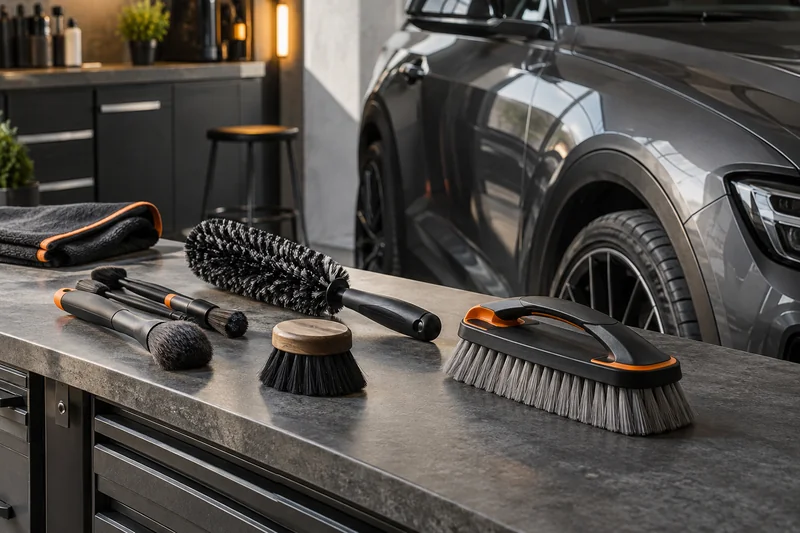
Prepare the permitted shampoo and washing tools before wetting the vehicle. Work on cool surfaces in shade where possible. Follow the vehicle’s rinse restrictions, including directions for seals, lenses, and electrical components; the brush’s hose fitting is not a pressure-washer instruction.
- Remove loose grit first. Rinse the vehicle as its manual directs before making contact. Do not use the brush as a dry duster or start by pushing collected mud across a panel.
- Inspect and separate the tools. Check for retained grit, hardened contamination, damaged bristles, exposed hard parts, and loose connections. Keep wheel-cleaning tools out of the painted-body wash.
- Use the allowed wash solution. Follow the shampoo’s current label for dilution and use. More foam, a water-fed head, or a longer pole does not authorize stronger chemistry.
- Wash a controlled area. Where brush contact is permitted, use the tool’s directions and avoid forcing hard parts against the surface. Rinse the wash medium and refresh the solution as it becomes dirty.
- Rinse and dry as directed. Do not leave wash solution to dry on the vehicle. Clean and store the brush or pad according to its own care instructions, keeping its assigned wheel or body role.
Mothers’ washing guide explains top-to-bottom body washing, frequent rinsing and re-soaping, and a separate rinse bucket before returning a wash medium to the soap bucket. It also recommends separate wheel/lower-panel tools. Use those contamination-control principles alongside your vehicle’s directions, rather than transferring every general mitt recommendation to every car.
If a brush or pad falls onto the ground, take it out of the paint-washing step for that wash. A quick rinse does not verify that every embedded particle has gone. Keep a clean permitted replacement available, even if you have already wet the rest of the vehicle; do not continue with a visibly contaminated head.
For stubborn bugs, tar, iron deposits, or water spots, identify the contamination and use a treatment allowed for that finish. See the bug-remover guide or tar-remover guide for the separate treatment decision. This brush comparison does not establish a cleaner’s compatibility or a stain-removal result.
How the earlier brush recommendations changed
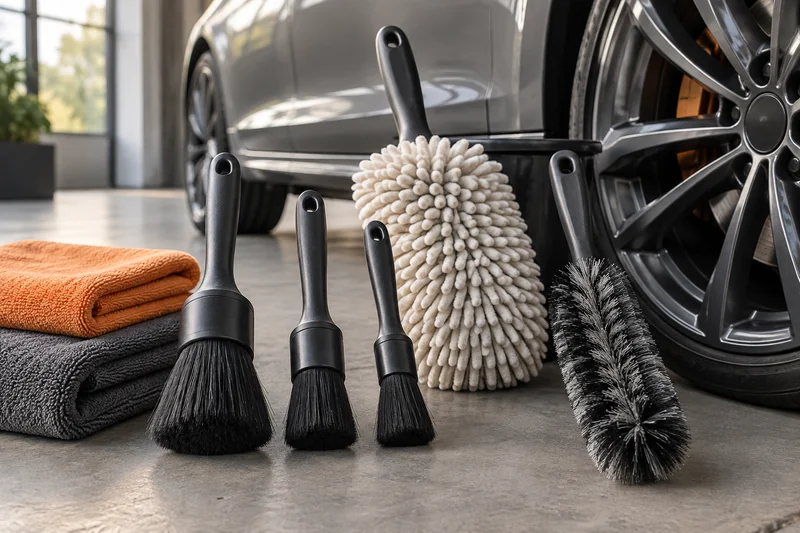
The earlier top-eight list treated different jobs as directly comparable and attached performance scores and durability claims that this guide cannot substantiate. Two identifiable choices have documented roles and remain in this comparison. The other earlier recommendations need additional verification before returning to a current buying shortlist.
| Earlier model | Unresolved buying decision |
|---|---|
| Carrand 93058 | Current exact head, handle package, and application instructions. Do not substitute specifications from another Carrand model. |
| Ordenado CWB0606 kit; Tanlade DIA-Tanlade-3386 heads | Current package, attachment, and material-specific instructions; no verified lifespan for the Tanlade heads. |
| Griot’s Garage 15736; Weiler 73146 | Current exact model and its instructions. Their older identities do not establish today’s product recommendation. |
| Detailer’s Choice 4B369 | Current package and use/care instructions before relying on the older flow-through recommendation. |
Small detailing brushes, glass wands, interior dusters, and tire-dressing applicators are separate categories. They are not substitutes for a brush or cloth approved for painted-body washing. For smaller areas, see the detailing-brush guide; check its surface instructions before taking any tool onto paint.
Questions about car wash brushes
Can a soft car wash brush still damage paint?
Yes. Bristle softness does not rule out trapped grit, an exposed hard edge, unsuitable contact, or poor tool control. Follow the vehicle’s instructions, keep the permitted wash medium clean, and stop if the tool’s condition is uncertain. This guide does not provide a scratch-free guarantee for either brush.
Is a microfiber mitt always a better choice?
No universal choice follows from the material name. Use the cloth, mitt, or brush your vehicle permits and follow that tool’s care directions. A dirty microfiber pad needs attention just as a dirty bristle head does. Some vehicles have specific cloth-versus-mitt restrictions, as the Model 3 example shows.
How long do Tanlade brush bristles last under heavy use?
We do not have a verified durability test or service-life specification for the earlier Tanlade set. The comments asking about softness and heavy-use longevity do not establish a lifespan. Before buying, confirm the exact head, connector, current care instructions, and replacement availability. If those details are missing, do not treat the earlier value rating as evidence of a long-lasting tool.
Does a flow-through brush replace the wash bucket?
Not automatically. It routes water to the head, but the tool and shampoo instructions still determine the wash method. It does not confirm a detergent dilution, remove every lodged particle, or make wheel and body tools interchangeable. Keep clean solution and a way to rinse the permitted contact medium available for the method you are using.
Should I wash every two weeks?
Choose the wash interval from your vehicle’s care instructions and its actual contamination; a fixed interval does not decide which tool to use. Remove harmful deposits as those instructions direct; do not leave them in place just because the next scheduled wash is days away.
Is hand washing always preferable to an automatic wash?
The vehicle’s instructions decide which methods are permitted. Hand washing still uses contact tools that need to be clean and suitable. Automatic washes vary, and the Model 3 manual specifically requires touchless operation. A long-handled brush cannot resolve that vehicle-specific decision.