How to Use a Foam Cannon Without Guessing the Setup or Mixture
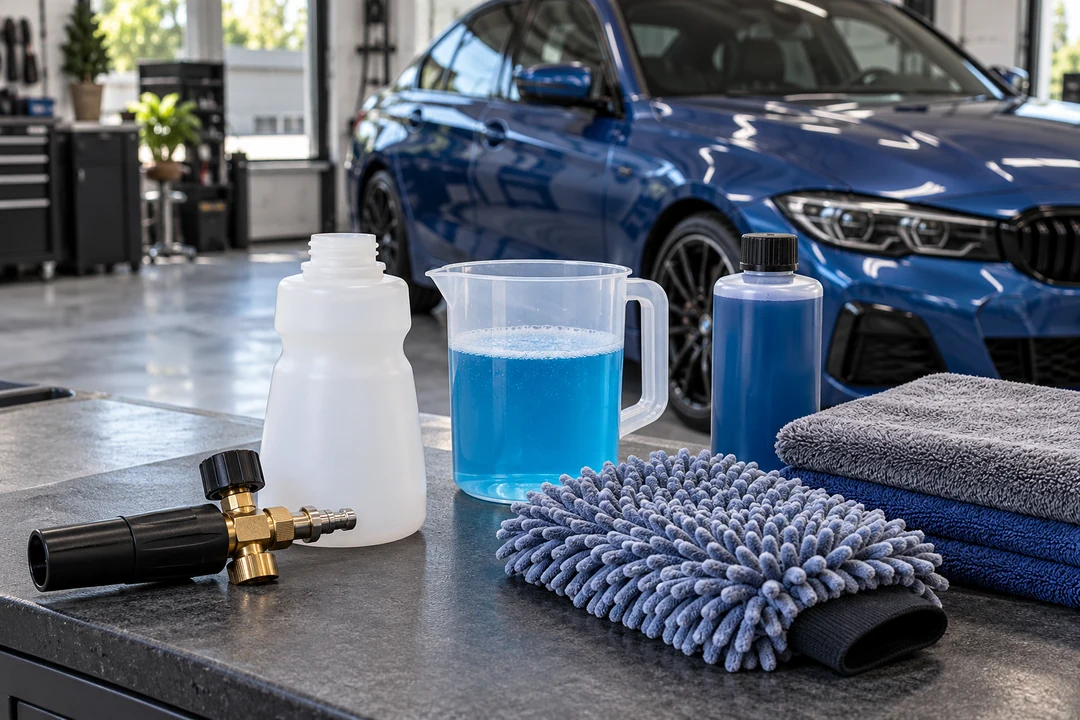
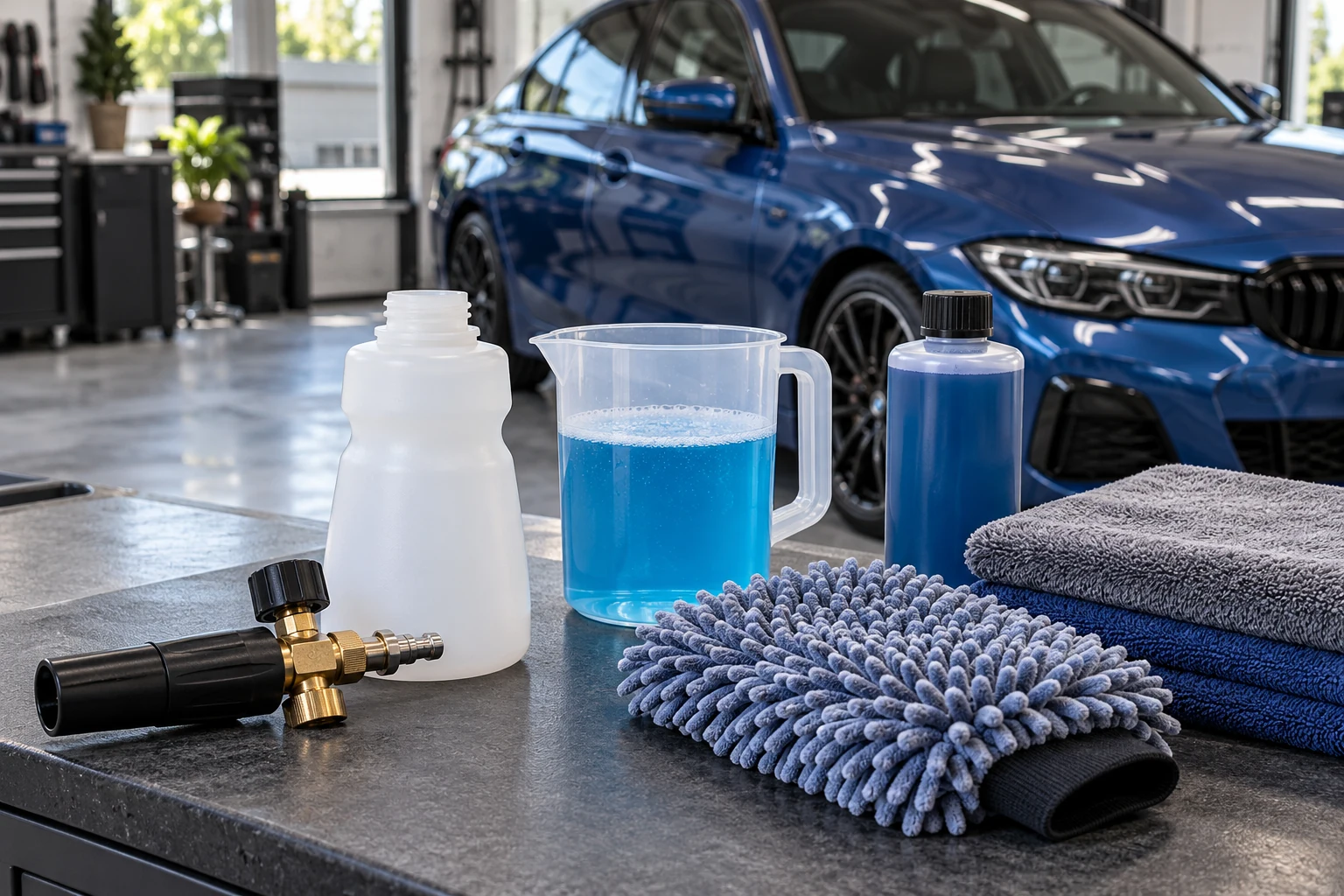
Choose by the documented washing setup
Match the attachment to its water supply, the shampoo to its documented method, and the wash to your vehicle’s care instructions. Measure the bottle mixture, connect the equipment safely, apply foam, then complete the required wash, rinse and drying steps. The Armor All example below shows a complete process without making its recipe universal.
This guide uses published instructions, not a Hot Car Care wash test. Some shopping links are affiliate links. As an Amazon Associate, Hot Car Care earns from qualifying purchases. A search button does not confirm a particular Amazon seller, price or available configuration.
Identify Your Attachment and Water Source
Determine the documented operating mode before filling or connecting anything. A pressure-washer foam cannon, a garden-hose gun and a device with separate modes have different setup requirements. Identify the water source from the device’s documented mode.

For a pressure-washer attachment, record the washer’s actual operating pressure and flow, the gun/coupler being used and the attachment’s required fitting. Resolve any orifice or unloader restriction before use. For example, MTM’s 14.7022 catalogue excludes flow-sensing unloaders and says the two supplied orifices do not cover every pressure-flow combination in its broad rating range. Those are that device’s restrictions, not a rule for every cannon.
For a hose gun, follow its hose connection and water requirements. Do not attach a hose-only gun to a high-pressure outlet. For a dual-mode device, use one documented mode at a time. Choose between a foam cannon and a foam gun by the water setup you can supply.
Prepare the Vehicle, Water, and Wash Supplies
Prepare the supplies for the whole wash before applying shampoo. Identify the vehicle’s outer surface and any added film or coating, then check their permitted cleaners, contact tools, temperature conditions and wash timing. Do not use an attachment’s maximum pressure or water temperature as a treatment setting for the car.

The current US Model 3 cleaning instructions illustrate why that check matters: they call for a clean soft cloth, caution against rough or tight-napped mitts, and treat cameras and seals separately from ordinary panels. Those are named-vehicle instructions, not approval of the equipment or shampoo in this guide for every Tesla or every finish.
Set out:
- the selected shampoo;
- measuring tool;
- clean permitted wash media;
- rinse supply;
- drying materials.
Check the shampoo’s handling precautions and the washer’s required personal protection and electrical setup. If the required wash or rinse water is unavailable, choose another documented method instead of omitting a step. Compare shampoos by method and existing protection before choosing the formula.
Tesla Model 3 US cleaning instructions: vehicle-specific limits
Read the Bottle Mixture Correctly
Use the selected device and shampoo instructions together. Reservoir capacity, final fill level and water added are different quantities. The device draws the bottle mixture into flowing water. The bottle recipe alone does not establish the concentration that reaches the paint.

For the Armor All 2-in-1’s stated standard-size-vehicle example, its US directions specify 6 oz of an Armor All car wash, then water to the 32 oz mark. The 32 oz mark is the total reservoir fill, not 32 oz of water plus 6 oz of product. Under that marked-total interpretation, the remaining volume is 26 oz; use the reservoir mark to finish filling rather than claiming a more accurate laboratory mixture.
This example is not a dose for MTM, MJJC, another reservoir size or another shampoo. The device’s 40 oz capacity also does not require filling to 40 oz for this stated example. Do not average neighboring recipes or calculate the downstream concentration from the bottle numbers.
If a shampoo label gives only a ratio, establish which quantity is product, which is water, and whether it describes the bottle or delivered mixture. If those inputs are missing, obtain the applicable instructions before mixing. More soap is not a substitute for resolving an incomplete recipe.
Armor All: named fill example and complete usage directions
Connect and Set Up the Equipment
Make connection changes only after the applicable shutdown and pressure-release procedure. Turn the equipment off and follow its instructions for water shutoff, relieving trapped pressure and engaging the trigger lock before changing attachments. Never loosen a pressurized coupling or change a nozzle with the trigger engaged.
For example, Sun Joe’s SPX3000-XT1 manual separates water shutoff and pressure release from engaging the trigger safety lock before its quick-connect nozzle change. It is a model-specific example of the safety sequence, not confirmation that its supplied cannon or fittings are interchangeable with another device. Follow the actual washer’s sequence if it differs; this guide does not replace its startup, electrical or attachment instructions.
Check that the required connection fully locks without force and that the assembly is supported as its instructions require. Stop for an insecure fit, leakage or an unresolved connector mismatch. Complete the documented water-supply and startup checks before operating; do not test a questionable fit under pressure.
For the named Armor All example, the pressure-washer branch uses the quarter-inch quick connection with the selector in the pressure-washer position. The hose branch uses its wash-gun adaptor and the hose position. These are alternatives, not simultaneous connections. Read the exact mode and connection directions on the supplied device before starting.
Sun Joe SPX3000-XT1: model-specific attachment-change precautions
Apply Foam and Finish the Wash
Complete the selected shampoo’s entire method. Foam production does not establish a finished wash, and there is no universal dwell time or permission to skip contact washing.
With the named Armor All device and an applicable Armor All car wash, the manufacturer’s sequence is:
- Rinse the car with water to remove loose dirt.
- Prepare the documented reservoir mixture and securely attach the sprayer. For the stated standard-size example, use the 6 oz-to-32 oz total-fill direction above.
- Connect the selected water mode, secure it and set the matching selector position before startup. Keep the washer’s own startup and attachment precautions in force.
- Adjust the device’s soap control as directed, then apply from top to bottom while following the selected car wash’s instructions.
- Hand wash using the clean contact tool the vehicle and finish permit. The device page names a mitt or sponge; a vehicle’s narrower tool restriction still needs resolving before use.
- Rinse away the wash solution and dry immediately with a clean suitable drying towel or chamois, within the finish’s care instructions.
Check the shampoo’s actual working conditions and removal instructions before application. This guide supplies no substitute dwell time. If the product must not dry and the conditions will not let you keep that requirement, change the conditions or postpone the wash.
Use the following checks to distinguish a completed stage from an unresolved setup. They are planning checks, not measured cleaning or paint-safety results.
| Step | What to check or do | Applicable instruction | Observable completion or stop condition |
|---|---|---|---|
| Identify mode | Match device and water source | Attachment’s exact model instructions | Mode and required supply identified; otherwise stop |
| Prepare finish and supplies | Check material permission; have rinse and drying tools ready | Vehicle, added finish and shampoo | Complete permitted process can be supplied |
| Measure | Read product amount and total reservoir fill separately | Exact shampoo/device recipe; Armor All example above only | Correct marked fill; missing ratio inputs mean do not mix |
| Connect | Shut down and release pressure as instructed; lock the correct connection | Actual washer and attachment manuals | Secure fitting without force; stop for leak or uncertain fit |
| Apply and wash | Follow application, contact-tool and working-condition instructions | Selected shampoo and vehicle; named Armor All sequence | Required contact stage completed; no invented touchless shortcut |
| Rinse and dry | Remove wash solution; perform required drying | Selected wash and finish | Wash residue removed and drying completed |
| Clean attachment | Carry out its permitted flush and storage routine | Exact attachment instructions | Flush completed; device ready for its stated storage conditions |
Flush, Dry, and Store the Attachment
Use the attachment’s own cleanup method after the wash. Armor All’s named routine runs clean water through the sprayer with clean water in the reservoir, then lets it dry before storage. Shutdown and any bottle or coupling changes still follow the applicable pressure-release instructions.
Do not transfer a different cannon’s bottle-removal or filter-service procedure to yours. In particular, an exploded diagram does not by itself make internal service an owner task. Stop at the manufacturer’s permitted maintenance boundary and have damaged or persistently malfunctioning equipment assessed by the responsible supplier.
Reusable wash and drying towels need their separate care routine. Care for the used microfiber towels after the equipment is put away. Flushing the cannon does not clean the cloths.
If the Foam Is Weak, Check Before Adding More Soap
Stop and check the documented setup before changing the mixture or hardware. With equipment safely shut down and depressurized as instructed, verify the water supply, selected mode, actual fill, draw-tube arrangement and the user-adjustable control positions permitted by that model. Recheck whether the shampoo is intended for this equipment and method.
If the supply or fit is outside the attachment’s requirements, a stronger bottle mixture does not establish compatibility. Persistent pulsing, leakage or uncertain orifice guidance calls for the maker’s help. Do not drill a nozzle, bypass an unloader or disassemble a pressurized device to chase thicker foam.
Foam thickness can change without proving a difference in dirt removal. Evaluate the completed wash by its permitted process and the condition of the surface, rather than using foam appearance as evidence of cleaning performance or scratch prevention.
Questions About Foam-Cannon Washing
Must I use the same pre-rinse step with every shampoo?
The named Armor All sequence starts with rinsing loose dirt. Keep that step for this example. Another documented product may specify a different preparation; use its complete method together with the vehicle’s care requirements rather than borrowing only one convenient step.
Can I skip contact washing when the foam looks thick?
The named method includes hand washing. Foam appearance does not establish that the contact step can be omitted or that the result is clean. A different touchless process needs its own applicable instructions and evidence.
Should I fill the bottle to its capacity every time?
Follow the selected recipe’s fill instruction. Capacity is a container limit, not a dose. A bottle’s maximum volume does not tell you the amount needed for a different shampoo or job.
What should I do if the documents disagree?
Identify which exact device, shampoo and surface each instruction covers. Ask the responsible maker or installer to resolve a conflict that affects use. Do not combine the most convenient parts of different procedures into a new one.
Equipment Search for the Named Example
The example uses the Armor All 2-in-1 Foam Cannon. Search for that complete device, then confirm its actual mode hardware, included adaptor, current instructions, seller and terms. The example does not establish fit for your washer or approve an unidentified shampoo or finish. Keep equipment that already meets the same requirements rather than buying a replacement solely for a different foam appearance.
Search Amazon US for Armor All 2-in-1 Foam Cannon
Sources and Scope
Instructions were checked October 19, 2026. Armor All supplies the named operative example. Veloci supplies only the stated MTM compatibility exceptions; its ratings are not car-surface settings. The Sun Joe manual supplies a named attachment-change safety example, and Tesla’s current US Model 3 manual illustrates vehicle-specific restrictions. Neither identifies the reader’s actual equipment or authorizes a cross-brand combination.
Hot Car Care performed no physical wash, concentration measurement, foam comparison or paint-safety test for this guide. Follow the supplied current instructions for the exact device, shampoo, vehicle and installed finish; unresolved critical setup or material checks remain reasons to stop.