How to Clean Cloth Car Seats Without Soaking Them

Start by identifying the seat fabric and removing loose dirt. For an ordinary cloth seat whose care instructions permit wet cleaning, clean a small area with the specified cloth method, remove residue as directed, and let the seat dry before judging the result. Keep the liquid on the working cloth rather than treating the seat as something to soak. Carpet-cleaner permission does not establish seat permission.
This guide provides a first-pass framework and two named vehicle examples. It does not prescribe one chemical, mixture, brush, or extractor for every seat. Hot Car Care has not performed a stain-removal or drying test on these seats.
Top 5 best cloth car seat cleaning products by use case
These products are ordered for the stated use cases. The list is documentary: it does not report measured performance or rank the whole market. Check the exact formula, surface and received directions before choosing.
How this shortlist is ordered
Order for this page: seat-appropriate controlled hand cleaning before concentrate or broader water-safe routes.
How we order these choices- Adam’s Carpet & Upholstery Cleaner, gallonBest for nonfoaming hand cleaning without added dye or fragrance
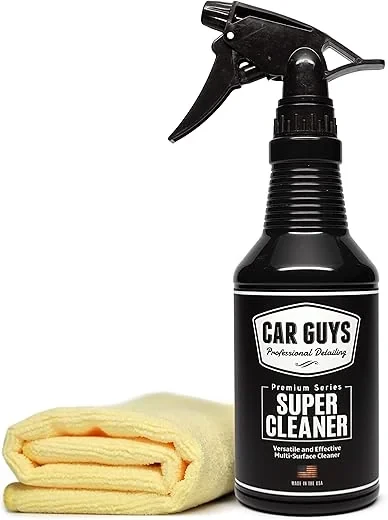
- CAR GUYS Super Cleaner, 18 oz with clothBest for cleaning permitted interior materials without adding a protection step
- Griot’s Garage Interior Cleaner 10956, 22 fl ozBest for a cleaner covering permitted fabric and hard interior materials
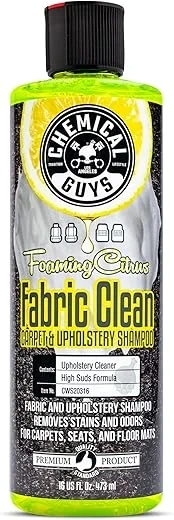
- Chemical Guys Foaming Citrus Fabric Clean, 16 oz concentrateBest for mixing a hand-cleaning fabric concentrate for a permitted material
- 303 Marine & Recreation Multi-Surface Cleaner 30204, 32 fl ozBest for compatible water-safe materials with damp-cloth removal

01Documented task fit
Best for nonfoaming hand cleaning without added dye or fragrance
Adam’s Carpet & Upholstery Cleaner, gallon
Adam’s describes this formula as nonfoaming and dye- and fragrance-free. The hand-cleaning method uses controlled application and blotting.
Why this position: First for controlled nonfoaming hand cleaning when the seat permits the formula and fragrance or dye avoidance matters. A gallon refill does not make it an extraction detergent.
Check before choosing: This cleaner is distinct from Adam’s Extractor Shampoo. A gallon refill does not establish permission to fill a machine tank.
02Documented task fit
Best for cleaning permitted interior materials without adding a protection step
CAR GUYS Super Cleaner, 18 oz with cloth
CAR GUYS distinguishes Super Cleaner from UV protection or a gloss treatment in its FAQ. The reviewed offer includes an 18 oz bottle and cloth.
Why this position: Second as a cleaning-only option shared with other permitted cabin materials. The seat's actual care rules still control whether that broader cleaner is appropriate.
Check before choosing: Exclude glass and screens. A broad material list does not override the vehicle’s cleaner restrictions.

03Documented task fit
Best for a cleaner covering permitted fabric and hard interior materials
Griot’s Garage Interior Cleaner 10956, 22 fl oz
Griot’s lists both fabric and hard-surface cleaning for this formula and describes removal without residue.
Why this position: Third as the identified cleaner with both fabric and hard-surface roles. Those roles add a cabin-use alternative without establishing a universal seat or screen approval.
Check before choosing: Do not infer a fragrance-free formula, a precise sheen, or compatibility with every screen from that description.
04Documented task fit
Best for mixing a hand-cleaning fabric concentrate for a permitted material
Chemical Guys Foaming Citrus Fabric Clean, 16 oz concentrate
The reviewed bottle is a concentrate; its label determines preparation before agitation and removal.
Why this position: Fourth when a hand-cleaning concentrate is suitable and its preparation can be measured. That extra mixing decision follows the identified bottle-cleaning routes.
Check before choosing: Do not borrow directions from the ready-to-use variant or assume one ratio suits every fabric. It is not automatically an extractor-tank detergent.

05Documented task fit
Best for compatible water-safe materials with damp-cloth removal
303 Marine & Recreation Multi-Surface Cleaner 30204, 32 fl oz
Gold Eagle’s method uses the water-safe-material decision and a damp cloth to remove cleaner; fabric then needs to dry.
Why this position: Fifth for seat materials specifically confirmed to be water-safe and compatible with damp removal. That qualifying water-tolerance condition makes it a more restricted branch here.
Check before choosing: No dilution recipe is invented here. Check the exact material and keep liquid away from excluded electronics or restraint components.
Check the Fabric and the Spill First

Confirm the upholstery in the care section for your model year and trim. Ordinary woven cloth is the scope here. A suede-like surface could require a different procedure; do not identify suede or Alcantara by appearance alone. Stop the general wet-cleaning process if the material is unknown or the finish is already damaged.
Keep these items outside this seat-fabric procedure:
- suede and Alcantara;
- leather and leather-like upholstery;
- headliners;
- seat belts and child restraints.
Each needs its own applicable instructions. For leather-looking seats, use the leather material and care checks. Do not dismantle a seat or unplug its equipment to make a cloth-cleaning method fit. Keep liquid out of restraint mechanisms, switches, and airbag areas; surface-cleaning permission does not authorize wetting the assembly beneath it.
Decide what remains on the fabric. Loose crumbs and grit call for dry removal. For a fresh liquid spill, use the upholstery’s permitted spill procedure. An old mark with an unknown cause is not automatically a reason to use more cleaner.
Remove Loose Dirt Before Adding Moisture

Use the vacuum and clean, surface-permitted attachment you already own. Work accessible fabric gently and inspect it afterward. Stop here if removing the loose debris completes the job.
For remaining hair, follow the separate pet-hair removal process for eligible fabric. Collect the released hair before deciding whether a separate wet-cleaning task exists. Hair removal does not require adding shampoo or fragrance.
The Tesla textile example below specifies a smooth vacuum head. That named instruction does not establish that every brush attachment is suitable for another vehicle. Likewise, a tool’s upholstery label does not override the seat maker’s restrictions.
Clean a Small Area With the Permitted Cloth Method
Have the removal and drying cloths ready before wetting the fabric. Select the actual seat’s procedure, including any concealed-area check, and use only that procedure’s permitted cleaner and application. A small test can check an allowed method; it cannot cancel an explicit exclusion.
- Qualify the area. Confirm ordinary fabric, vehicle permission, and the exact cleaning method. Keep a damaged or unidentified surface out of this process.
- Prepare the cloth. Use a clean, soft cloth moistened with the permitted solution for wiping or dabbing without dripping liquid into the seat. Do not create a stronger mixture or spray the seat to compensate for a mark.
- Work gently on the small area. Follow the specified motion. Stop if color transfers unexpectedly, the texture changes, or the method appears to require harder rubbing.
- Remove what the method requires. Use the clean-water residue cloth or dry finishing cloth specified by that procedure. Change to a clean working face rather than spreading the collected dirt.
- Dry and inspect. Finish the prescribed drying step, allow remaining moisture to clear by the vehicle-permitted method, and compare the area with adjacent fabric before continuing.
Use this sequence to organize the job. The named methods below determine the actual solution, motion, and removal. They are separate examples, not interchangeable approvals.
Mazda CX-5, 2024 US: Dabbing and Detergent Removal
The manual’s Upholstery Maintenance subsection specifies gentle dabbing with a soft cloth carrying water-diluted mild detergent, described as approximately 5%. It then calls for removing detergent with a clean-water cloth wrung out well. That model-specific concentration is not a dilution for CAR GUYS or another branded concentrate.
The manual warns against spraying water into the cabin and hard rubbing. Its shaded, ventilated drying instruction appears in the separate leather subsection; this guide does not present it as the cloth-seat instruction.
Read the 2024 US CX-5 upholstery instructions
Read Mazda’s separate cabin-care cautions
Tesla Model 3, 2024+ North America: Cloth First, Then Wipe Dry
For liquid-based spills on textile seats, the manual specifies warm water and mild soap on a soft cloth, gentle circular wiping, and a soft lint-free cloth to wipe dry. It prohibits direct seat spraying and blow drying, and does not recommend additional cleaners, conditioners, or protectants.
Use that seat-specific route for the applicable vehicle. The same manual’s different carpet-cleaning permission does not approve a carpet formula for those seats.
Read Tesla’s textile-seat method and exclusions
Remove Residue and Let the Seat Dry
Complete the removal step belonging to the selected method. Mazda’s detergent-removal cloth and Tesla’s lint-free dry cloth do different jobs. Do not replace either with a universal rinse, or leave a cleaner to dry in place when its instructions call for removal.
Wait for the seat to dry before assessing the mark or using a treatment that requires a dry surface. This guide establishes no fixed drying time. The amount of moisture and the seat assembly are not measured here; a dry-looking top alone is not evidence that previously soaked padding is dry. If the seat was substantially wetted, stop further application and obtain the vehicle’s advice about drying.
No heat-drying method is supplied here. Tesla’s named example expressly excludes blow drying. Use only the actual vehicle’s permitted drying approach rather than improvising heat or extending a leather-specific drying instruction to cloth.
Keep the used cloths identifiable by the product they touched. Before reusing them, follow the microfiber towel sorting and care checks; that guide does not establish that routine laundry removes every chemical residue.
What to Do When a Mark Remains

Judge the dry result before repeating the process. Record the remaining problem:
- loose dirt;
- a defined spill;
- a ring;
- residue;
- a change in the fabric itself. Appearance alone does not identify a stain’s cause.
| Observation | Check first | Bounded action | Check afterward | Stop boundary |
|---|---|---|---|---|
| Loose dirt or crumbs | Permitted dry tool and fabric | Vacuum accessible fabric; wet cleaning may be unnecessary. | Inspect what remains after collection. | Stop if the area is clear. |
| Identified liquid spill | Actual upholstery’s spill method | Use the permitted gentle cloth process. | Complete removal and assess after drying. | No direct spraying where prohibited; no stain-removal guarantee. |
| Detergent or cleaner residue | Removal instruction for the actual method | Complete its specified clean-water or towel-removal step. | Inspect the dry area for residue. | Do not invent a rinse or another cleaning mixture. |
| A ring or old mark remains | Cause, material, and permitted follow-up are unresolved. | Seek a stain-specific instruction or upholstery assessment. | Compare the dried area with adjacent fabric. | Do not keep soaking the center or assume a stronger chemical is suitable. |
| Texture or color changes; padding was soaked | The first-pass process has not produced an acceptable result. | Stop application and obtain material-specific advice. | Resolve drying or damage before another treatment. | No harder scrubbing, extractor, or steam remedy is established here. |
For broader product choices on an approved material, compare fabric and carpet cleaner methods. For a remaining trim task, use the interior-cleaner surface checks. Neither comparison replaces the seat’s care instructions.
An Optional Cleaner Only After the Seat Allows It
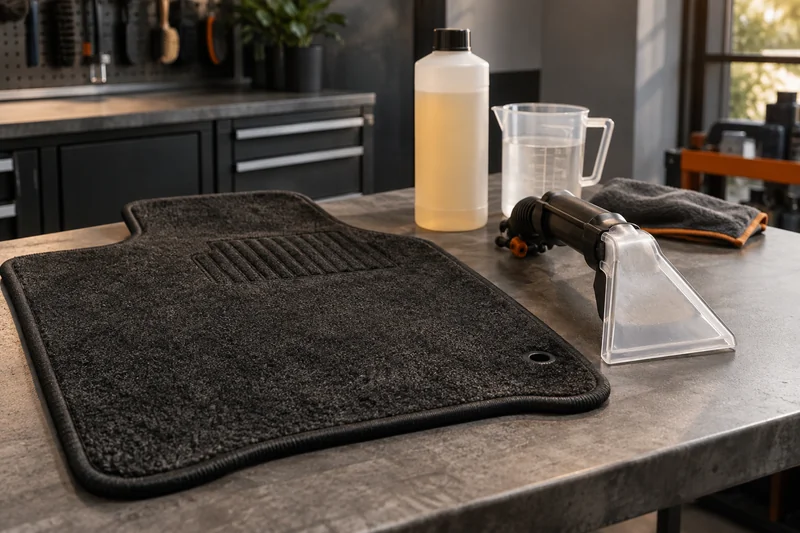
The cloth-first OEM examples above do not require buying this product. Consider a separate cleaner only when the actual seat instructions permit it and a cleaning job remains. Keep a suitable cleaner or cloth you already own.
If a separate spot cleaner is permitted, check whether Folex fits the fabric or check Lightning Fast’s application requirements. Neither review overrides the cloth-first vehicle examples above.
Questions About Cloth Car Seat Cleaning
Can I Clean a Cloth Seat Without an Extractor?
The named Mazda and Tesla cloth methods use cloths; neither requires an extractor to perform the procedure described here. Extraction remains a separate decision requiring the vehicle, machine, and formula to permit it. Owning a machine does not change a seat’s wetting restrictions.
Does a Whole Seat Need the Same Treatment as One Spot?
Do not turn a local spill procedure into a full-panel shampoo routine. If the approved instructions call for a larger area, follow that scope. A ring after a small treatment is a reason to resolve the next method, not permission to wet the entire seat.
Will Repeating the Same Cleaner Remove an Old Stain?
No result is guaranteed here. Once the permitted first pass is dry, reassess the remaining mark and the material. Stop when texture or color changes, the cause is unclear, or no applicable follow-up is established.
Sources and Method
Hot Car Care reviewed the 2024 US Mazda CX-5 manual, the Model 3 2024+ North American manual, and CAR GUYS product directions on October 13, 2026. Vehicle examples retain their model, material, and method boundaries. The framework organizes those checks; it is not a physical stain-removal test or a universal chemical recipe.